
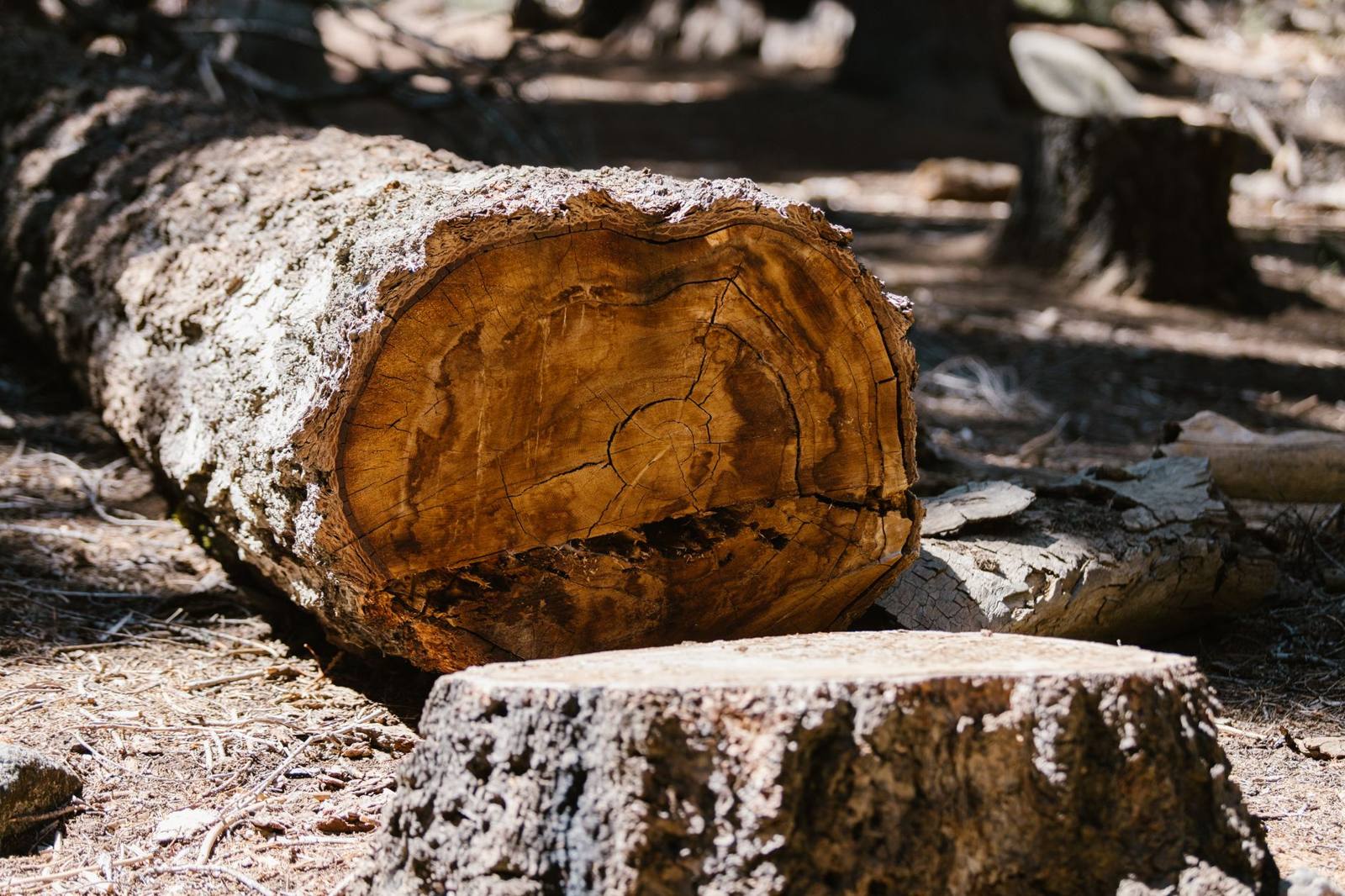
Big Stump Grove sits immediately inside the Big Stump entrance on Highway 180, the western gateway to Kings Canyon National Park5. Loggers cut most of the large sequoias here between about 1883 and 1891, before the park existed, leaving a landscape of huge stumps instead of standing trees2. The grove’s centerpiece is the stump of the Mark Twain Tree, a sequoia 16 feet in diameter that the Army felled in 1891 so sections of its trunk could be shipped east and displayed to skeptical crowds in New York and London1. A flat, roughly 2-mile loop trail circles the grove from the Big Stump Picnic Area, and the same parking area doubles as a winter snowplay site at 6,600 feet34. It is one of the few places in either park where you can see, up close, what a sequoia grove looked like after commercial logging rather than after a park was drawn around it.
- Location: Big Stump entrance, Highway 180, Kings Canyon National Park5
- Logging period: roughly 1883 to 1891, before the park’s creation2
- Mark Twain Tree stump: 16 feet (4.8 m) in diameter, felled in 18911
- Why it was cut: shipped to the American Museum of Natural History and displayed to crowds in New York and London who doubted trees grew that large1
- Trail: roughly 2-mile loop from the Big Stump Picnic Area3
- Distance to Grant Grove Village: 3.5 miles2
- Winter use: designated snowplay area at 6,600 feet4
- Nearby history: the Smith-Comstock Mill and logging camp once stood in the grove2
Most visitors to Kings Canyon National Park drive straight past Big Stump Grove on their way to Grant Grove, five minutes up the road. That is a mistake if you want to understand how these mountains looked in the 1890s, when a sequoia this size was worth more as lumber and museum spectacle than as a living tree. For the wider park context, see the Kings Canyon National Park guide.
Where Big Stump Grove Is
Big Stump Grove sits right at the Big Stump entrance station, which the National Park Service describes as being on Highway 180 and entering Kings Canyon National Park “from the west via Fresno”5. The route in is straighter, less steep, and wider than the Ash Mountain entrance on Highway 198 into Sequoia National Park, which has length restrictions for vehicles over 22 to 24 feet5. That makes Big Stump the entrance the NPS effectively recommends for longer vehicles and RVs approaching from the west. For a full comparison of the two, see Sequoia National Park entrances: Ash Mountain vs Big Stump.
From the Big Stump entrance, Grant Grove Village and the Kings Canyon Visitor Center are 3.5 miles up Highway 1802. That short distance means Big Stump works well as a first or last stop on a day built around Grant Grove, rather than a separate destination requiring its own trip.
The Logging Era at Big Stump
The sequoias standing here today are mostly second growth. The old-growth trees that once filled this grove were logged over roughly 1883 to 1891, in the years before Sequoia and General Grant national parks were established in 18902. The grove includes the site of the Smith-Comstock Mill and an associated logging camp, remnants of the operation that worked this stand of trees2.
Giant sequoia wood is brittle and tends to shatter when a tree its size hits the ground, which made the species a poor commercial choice even by the standards of the era. That did not stop loggers from cutting Big Stump and the far larger Converse Basin Grove to the north, where the operation ran on an industrial scale. For the fuller story of that operation and why the wood so often went to waste, see Converse Basin: the greatest sequoia grove, and how it was cut down and why giant sequoia wood is nearly useless for lumber.
The Mark Twain Tree and Its Stump
The grove’s best-known feature is not a tree but the absence of one. The Mark Twain Tree was a giant sequoia 16 feet (4.8 meters) in diameter, cut down in 18911. It was not felled for lumber in the ordinary sense. The National Park Service’s own account of the stump explains that the tree was cut for the American Museum of Natural History, and that sections of the trunk were shipped east and displayed to audiences in New York and London who, at the time, “simply didn’t believe trees could grow so large”1.
That detail is worth sitting with. Photographs and cross-sections were not enough to convince nineteenth-century audiences that a living tree could reach 16 feet across. The Army, which administered the parks from 1891 to 1913, apparently judged that a piece of the actual trunk would settle the argument1. The stump remains in place today, reached from the Big Stump Picnic Area, and it is large enough that visitors can still stand on top of it.
The name honors Mark Twain, though the tree was cut the same year Twain was still alive and writing; the naming reflects the fame of the specimen rather than any documented visit by the author. The NPS page dedicated to the stump does not describe a visit from Twain himself, and no such visit is confirmed in the sources checked for this article.
The Big Stump Loop Trail
A roughly 2-mile loop trail starts at the Big Stump Picnic Area and circles through the grove, passing stumps and surviving young sequoias along the way3. The Park Service lists this as one of the standard day hikes near Grant Grove, alongside the shorter North Grove Loop and the drive-in Boole Tree trail out in the national forest3. The trail is largely flat and unpaved, walking through a mix of second-growth sequoia, pine, and fir that has grown back in the roughly 140 years since the original logging.
Because the loop stays close to the entrance and the picnic area, it is a reasonable stop even for visitors who are not planning a full day of hiking. Give it 45 minutes to an hour if you want to see the Mark Twain stump and a few of the other large remnants without rushing.
The Picnic Area and Winter Snowplay
The Big Stump Picnic Area is the trailhead and the natural place to stop for lunch on the way in or out of the park. In winter, the same general area at 6,600 feet in elevation is designated as one of the park’s snowplay sites, alongside Wolverton and Columbine in Sequoia National Park4. That makes Big Stump one of the few places on the Kings Canyon side where visitors can sled or play in snow without a wilderness permit or backcountry gear, provided there is enough snowpack for the season.
Because it sits at a lower elevation than Grant Grove Village, snow cover at Big Stump can be inconsistent from year to year. Check current conditions on the park’s road and weather pages before planning a winter visit specifically around snowplay.
Planning a Stop at Big Stump
Big Stump makes the most sense as a bookend to a Grant Grove visit rather than a standalone trip. A typical plan pairs it with the General Grant Tree, a scenic drive up the Kings Canyon Scenic Byway, and, time permitting, the drive out to Converse Basin and the Boole Tree in the adjacent national forest. If you are coming from the west on Highway 180, Big Stump is also simply the first sequoia grove you will pass, which makes it a natural orientation stop before continuing to the more heavily visited groves further in.
There is no lodging at Big Stump itself. The closest in-park options are in Grant Grove Village, covered in the Kings Canyon campgrounds guide and the broader where to stay guide.
Frequently Asked Questions
What is Big Stump Grove?
Why was the Mark Twain Tree cut down?
The Army felled the 16-foot-diameter sequoia in 1891 so sections of its trunk could be shipped to the American Museum of Natural History and displayed in New York and London, at a time when audiences did not believe a tree could grow that large1.
How long is the Big Stump Trail?
The loop from the Big Stump Picnic Area is about 2 miles, a flat, unpaved walk through second-growth sequoia and stumps from the original logging3.
Which entrance is Big Stump grove near?
It sits right inside the Big Stump entrance station on Highway 180, the western entrance to Kings Canyon National Park. The route is straighter and wider than the Ash Mountain entrance into Sequoia National Park on Highway 1985.
How far is Big Stump Grove from Grant Grove Village?
About 3.5 miles up Highway 1802.
Can you snowplay at Big Stump in winter?
Yes. The area around the picnic ground, at 6,600 feet, is one of the park’s designated snowplay sites, along with Wolverton and Columbine4.
Is Big Stump Grove worth stopping at?
Related Articles
Sources
- big stump — National Park Service. Accessed 2026-09-15.
- Sequoia Groves — National Park Service, Sequoia & Kings Canyon. Accessed 2026-09-15.
- Grant Grove Day Hikes Summary — National Park Service. Accessed 2026-09-15.
- Snow Play — National Park Service. Accessed 2026-09-15.
- Directions & Transportation — National Park Service. Accessed 2026-09-15.