
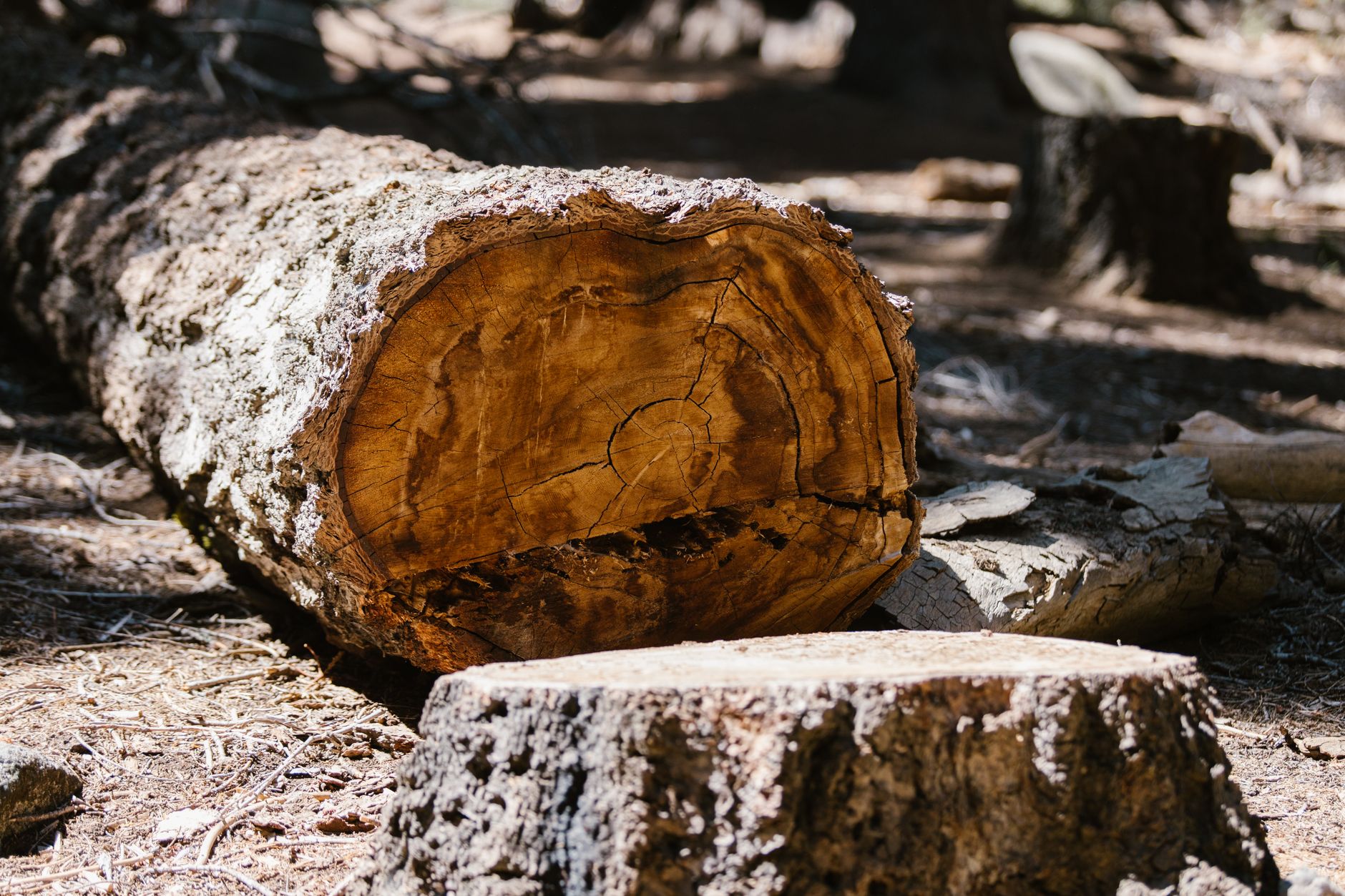
Converse Basin, in what is now Giant Sequoia National Monument, was once the largest giant sequoia grove in the world at about 4,666 acres1. Logging companies cut most of its ancient trees between 1892 and 1918, and by the U.S. Forest Service’s own account, perhaps sixty large specimens survive out of the thousands that once stood there1. The operation ran on flumes built starting in 1889 that floated logs out of the basin, and it employed Italian and Chinese laborers recruited in San Francisco2. Sequoia wood turned out to be brittle and shattered on impact, so the venture never made the profit its owners expected, even after stripping the grove3. Only the Boole Tree, spared by the logging foreman it is named for, survived from that era, and the reassembled General Noble Tree, cut into sections and shipped to Chicago’s 1893 World’s Columbian Exposition, left behind the stump still known today as the Chicago Stump14. Both are reachable today by short trails off a dirt Forest Service road1.
- Grove size: about 4,666 acres, once the largest sequoia grove on Earth1
- Logging dates: most large sequoias cut between 1892 and 19181
- Survivors: perhaps 60 large sequoias remain out of the thousands originally standing1
- Flumes: built starting in 1889 to move logs out of the basin2
- Chicago Stump: what remains of the General Noble Tree, exhibited at the 1893 World’s Columbian Exposition14
- Boole Tree: the largest sequoia on National Forest land, spared and later named for logging foreman Franklin A. Boole1
- 1955 McGee Fire: burned through most of the rest of the grove1
- Today: managed within Giant Sequoia National Monument, reached via dirt Forest Road 13S55 off Highway 1801
Converse Basin is the clearest illustration anywhere of what the 1890s logging boom did to giant sequoia groves left outside the new national parks. This page covers the companies that cut it, the timeline, what survives, and how to see it today. For the wider story of sequoia logging and why the wood itself was a poor commercial choice, see giant sequoia wood and logging; for the national park history around it, see history of Sequoia National Park.
The largest grove that ever existed
Converse Basin, concentrated in the drainage of Converse Creek in what is now the northern section of Giant Sequoia National Monument, covers about 4,666 acres and was, before logging, the largest giant sequoia grove anywhere1. It sat outside the boundary of the national park created in 1890, in land that remained privately held and open to commercial logging. That single fact of geography decided the grove’s fate: groves that fell inside Sequoia and General Grant national parks were protected from the moment those parks existed, while Converse Basin was not.
Who logged it, and how
The Kings River Lumber Company, run by Moore and Smith, began cutting Converse Basin in earnest after flumes were introduced starting in 1889, using the water-powered chutes to move felled logs down out of the basin to mills below2. At Big Stump, one of the operation’s mill sites, Joseph H. Thomas had already arrived in 1862, and Smith Comstock ran a mill there from 1883, hiring Italian and Chinese laborers recruited in San Francisco to do the work2. Most of the basin’s large sequoias came down between 1892 and 1918, a 26-year span in which the grove went from the largest stand of giant sequoias on Earth to a landscape of stumps1.
The economics never worked out the way investors hoped. Giant sequoia wood is brittle, and the huge trunks often shattered on impact when felled, wasting much of the timber the loggers had gone to such trouble to cut3. A U.S. Forest Service history of the region states plainly that the Converse Basin operation was never actually profitable, despite the scale of the cutting3.
The Chicago Stump and the 1893 World's Fair
One tree, the General Noble Tree, was cut for a different purpose than lumber. Loggers felled it, cut it into numbered sections, shipped the pieces east by rail, and reassembled it as a standing exhibit at the 1893 World’s Columbian Exposition in Chicago14. The reconstruction was convincing enough — or unbelievable enough — that skeptical fairgoers nicknamed it the “California Hoax,” refusing to accept that the exhibit had ever been one living tree4. What was left behind in Converse Basin is the roughly 20-foot-tall Chicago Stump, reached today by an easy, universally accessible half-mile loop trail1.
Nearby, Stump Meadow is a flat clearing ringed by the stumps of that era’s logging, with the oldest ring-counted stump on record exceeding 3,200 years, a specimen still used in dendrochronology research1. Thousands of roughly 100-year-old second-growth sequoias, which sprouted after the logging, now surround the old stumps1.
The Boole Tree: the one that was spared
Not every large tree in the basin came down. The Boole Tree, at 269 feet tall, is the largest sequoia standing on National Forest System land anywhere and the last big sequoia in Converse Basin that has stood since the 1890s1. It takes its name from Franklin A. Boole, the Converse Mill logging supervisor credited with sparing it, a name given to the tree around 1895 by a Fresno doctor1. Before 1931, the Boole Tree was considered the largest tree in the world; it now ranks among the largest known giant sequoias, though Forest Service pages differ on exactly where — one lists it sixth by volume, another eighth1. A 2.5-mile moderate loop trail with restrooms at the trailhead, but no drinking water, leads to the tree1. The Boole Tree page covers the trail and the tree’s statistics in full.
By 1908, according to Forest Service accounts, the basin had been thoroughly logged, and in 1955 the McGee Fire burned through most of what remained of the grove, leaving second growth and the handful of survivors that stand today1.
What happened to the land afterward
Converse Basin passed from private hands to the U.S. Forest Service in 1935, decades after the worst of the cutting3. It remained part of Sequoia National Forest until April 15, 2000, when President Bill Clinton proclaimed the Giant Sequoia National Monument, a designation that extended formal protection to Converse Basin and every other remaining grove in the forest that had not already been protected3. The monument today includes 33 groves managed by Sequoia National Forest, split between a northern portion in the Hume Lake Ranger District, which includes Converse Basin, and a southern portion in the Western Divide Ranger District5.
Visiting Converse Basin today
Converse Basin is reached by Forest Road 13S55, a dirt road off Highway 180, best driven in summer when it is dry; winter access is by ski or snowmobile only1. Because the drive typically passes through Kings Canyon National Park on Highway 180, the standard interagency entrance fee applies even though the grove itself sits on national forest land1. From the road, short trails lead to the Boole Tree, the Chicago Stump, and Stump Meadow. Nearby, Indian Basin Grove and Princess Campground offer three developed loops and, in summer, weekend campfire talks from Memorial Day through Labor Day1.
Frequently Asked Questions
Why was Converse Basin logged so heavily?
It sat on private land outside the boundaries of the national parks created in 1890, so nothing protected it from commercial logging the way General Sherman’s grove in Giant Forest was protected. Cutting ran mainly from 1892 to 19181.
What survives in Converse Basin today?
Perhaps 60 large sequoias out of the thousands that once stood, according to the U.S. Forest Service, along with the Boole Tree, the Chicago Stump, and thousands of second-growth sequoias that sprouted after logging1.
What is the Chicago Stump?
Why was the Boole Tree spared?
It was left standing by Franklin A. Boole, the logging supervisor at Converse Mill, and later named for him. It is now the largest sequoia on any National Forest land1.
Did the Converse Basin logging operation make money?
No. Giant sequoia wood is brittle and shattered when the huge trunks hit the ground, wasting much of the timber. A U.S. Forest Service history describes the operation as never having turned a profit3.
Is Converse Basin inside a national park?
Related Articles
Sources
- Converse Basin Grove — U.S. Forest Service. Accessed 2026-09-09.
- Sequoia–Kings Canyon National Parks: A History of the Parks — A. Berle Clemensen, National Park Service, 1975. Accessed 2026-09-09.
- Discover History — U.S. Forest Service, Sequoia National Forest. Accessed 2026-09-09.
- Giant Sequoia National Monument — North — U.S. Forest Service. Accessed 2026-09-09.
- Explore the Forest — U.S. Forest Service, Sequoia National Forest. Accessed 2026-09-09.