
The Boole Tree stands 269 feet tall in Converse Basin Grove, inside Giant Sequoia National Monument, and is the largest giant sequoia on any National Forest System land12. The Forest Service’s own dedicated page for the tree ranks it 6th largest in the world by volume, though a separate Forest Service page about Converse Basin ranks it 8th, a discrepancy between two pages from the same agency23. Around 1895, Fresno physician A. H. Sweeny named the tree after Franklin A. Boole, the logging supervisor whose crews cut down the rest of Converse Basin between 1892 and 1918 but spared this one tree because of its exceptional size2. The Boole Tree also holds the largest known trunk diameter (898 cm) and the largest footprint (87.14 square meters) of any giant sequoia4. A 2.5-mile moderate loop trail reaches the tree from a trailhead at the end of Forest Route 13S55, a road recommended only for high-clearance, four-wheel-drive vehicles23.
- Height: 269 ft1
- Volume rank: 6th largest in the world, per the tree’s dedicated Forest Service page; 8th largest per a separate Forest Service page on Converse Basin23
- Rank among National Forest trees: largest known giant sequoia on Forest Service land12
- Largest known trunk diameter of any giant sequoia: 898 cm (about 29.5 ft)4
- Largest known footprint of any giant sequoia: 87.14 m²4
- Named: around 1895, by Fresno doctor A. H. Sweeny, after logging supervisor Franklin A. Boole2
- Why it survived: credited to its size — Boole is thought to have spared it during Converse Basin’s 1892–1918 logging2
- Trail: 2.5-mile moderate loop, restrooms at trailhead, no water3
- Road: Forest Route 13S55, 2.5 miles off Highway 180, high-clearance 4WD recommended23
Converse Basin, once one of the largest sequoia groves anywhere, was logged almost to nothing between the 1880s and 1918. The Boole Tree is what survived, and it is covered here as part of the broader picture of where to see giant sequoias outside the national parks. This page covers its size and rank, why it was spared, and how to reach it by trail and road.
How big is the Boole Tree, and where does it rank?
The Boole Tree’s own dedicated Forest Service page describes it as “the 6th largest giant sequoia tree in the world, and the largest known sequoia on Forest Service lands”2. A separate Forest Service page covering Converse Basin as a whole ranks the same tree 8th largest of all known sequoias3. Both pages come from the U.S. Forest Service; this page cites the tree’s own dedicated page as the primary figure, following the same approach used elsewhere on this site when official sources disagree on a tree’s exact ranking.
At 269 feet tall, the Boole Tree is shorter than General Sherman’s 274.9 feet and General Grant’s 268.1 feet, but height is not what drives its ranking15. Giant sequoias are ranked chiefly by trunk volume, and by that measure the Boole Tree carries two individual records: the largest known trunk diameter of any giant sequoia, at 898 centimeters (about 29.5 feet), and the largest known footprint, at 87.14 square meters4. Before 1931, the Boole Tree was considered the world’s largest tree, a title it lost only when later measurement methods and newly surveyed trees, including General Sherman, established the modern rankings2. For how it compares with the ten largest giant sequoias known today, see the 10 largest giant sequoias.
Why was it spared from logging?
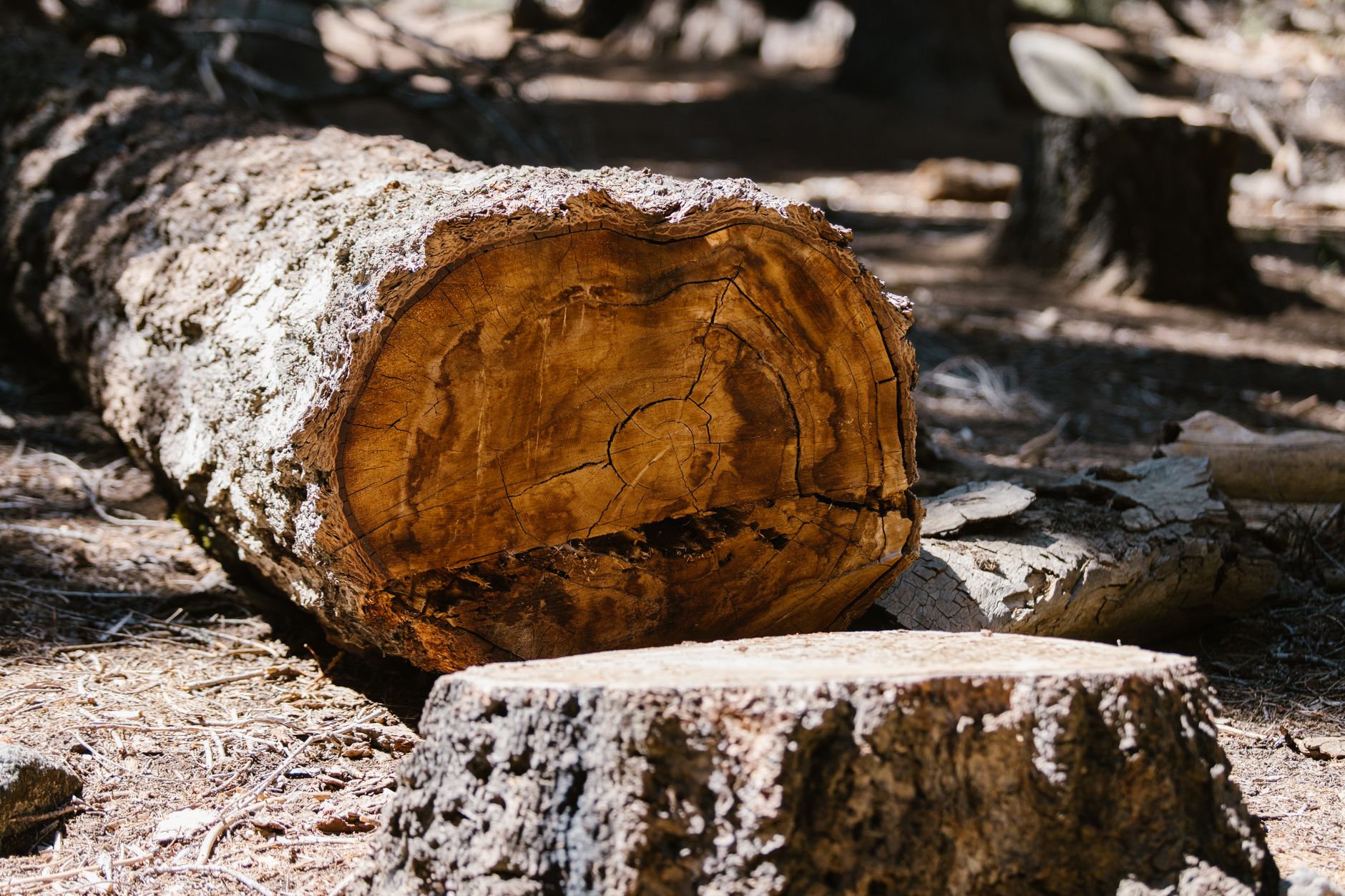
Converse Basin’s giant sequoias were cut down almost entirely during a logging operation that ran from 1892 to 19182. The Boole Tree is the exception, and the Forest Service credits one man for it: Franklin A. Boole, the supervisor of the logging operation, is thought to have spared the tree specifically because of its great size2. Around 1895, a Fresno physician named A. H. Sweeny gave the tree its name, honoring the man credited with leaving it standing2.
Converse Basin Grove itself covers about 4,666 acres and was, before logging, one of the largest sequoia groves in the world3. It was privately owned and heavily cut through the 1880s and 1890s; by 1908 the area had been thoroughly logged before it was sold to the Forest Service36. Giant sequoia wood is brittle and shatters when the tree falls, which meant the Converse Basin operation, like most sequoia logging of the era, never turned the profit its scale might suggest6.
Two other landmarks from the same era sit nearby. Chicago Stump, the remains of the General Noble Tree, was felled and its sections shipped to be reassembled and displayed at the 1893 World’s Columbian Exposition, where skeptics dubbed it the “California Hoax”3. The remaining 20-foot stump is reached today by an easy, universally accessible half-mile loop3. Stump Meadow, also nearby, is ringed by young sequoias that have grown up amid the logging-era stumps in the century-plus since; its oldest stump exceeds 3,200 years and has been used in dendrochronology research3.
Nearby, Indian Basin Grove and its Princess Campground hold the most large stumps of any developed site in the monument alongside young, regenerating sequoias, and the Forest Service runs weekend campfire talks there from Memorial Day through Labor Day7. It is one option for staying overnight near Converse Basin without driving back out to Grant Grove village.
The Boole Tree within Giant Sequoia National Monument
The Boole Tree sits inside Giant Sequoia National Monument, a designation President Clinton proclaimed on April 15, 2000, from beneath a sequoia at the Trail of 100 Giants, in the monument’s southern section8. The monument as a whole spans a northern portion, managed from the Hume Lake Ranger District and including Converse Basin, and a southern portion managed from the Western Divide Ranger District9. For the full picture of what the monument protects and how its groves compare, see the Giant Sequoia National Monument guide and the Trail of 100 Giants page, which covers the monument’s other extreme: an easy, fully paved grove at the opposite end of the protected area from Converse Basin’s rough dirt roads.
The trail and the road
The Boole Tree Trail is a 2.5-mile moderate loop, with restrooms at the trailhead but no drinking water3. The trailhead itself is reached by driving Forest Route 13S55 for 2.5 miles2. The Forest Service recommends a high-clearance, four-wheel-drive vehicle for this road and specifically advises against it for low-clearance vehicles2. Broader guidance for the Converse Basin area describes the access road as a dirt road off Highway 180, best driven in summer when dry, with winter access limited to skiing or snowmobiling3.
Because the drive to Converse Basin from Highway 180 runs through Kings Canyon National Park, the Forest Service notes that standard interagency fees apply, meaning the Kings Canyon entrance fee if you reach the area by driving in through the park3. As of September 2026, road conditions in this part of Giant Sequoia National Monument can change with weather; check current status before you go.
Frequently Asked Questions
How tall is the Boole Tree?
The Boole Tree is 269 feet tall, according to the National Park Service’s own listing of giant sequoia groves1.
Is the Boole Tree bigger than General Sherman?
Why wasn't the Boole Tree cut down with the rest of Converse Basin?
The Forest Service credits Franklin A. Boole, the logging supervisor at the time, with sparing the tree because of its exceptional size during the 1892–1918 logging of Converse Basin2.
How do you get to the Boole Tree?
What is Converse Basin?
Is there water or restrooms at the Boole Tree trailhead?
There are restrooms at the trailhead but no drinking water3.
Do you need a permit or pay a fee to see the Boole Tree?
No specific permit is required, but standard interagency fees apply, meaning the Kings Canyon entrance fee if you drive in through the park on Highway 1803.
Related Articles
Sources
- Exploring Giant Sequoia Groves — National Park Service, Sequoia & Kings Canyon. Accessed 2026-09-09.
- Boole Tree — Sequoia National Forest, U.S. Forest Service. Accessed 2026-09-09.
- Converse Basin Grove — Sequoia National Forest, U.S. Forest Service. Accessed 2026-09-09.
- Sequoiadendron giganteum — The Gymnosperm Database. Accessed 2026-09-09.
- The General Sherman Tree — National Park Service, Sequoia & Kings Canyon. Accessed 2026-09-09.
- Discover History — Sequoia National Forest, U.S. Forest Service. Accessed 2026-09-09.
- Giant Sequoia National Monument – North — Sequoia National Forest, U.S. Forest Service. Accessed 2026-09-09.
- Trail of 100 Giants (Long Meadow Grove) — Sequoia National Forest, U.S. Forest Service. Accessed 2026-09-09.
- Explore the Forest — Sequoia National Forest, U.S. Forest Service. Accessed 2026-09-09.