
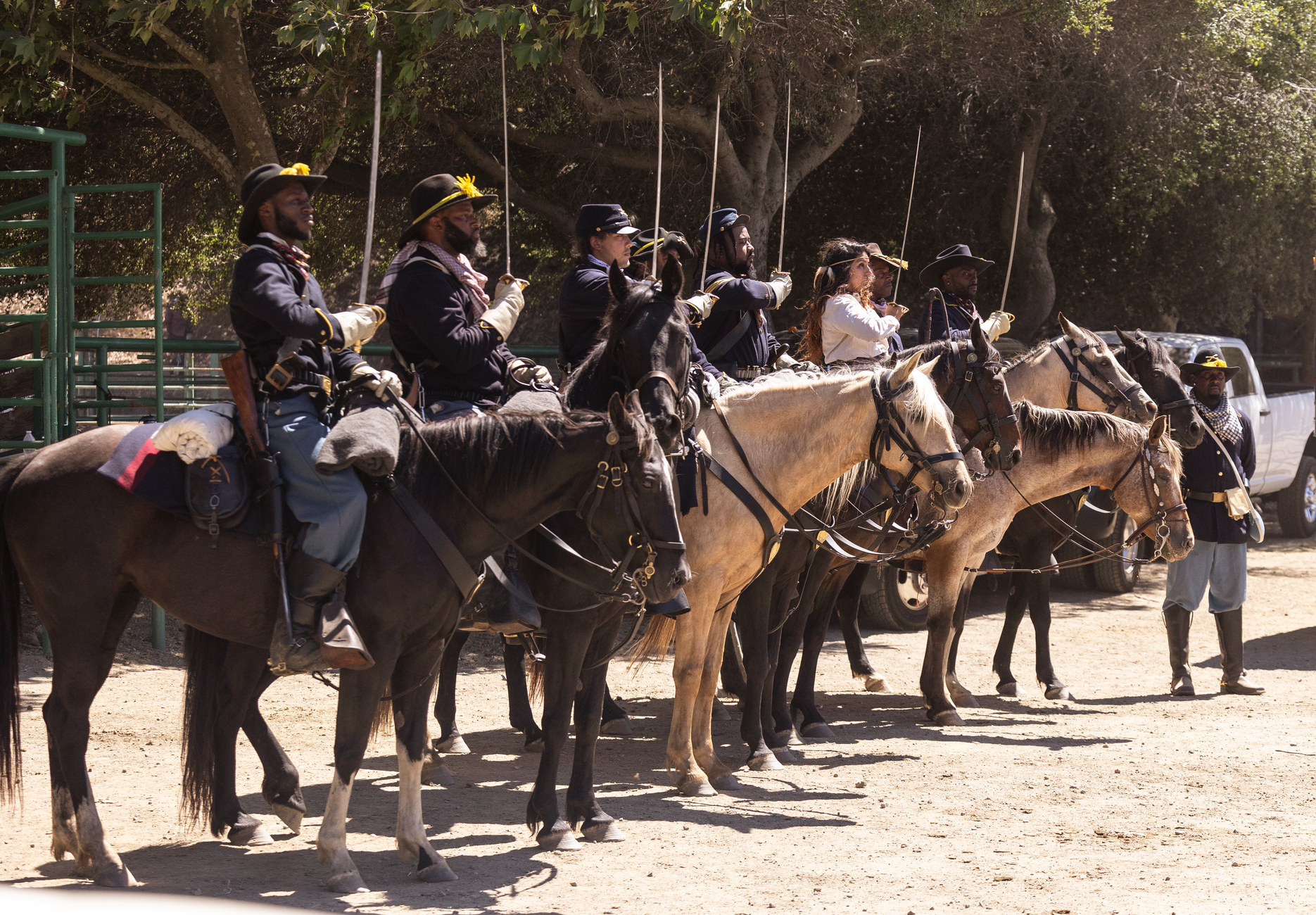
The U.S. Army administered Sequoia and General Grant National Parks from 1891 to 1913, and in the summer of 1903 that duty fell to Captain Charles Young and 96 enlisted men of Troops I and M of the all-Black 9th Cavalry, the Buffalo Soldiers12. Young, a West Point graduate, served as acting superintendent, the first Black superintendent of a national park2. In three earlier summers the Army had completed only five miles of road toward the sequoias; Young’s troops pushed a wagon road all the way to the base of Moro Rock by mid-August 1903, at a grade under 8 percent2. They also improved more than 18 miles of trail, including the link between Giant Forest and Mineral King, stopped poaching and sheep trespass, and negotiated the purchase of private inholdings12. Young was posthumously promoted to brigadier general on November 1, 20212.
- Army administration: 1891 to 19131
- The 1903 detachment: 96 enlisted men, Troops I and M, 9th Cavalry, left San Francisco May 20, 19032
- Commander: Captain Charles Young, acting superintendent, first Black national park superintendent2
- Road: 5 miles built in three prior summers; wagons reached the sequoia groves by mid-August 19032
- Trails: more than 18 miles improved, including Giant Forest to Mineral King2
- Named for him: the Charles Young Tree, near Auto Log, and the Booker T. Washington Tree, which Young recommended naming2
- Posthumous promotion: brigadier general, November 1, 20212
Sequoia National Park was created on September 25, 1890, the second national park in the United States and the first established to protect a living organism1. What it did not have was a road, a ranger force, or any means of keeping cattle and sheep out. The Army got the job, and in 1903 the soldiers assigned to it were Black cavalrymen under a Black officer. This page covers what they did, why one summer mattered so much, and what carries their names today. For the wider chronology, see the history of Sequoia National Park.
Why the Army ran the park
Congress created the park without creating anyone to run it, and there was no National Park Service yet. The War Department filled the gap, sending cavalry detachments to spend the summer season in the parks. The National Park Service now describes Buffalo Soldiers as having served as the first rangers for the country’s new national parks3.
At Sequoia and General Grant, Army administration ran from 1891 to 19131. Walter Fry became the first civilian superintendent in 1914 and went on to found the park’s Nature Guide Service in 19224.
Who the Buffalo Soldiers were
“Buffalo Soldiers” refers to the Black regiments of the post-Civil War U.S. Army. The National Park Service counts four Buffalo Soldier regiments, among them the 9th and 10th Cavalry and the 25th Infantry, and credits them with helping to build, protect, and operate the early parks3.
The detachment that came to Sequoia in 1903 was drawn from Troops I and M of the 9th Cavalry. Ninety-six enlisted men left San Francisco on May 20, 19032.
Captain Charles Young
Charles Young was a West Point graduate and a career cavalry officer. In the summer of 1903 he commanded the Sequoia detachment and served as acting superintendent of Sequoia and General Grant National Parks, making him the first Black superintendent of a national park2.
His tenure lasted a single season. He filed his superintendent’s report on October 15, 19032. What is remarkable is the volume of work compressed into those months.
What they built
The road. Getting visitors to the giant sequoias meant getting wagons up several thousand feet of Sierra front. Three previous summers of Army labor had produced five miles of road2. Young’s detachment finished the job: by mid-August 1903 wagons could reach the sequoia groves, and the road ran on to the base of Moro Rock, engineered at a grade of less than 8 percent2. Young projected that the park’s visitation would rise from about a hundred people to a thousand2.
That alignment is still legible on the ground. The Colony Mill trail and the Crystal Cave Road follow the route of the old road2. Its lower grade was the work of the Kaweah Colony, the socialist cooperative that filed timber claims covering Giant Forest in 1885 and built a road up the North Fork of the Kaweah from 1886, stopping in 1890 four miles short of the big trees5. That story is on the page about the Kaweah Colony.
Grade is the detail that shows what kind of work this was. Keeping a wagon road under 8 percent up the Sierra front means surveying, cutting bench into slope, and moving rock, by hand and with animals, in a single field season at altitude. The previous rate of progress, roughly a mile and two-thirds per summer, suggests the earlier detachments were not attempting anything of the sort.
The trails. The detachment improved more than 18 miles of trail, including the connection between Giant Forest and Mineral King2. Mineral King sits in a separate drainage at the end of a long road, and a usable trail between it and Giant Forest was the difference between two isolated pockets and one park.
The boundary. Poaching and illegal sheep grazing were the park’s chronic problems, and the 1903 troops stopped both1. Young also persuaded most of the private landowners around the park, particularly in Giant Forest, to sign contracts to sell, which mattered for the decades of inholding buyouts that followed12.
What carries their names
Two named sequoias in the park commemorate the 1903 season. The Charles Young Tree stands near Auto Log, and Young himself recommended naming the Booker T. Washington Tree2. Both are in the Giant Forest area, off the Moro Rock and Crescent Meadow Road; see the Giant Forest guide for where the named trees sit relative to each other.
Recognition of Young himself took longer. On November 1, 2021, he was posthumously promoted to brigadier general2, 118 years after the summer he ran the park.
It is worth being clear about what the 1903 season was and was not. It was one command, one field season, and one officer’s report. It was also the season in which the road finally reached the trees the park had been created to protect, which changed the park from a paper reserve into a place the public could get to. Young’s own estimate, that visitation would go from about a hundred people to a thousand, reads modestly now2. Modern visitor numbers are orders of magnitude higher, and the corridor from the Ash Mountain side up to Giant Forest and Moro Rock is still the route most of them take.
Seeing the 1903 work today
Nothing here is a formal historic-site visit, but three things connect.
- Moro Rock. The road Young’s troops pushed to the base of the dome is the reason there is vehicle access at all. The granite dome and its stairway are covered on the Moro Rock page.
- Crescent Meadow Road. The named-tree corridor, including Auto Log and the Charles Young Tree, runs along it2.
- Colony Mill and Crystal Cave Road. Both follow the earlier road alignment that the 1903 detachment worked from2. Both are subject to seasonal and post-fire closures, so check the park’s road conditions page before counting on either as of September 2026.
Frequently Asked Questions
Who were the Buffalo Soldiers in Sequoia National Park?
Ninety-six enlisted men of Troops I and M of the 9th Cavalry, an all-Black regiment, who left San Francisco on May 20, 1903 to administer and patrol Sequoia and General Grant National Parks for the summer2.
Who was Captain Charles Young?
A West Point graduate who commanded the 1903 detachment and served as acting superintendent of the parks, the first Black superintendent of a national park. He was posthumously promoted to brigadier general on November 1, 20212.
What did the Buffalo Soldiers actually do at Sequoia?
Why did the Army run Sequoia National Park?
Is there a tree named after Charles Young?
Yes. The Charles Young Tree stands near Auto Log in the Giant Forest area. Young also recommended the naming of the nearby Booker T. Washington Tree2.
How long were the Buffalo Soldiers at Sequoia?
Can you still see the road they built?
In part. The Colony Mill trail and the Crystal Cave Road follow the alignment of the old road that the detachment worked on and extended2.
Related Articles
Sources
- History & Culture — National Park Service, Sequoia & Kings Canyon. Accessed 2026-09-09.
- Captain Charles Young — National Park Service, Sequoia & Kings Canyon. Accessed 2026-09-09.
- Buffalo Soldiers — National Park Service. Accessed 2026-09-09.
- Walter Fry — National Park Service, Sequoia & Kings Canyon. Accessed 2026-09-09.
- Sequoia–Kings Canyon National Parks: A History of the Parks — A. Berle Clemensen, National Park Service, 1975. Accessed 2026-09-09.