
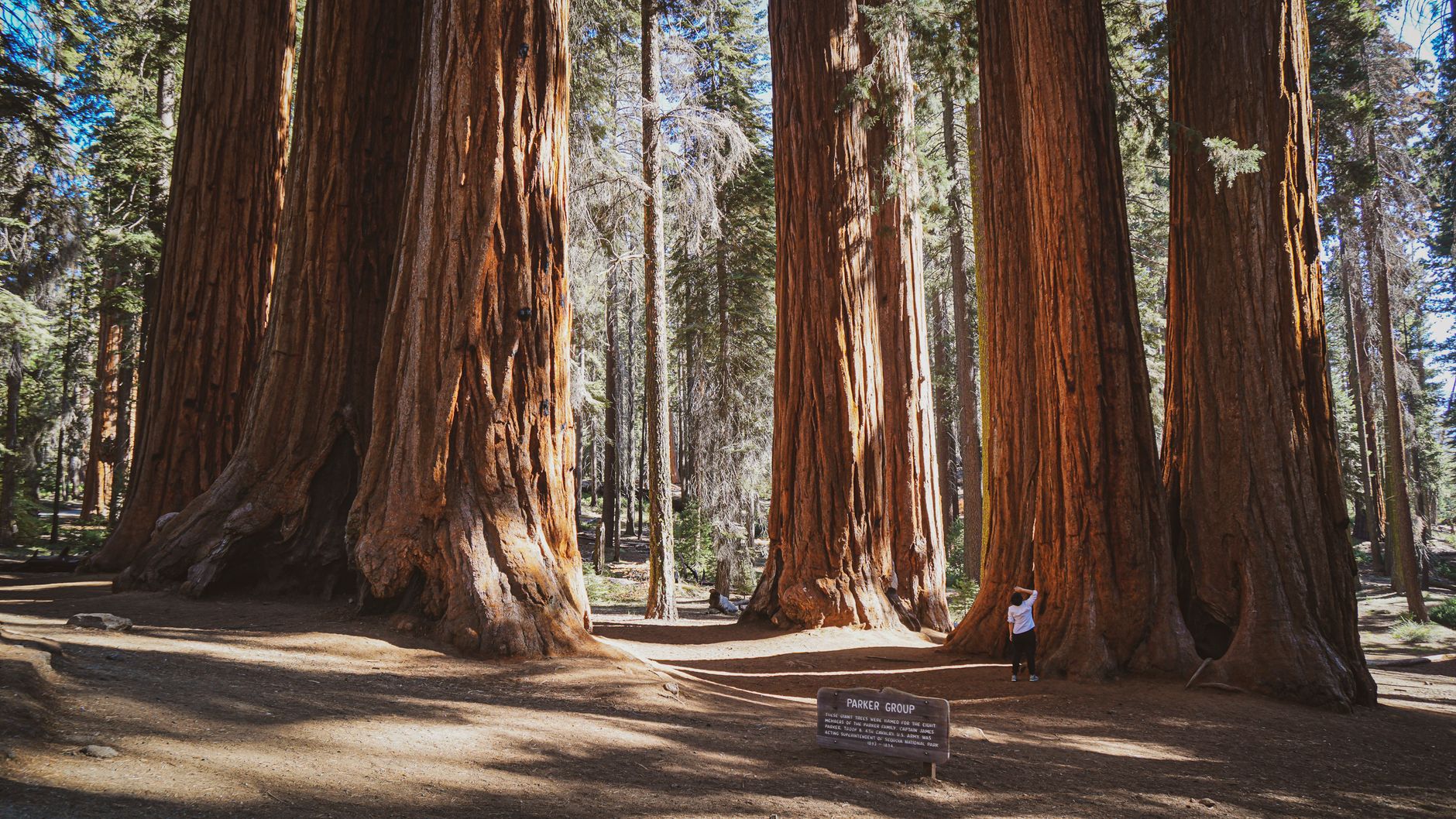
John Muir first visited Yosemite in 1868 and returned in 1869 to work as a ranch hand and shepherd, beginning the Sierra Nevada years that made his name1. From 1876 he wrote extensively about giant sequoias, which he called the “big trees,” in newspapers, magazines, and books including Our National Parks (1901) and The Yosemite (1912)2. His assessment of the danger was that “only fire and the ax” threatened the species, which turned out to be half right and half exactly backward23. Around 1885 he planted a sequoia seedling carried from the Sierra on his father-in-law’s property in Martinez, California, and that tree still stands2.
- In the Sierra: first visit 1868, settled 18691
- Writing on sequoias: extensively from 18762
- Books that carry the argument: Our National Parks (1901), The Yosemite (1912)2
- His warning: “only fire and the ax”2
- The Martinez tree: planted around 1885, about 80 ft tall by 20042
- Sierra Club: founded 1892; Muir was president until his death in 19141
- The 1889 campaign: Muir took Century editor Robert Underwood Johnson to Tuolumne Meadows, and the resulting articles fed the 1890 legislation creating Yosemite National Park1
Disclosure: some links on this page are affiliate links, marked by the products, tours and hotels they name. As an Amazon Associate, sequoia.info earns from qualifying purchases. A purchase through these links may earn the site a commission at no cost to you, and it never affects what is recommended. How this works.
Muir’s connection to the giant sequoias is more specific than the general association of his name with wild California. He wrote about the trees for nearly forty years, he named a threat to them that shaped a century of forest policy, and he planted one himself at sea level, 150 miles from where it belonged. This page separates what is documented from what has accreted around the name. For the wider chronology of protection in these mountains, see the history of Sequoia National Park.
Into the Sierra
Muir first came to Yosemite in 1868 and returned the following year to work as a ranch hand and shepherd1. The sheep are relevant. Muir’s later hostility to grazing in the high country came from having herded animals through it himself, and sheep grazing is one of the causes the National Park Service names for the collapse in Sierra fire frequency after about 18603.
He spent the next decades traveling and writing. He served as president of the Sierra Club from its creation in 1892 until his death in 19141.
Writing the big trees
By 1876 Muir had begun writing extensively about Sequoiadendron giganteum, which he called the big trees, in newspaper pieces, magazine articles, and eventually books2. Two of the books the National Park Service names in connection with that work are Our National Parks, published in 1901, and The Yosemite, published in 19122.
The line most worth remembering from that body of work is a piece of forecasting. Muir judged that, as far as he could see, “only fire and the ax” threatened the existence of the big trees2.
Half right
The ax half arrived on schedule. Converse Basin, once the world’s largest giant sequoia grove at roughly 4,666 acres, had most of its giants logged between 1892 and 1918, and perhaps 60 large specimens survive out of thousands4. By 1908 the basin had been thoroughly cut over5. That story is on the page about Converse Basin, and the exhibition-tree episodes that preceded it are covered at the Mother of the Forest and who discovered the giant sequoias.
The fire half was backward, and it took most of a century to work that out. Tree-ring fire scars show that widespread fires recurred in Giant Forest at intervals of about 6 to 35 years for two thousand years, and that the frequency dropped sharply after about 18603. Giant sequoias need fire: heat opens their cones, fire clears duff down to bare mineral soil, and fires intense enough to kill patches of canopy create the sunlit gaps in which young sequoias establish3. The Forest Service’s silvics manual identifies fire exclusion, not fire, as the single most significant human impact on the species6.
Muir was writing before any of that was understood, and his instinct that the trees needed protecting was sound. The specific diagnosis was not. The consequences of acting on it are laid out at why giant sequoias need fire.
The 1889 campaign
The clearest documented case of Muir’s advocacy producing legislation involves Yosemite rather than Sequoia. In 1889 Muir took Robert Underwood Johnson, editor of Century magazine, up to Tuolumne Meadows to see the damage sheep had done. Johnson published Muir’s exposés, and the resulting pressure led to the federal legislation that established Yosemite National Park in 18901.
Sequoia National Park was signed into law the same year, on September 25, 1890, as the second national park in the United States and the first created to protect a living organism7. Its campaign was a different one. George Stewart, editor of the Visalia Delta, is the figure the National Park Service’s own park history credits as the father of Sequoia National Park, for an editorial campaign begun in 1878; the enabling bill came from Representative William Vandever, and a second bill a week later tripled the park’s size and created General Grant National Park8.
Muir’s sequoia writing belongs to the atmosphere in which both parks passed. Attributing Sequoia National Park to him specifically is not something the record supports.
The tree he planted
Around 1885 Muir planted a giant sequoia sapling on his father-in-law Dr. John Strentzel’s property in Martinez, California2. Muir had carried it from the Sierra wrapped in a damp handkerchief, and set it 150 miles from and about 2,000 feet below its native range2. It went into a triangular patch of ground at a prominent intersection, protected by a wooden enclosure2.
It grew. By 1969 it reached the roofline of Muir’s two-story house, and by 2004 it stood about 80 feet tall in fair condition2. Then it began to fail. By 2010 the tree had developed cankers caused by the fungus Botryosphaeria dothidea, with soil compaction from the surrounding roads, a trunk flare that had been progressively buried, and soil moisture problems as contributing factors2. The National Park Service responded by restricting pedestrian access, aerating the soil, and mulching2.
The park’s horticulturist began attempting to clone the tree in 2010, and in 2013 cuttings went to the Archangel Ancient Tree Archive, where several were successfully rooted2. Muir’s tree, in other words, is being copied rather than saved.
There is a lesson in it for anyone tempted by the same experiment, and it is covered at can you plant a giant sequoia in your backyard: the species will grow well outside its range for a long time, and then the site conditions catch up with it.
What to read
The site earns a commission on purchases made through product links, which does not affect what is recommended.
If you want Muir on the big trees in his own words, Our National Parks (1901) is the volume the National Park Service points to for his park advocacy, and The Yosemite (1912) covers the Yosemite groves2. Both are long out of copyright and available in many editions, including free digital ones, so there is no reason to overpay for a reprint. For modern accounts of sequoia science and history rather than Muir’s own prose, see best books about giant sequoias.
Where to see the trees Muir wrote about
Mariposa Grove in Yosemite, with more than 500 mature giant sequoias, was set aside by the 1864 Yosemite Grant for public use, resort, and recreation, the first federal protection of scenic land in the country9. It is the grove most directly tied to the era Muir was writing in and about, and there is a full visitor guide at Mariposa Grove.
Frequently Asked Questions
What did John Muir say about giant sequoias?
Muir wrote about them extensively from 1876, calling them the big trees, and judged that “only fire and the ax” threatened their existence2.
Was John Muir right about fire?
Did John Muir create Sequoia National Park?
Not according to the park’s own history. Sequoia National Park was signed into law on September 25, 1890 after an editorial campaign begun in 1878 by George Stewart of the Visalia Delta, with the enabling bill introduced by Representative William Vandever78. Muir’s documented legislative success that year was Yosemite1.
Which John Muir books are about the big trees?
The National Park Service names Our National Parks (1901) and The Yosemite (1912) among the books in which he made the case for the trees2.
Is John Muir's giant sequoia still alive?
Yes. The tree he planted around 1885 in Martinez, California, was about 80 feet tall by 2004 and still stands, though it has been fighting fungal cankers since about 2010 and is being cloned as insurance2.
Where can I see the sequoia grove most associated with Muir?
Mariposa Grove in Yosemite, protected by the 1864 Yosemite Grant and home to more than 500 mature giant sequoias9.
When did John Muir die?
In 1914. He had been president of the Sierra Club since its founding in 18921.
Related Articles
Sources
- John Muir — National Park Service, Yosemite. Accessed 2026-09-09.
- Preserving a “Big Tree” — National Park Service, John Muir National Historic Site. Accessed 2026-09-09.
- Giant Sequoias and Fire — National Park Service, Sequoia & Kings Canyon. Accessed 2026-09-09.
- Converse Basin Grove — U.S. Forest Service, Sequoia National Forest. Accessed 2026-09-09.
- Giant Sequoia National Monument – North — U.S. Forest Service. Accessed 2026-09-09.
- Sequoiadendron giganteum, Silvics of North America — U.S. Forest Service. Accessed 2026-09-09.
- History & Culture — National Park Service, Sequoia & Kings Canyon. Accessed 2026-09-09.
- Sequoia–Kings Canyon National Parks: A History of the Parks — A. Berle Clemensen, National Park Service, 1975. Accessed 2026-09-09.
- Mariposa Grove of Giant Sequoias — National Park Service, Yosemite. Accessed 2026-09-09.