
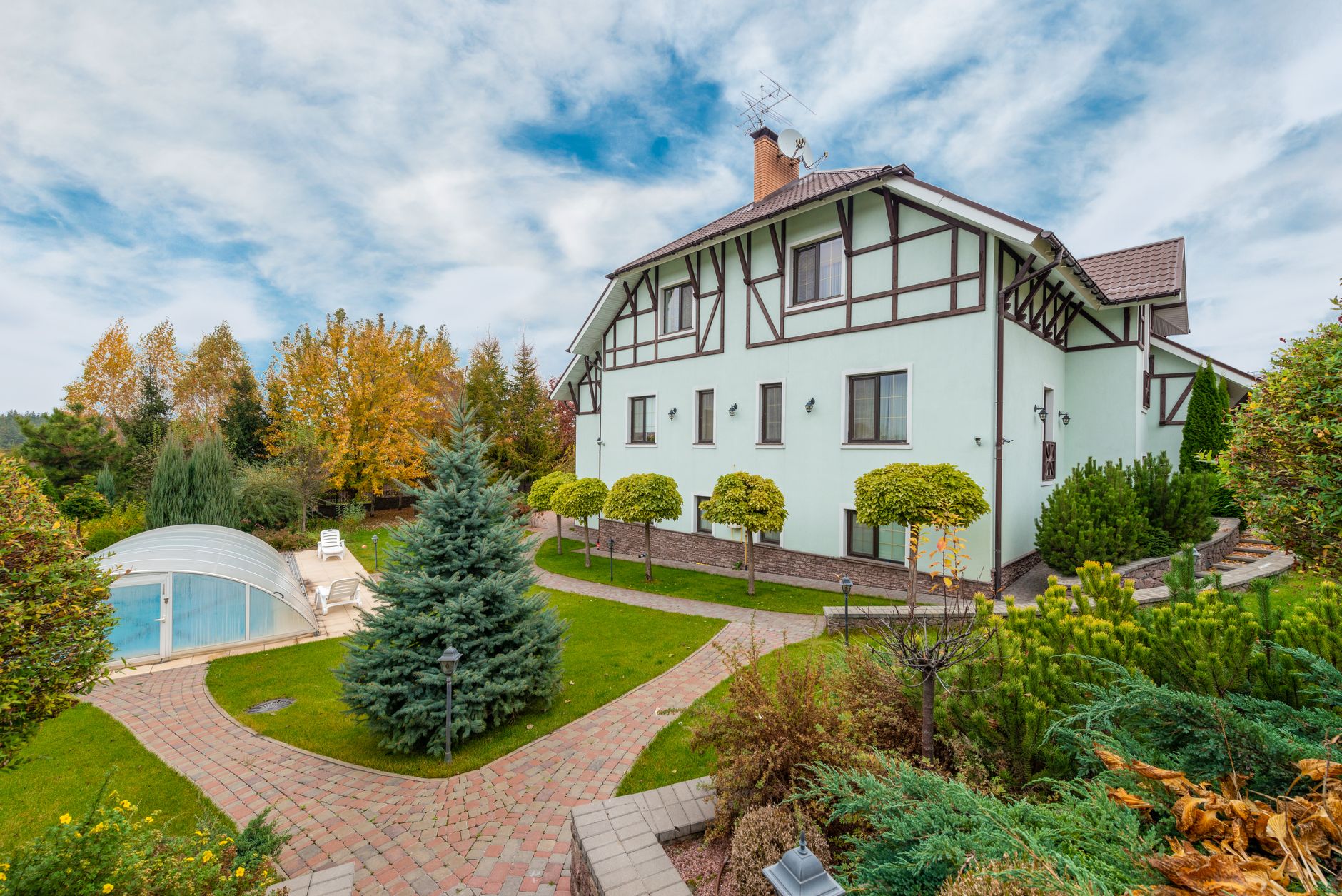
You can plant a giant sequoia in a backyard, and people do, but the yard has to be large and the climate has to be right. In gardens the tree reaches about 60 feet in the eastern United States and 100 feet or more in the Pacific Northwest and California within a human lifetime, with a spread of 25 to 60 feet123. Its roots stay within about 3 to 5 feet of the surface but reach 100 to 150 feet from the trunk on old trees, typically two to four times the canopy width, and an Oregon extension office confirmed foundation cracks and misaligned doors in a house with a giant sequoia about 20 feet away456. Nursery guidance puts specimen trees 30 to 60 feet apart and well clear of foundations, drains, septic systems, paving, and power lines738. The species needs full sun, deep well-drained acid soil, no clay, and more water than any other Sierra conifer, and it fails in hot, humid climates regardless of care1910.
- Mature garden size: about 60 ft typical on the East Coast; 80–116 ft documented in Seattle, Boise, and Michigan; 50 ft by 40 ft in a British Columbia nursery rating211121314
- Root spread: 100–150 ft from the trunk, mostly within 4–5 ft of the surface; 2–4 times canopy width45
- Foundation case: damage reported at about 20 ft in Eugene, Oregon6
- Spacing: 30–60 ft for specimen trees; as close as 6 ft for a screen7
- Soil and water: deep, well-drained, acid, not clay; at least 15–20 percent soil moisture year-round19
- Zones: 6–8 by most sources, Zone 7 by the two most scholarly databases11516
- Smaller-yard alternative: ‘Pendulum’ at about 12 ft in 10 years, or ‘Glaucum’ at 16 ft by 4.5 ft1718
Whether a giant sequoia belongs in a backyard depends on the size of the backyard, the distance to the nearest building, and the summer weather. Sequoiadendron giganteum is a fast, easy tree in its first decade and a 60- to 100-foot evergreen with a half-acre root system after that. This page covers the space it needs, what happened when one was planted too close to a house, how big it gets by region, soil and water, the ways owners come to regret it, and when a cultivar is the better choice. The full process is in the guide to how to grow a giant sequoia.
How much space a giant sequoia needs
NC State Extension lists the species at 60 to 275 feet tall and 25 to 60 feet wide1. Welker’s Grove Nursery, which grows the tree commercially in the Sierra foothills, recommends 30 to 60 feet between specimen trees, and as close as 6 feet only for a screen or windbreak where the trees will be managed as a group7. The Lady Bird Johnson Wildflower Center’s plant database is blunter: useful only on very large properties19.
A 60-foot evergreen with a 40-foot spread shades whatever is under it all year, winter included. The American Conifer Society rates the species in its largest growth class, meaning more than 12 inches a year and more than 12 feet tall at 10 years20. A nursery in Michigan reported a customer’s tree at 3 feet tall one year after planting; Trees for a Change expects about 30 feet at year 10 and 40 to 60 feet at year 20213.
Distance from foundations: the Oregon case
The clearest documented case is an Ask Extension inquiry from Eugene, Oregon. A homeowner with a giant sequoia about 20 feet from a 1960s house reported cracks in the foundation and doors that no longer aligned. The responding extension agent confirmed that a giant sequoia close to a house can affect the foundation, noted that some arborists install root barriers, and referred the homeowner to a consulting arborist6.
Why 20 feet is not enough comes down to the root system. California State Parks says the roots of large trees reach out 100 to 150 feet, mostly within 4 to 5 feet of the surface4. The Forest Service’s silvics manual gives 100 feet or more and a root footprint of 0.7 acre or more, with few roots deeper than 3 feet and most feeder roots in the top 2 feet22. UC forestry researchers put 95 percent of roots within 3 feet of the surface and lateral spread at up to half an acre9. A separate Ask Extension answer on redwoods and sequoias describes the root systems as widespread and shallow, typically two to four times the canopy width, and advises planning building footprints against the mature canopy and root zone with an arborist’s help5.
For a tree that will spread 40 feet, two to four times the canopy is 80 to 160 feet of root reach. Nobody plants that far from everything, but nursery guidance is consistent: keep the tree away from foundations, retaining walls, drains, septic systems, paving, and power lines38. Fifty feet from the house is a reasonable minimum, and more is better. Anything near the Eugene tree’s 20 feet is a documented mistake.
How big it gets in a garden, by region
The 275-foot figure is a Sierra Nevada number. Outside the native range the tree is smaller, and the difference is regional.
| Region | Documented garden size | Source |
|---|---|---|
| Northeast (Boston, zone 6b) | “60 feet at maturity is typical on the East Coast,” per the Arnold Arboretum’s conifer tour | 2 |
| Mid-Atlantic (Media, PA) | Pennsylvania state champion at Tyler Arboretum, planted in the 1800s; a roughly 30-ft tree at 15 years in Swoyersville | 232425 |
| Upper Midwest (Manistee, MI) | 116 ft, planted 1948–49, the largest east of the Rockies; Lake Michigan moderates the climate | 1326 |
| Mountain West (Boise, ID) | About 98–100 ft and roughly 800,000 lb at 105 years, planted 1912 from a seedling sent by John Muir | 12 |
| Pacific Northwest (Seattle) | More than 70 years old and 80 ft tall at the Washington Park Arboretum | 11 |
| Pacific Northwest (Oregon) | Tallest planted tree in Oregon, 213 ft (64.95 m), near Eagle Point | 16 |
| California lowlands (Martinez) | John Muir’s tree, planted about 1885, about 80 ft by 2004 | 27 |
| British Columbia | Rated 50 ft by 40 ft in the landscape by a BC nursery; Victoria’s tallest is about 164 ft (50 m) | 1428 |
In the eastern half of the continent, plan for 60 feet. On the Pacific coast and in mild interior valleys, plan for 100 feet or more.
Roots, soil, and water
Trees and Shrubs Online names the two main enemies in cultivation as soil compaction and poor drainage15. NC State lists loam, silt, or sand with an acid pH and full sun, and calls the species intolerant of clay and of drastic climate changes1. A West Virginia extension agent, asked about an 11-year-old tree browning in clay, said the species has limited success there because it does not tolerate clay, wants cool summers with maximum temperatures around 75–84 °F, and needs well-drained sandy soil29. The Wildflower Center adds low tolerance of calcareous, or limy, soil19.
Water is the other demand. UC forestry describes giant sequoia as the most moisture-demanding of the Sierra mixed conifers, needing year-round soil moisture of at least 15 to 20 percent9. Welker’s Grove calls drought the major cause of death in young landscape trees and advises never letting the roots dry out completely, and watering until the ground freezes7. At the same time, the tree will not stand in water: a BC nursery database says it will not tolerate standing water, and constantly soggy soil invites Phytophthora root rot1430.
Feeder roots in the top 2 feet are damaged by compaction from foot traffic, parked cars, and construction2215.
The regret scenarios
These are the ways a backyard giant sequoia goes wrong, in the order they show up.
Year 1 to 3: it dies. Drought is the leading killer of young landscape trees, and the first two years need consistent watering during dry spells729. Deer browse young trees where they are common, and a small fence is the nursery-recommended fix8. Care for this stage is on the giant sequoia care page.
Year 5 to 10: it is in the wrong climate. Outside its native habitat the species is highly susceptible to, and sometimes rapidly killed by, several organisms, according to the Forest Service’s fire-effects review10. UC IPM lists giant sequoia as a common host of Botryosphaeria canker, which infects trees that are drought-stressed or grown away from their native habitat, especially at warmer sites, and states that the tree will develop the disease in consistently hot climates even with good care31. This is why the Southeast and Gulf states are poor bets; the regional detail is on the giant sequoia hardiness zones page.
Year 10 to 20: it is too close to something. By year 10 the tree is 12 to 30 feet tall and by year 20 it can be 40 to 60 feet, with roots to match320. The Eugene homeowner’s foundation cracks are what this stage looks like when the tree was planted at 20 feet6.
Year 20 onward: lightning and wind. In southern England, where the species has been planted since 1853, its tall domed crown is a frequent lightning target wherever it rises above the surrounding canopy15. Big trees on shallow roots topple in wind, in water-softened soil, and under heavy snow loads22.
When a cultivar is the better choice
For a yard with room for a 15- to 30-foot conifer but not a 60-foot one, the cultivars solve the space problem. The site earns a commission on purchases made through product links, which does not affect what is recommended.
| Cultivar | Habit | Size at 10 years | Hardiness | Source |
|---|---|---|---|---|
| ‘Pendulum’ | Irregular weeper with a wandering leader and strictly hanging branches | About 12 ft tall, spread unpredictable | Not stated by ACS | 17 |
| ‘Glaucum’ | Narrow pyramid, blue-green spring flush, reputedly hardier | 16 ft by 4.5 ft; 1.5–2 ft per year | USDA 6b | 1815 |
| ‘Hazel Smith’ | Full-size, bright blue, vigorous | 30 ft by 20 ft; up to 3 ft per year | Zone 5 per ACS; 5b–6 per Trees and Shrubs Online | 3215 |
| ‘Von Martin’ | Dwarf, dense, conical | 40 in by 24 in; 3–4 in per year | Not stated | 33 |
‘Pendulum’ is the one for a small yard, a narrow sculptural column a fraction of the species’ width17. ‘Glaucum’ suits a tight spot that needs an upright screen18. ‘Hazel Smith’ is not a space saver; it is a full-size tree chosen for cold hardiness32. The full list is on the page about giant sequoia cultivars for smaller yards.
If the climate is the problem rather than the space, the answer is a different species. Dawn redwood is deciduous, hardy to Zone 5, and far easier to grow; coast redwood suits mild, humid, foggy zones 8 to 10303435. The comparison is on the page about giant sequoia vs coast redwood for landscaping.
A checklist before you plant
- Well beyond the 20 feet that damaged the Eugene foundation, which on this site means 50 feet or more from the house, and clear of the neighbor’s house, septic field, driveway, and any power line638
- Full sun, six hours or more1
- Deep soil that drains in a day and is not clay or limy11915
- A water source you are willing to use every dry week for two years and in every later drought729
- Summers that are not consistently hot and humid2931
- USDA zone 6 to 8, or a hardier cultivar in zone 511532
- A plan for what the tree looks like at 60 feet
Frequently Asked Questions
How far from a house should you plant a giant sequoia?
Will giant sequoia roots damage foundations?
How big does a giant sequoia get in a backyard?
How fast does a backyard giant sequoia grow?
One to two feet a year in the first decade, about 30 feet by year 10 and 40 to 60 feet by year 20 under good conditions38. The full table is on the giant sequoia growth rate page.
Do giant sequoias need a lot of water?
Is there a small giant sequoia for a small yard?
Related Articles
Sources
- Sequoiadendron giganteum — NC State Extension Plant Toolbox. Accessed 2026-09-06.
- Conifer Tour (PDF) — Arnold Arboretum of Harvard University. Accessed 2026-09-06.
- How to Grow Giant Sequoia — Trees for a Change. Accessed 2026-09-06.
- Giant Sequoia Growth — California State Parks. Accessed 2026-09-06.
- Redwood and sequoia root systems near buildings — Ask Extension. Accessed 2026-09-06.
- Giant sequoia near house foundation, Eugene, Oregon — Ask Extension. Accessed 2026-09-06.
- Giant Sequoia Landscape Questions — Welker’s Grove Nursery. Accessed 2026-09-06.
- FAQs — National Sequoias. Accessed 2026-09-06.
- Giant Sequoia (Sequoiadendron giganteum) — UC Agriculture and Natural Resources, Forestry Research and Outreach. Accessed 2026-09-06.
- Sequoiadendron giganteum, Fire Effects Information System — USDA Forest Service. Accessed 2026-09-06.
- Core Collections, Washington Park Arboretum — University of Washington Botanic Gardens. Accessed 2026-09-06.
- Giant sequoia move on schedule in Idaho; tree doing well — The Spokesman-Review, June 24, 2017. Accessed 2026-09-06.
- Giant Sequoia in Manistee — Up North Michigan. Accessed 2026-09-06.
- Giant Sequoia — GardenWorks plant database. Accessed 2026-09-06.
- Sequoiadendron giganteum — Trees and Shrubs Online, International Dendrology Society. Accessed 2026-09-06.
- Sequoiadendron giganteum — The Gymnosperm Database. Accessed 2026-09-06.
- Sequoiadendron giganteum ‘Pendulum’ — American Conifer Society. Accessed 2026-09-06.
- Sequoiadendron giganteum ‘Glaucum’ — American Conifer Society. Accessed 2026-09-06.
- Sequoiadendron giganteum — Lady Bird Johnson Wildflower Center. Accessed 2026-09-06.
- Sequoiadendron giganteum — American Conifer Society. Accessed 2026-09-06.
- Michigan Gallery — Welker’s Grove Nursery. Accessed 2026-09-06.
- Sequoiadendron giganteum, Silvics of North America — USDA Forest Service. Accessed 2026-09-06.
- Tyler’s Historic Trees — Tyler Arboretum. Accessed 2026-09-06.
- Big Trees, Big Deal — Penn State Extension. Accessed 2026-09-06.
- Pennsylvania Gallery — Welker’s Grove Nursery. Accessed 2026-09-06.
- A giant sequoia tree in northern Michigan? Yes, and it’s not only surviving but thriving — ClickOnDetroit, November 3, 2021. Accessed 2026-09-06.
- John Muir’s Giant Sequoia — National Park Service, John Muir National Historic Site. Accessed 2026-09-06.
- Mapping the Giant Sequoias of Victoria, BC — Vancouver Island Big Trees. Accessed 2026-09-06.
- Giant sequoia browning, West Virginia — Ask Extension. Accessed 2026-09-06.
- How to Grow Redwoods — Gardener’s Path. Accessed 2026-09-06.
- Botryosphaeria Canker — UC Statewide Integrated Pest Management Program. Accessed 2026-09-06.
- Sequoiadendron giganteum ‘Hazel Smith’ — American Conifer Society. Accessed 2026-09-06.
- Sequoiadendron giganteum ‘Von Martin’ — American Conifer Society. Accessed 2026-09-06.
- Metasequoia glyptostroboides — The Gymnosperm Database. Accessed 2026-09-06.
- Sequoia sempervirens — The Gymnosperm Database. Accessed 2026-09-06.