
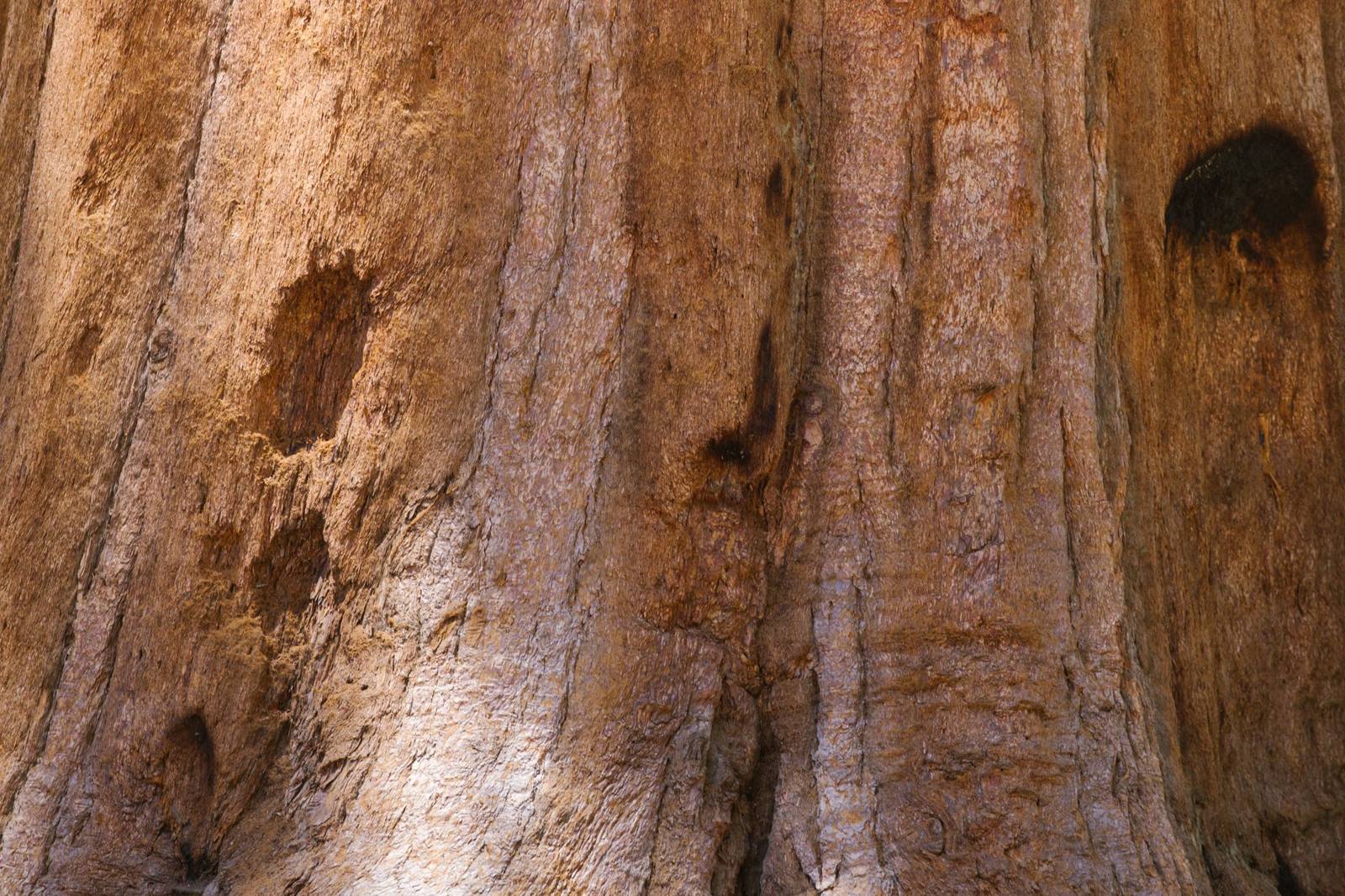
Giant sequoia (Sequoiadendron giganteum) and coast redwood (Sequoia sempervirens) are different species with different landscape requirements, and the right choice depends mostly on climate. The Gymnosperm Database rates giant sequoia hardy to Zone 7 and coast redwood to Zone 8, while other nursery references put giant sequoia at Zones 6–9 and coast redwood at 7–10123. Giant sequoia comes from a snowmelt-fed Sierra Nevada band at 4,600–7,100 feet with 35–55 inches of precipitation, mostly October through April, and tolerates drier air than coast redwood, which comes from a coastal fog belt within about 60 kilometers of the Pacific and wants humid, foggy conditions45. Coast redwood can grow taller (to roughly 370–380 feet against giant sequoia’s 310 feet) but giant sequoia is the larger tree by trunk diameter and volume5. Both species fail outside their preferred climate band: giant sequoia develops Botryosphaeria canker in consistently hot, humid regions, and coast redwood struggles without reliable moisture65.
- Cold tolerance: giant sequoia, down to about −17.7°C (Zone 7)1
- Heat and humidity tolerance: neither does well in the hot, humid Southeast; giant sequoia develops canker disease there6
- Water needs: coast redwood wants consistently humid air; giant sequoia wants deep, evenly moist, well-drained soil but tolerates drier air45
- Mature size: coast redwood taller (to about 370–380 ft); giant sequoia stouter (to about 35 ft diameter)5
- Soil: both fail in heavy clay or standing water; giant sequoia is “intolerant of clay soils and drastic climate changes”7
- Best zones-9-10 alternative: dawn redwood, hardy to Zone 4–5 and more adaptable than either evergreen58
Giant sequoia and coast redwood are both marketed simply as “redwoods,” and nurseries outside California often sell whichever one is easier for them to source rather than the one suited to the buyer’s climate. They are different species with different native ranges, different water needs, and different failure modes when planted somewhere wrong. This page lays out what growing research and university extension sources document about each species as a landscape tree, so the choice is based on your climate rather than on which one a nursery happened to have in stock. For general planting guidance that applies to giant sequoia specifically, see How to Grow a Giant Sequoia.
Native climate: why they need different things
Giant sequoia grows naturally only in a narrow band of the western Sierra Nevada, at 4,600 to 7,100 feet elevation, where about half of annual precipitation historically fell as snow and trees depend on snowmelt moving through granite-derived soils; UC ANR calls it the most moisture-demanding of the Sierra’s mixed conifers, needing year-round soil moisture of at least 15 to 20 percent even though it tolerates drier air than a true coastal species4. Coast redwood, by contrast, grows in a narrow strip within roughly 60 kilometers of the Pacific coast, where summer fog supplies moisture directly to the foliage; it wants humid, foggy air in a way giant sequoia does not5. Neither tree evolved for a hot, dry inland climate or a hot, humid one, which is the root of most landscape failures with both species.
Hardiness zones side by side
| Source | Giant sequoia | Coast redwood | Dawn redwood |
|---|---|---|---|
| Gymnosperm Database | Zone 71 | Zone 82 | Zone 58 |
| Gardener’s Path | Zones 6–93 | Zones 7–103 | Zones 4–83 |
| NC State Extension | Zones 6a–8b7 | — | — |
The two scholarly databases (Gymnosperm Database) put giant sequoia one full zone colder-hardy than coast redwood, and nursery-facing sources generally agree that giant sequoia handles a colder, more continental climate while coast redwood needs the milder, wetter zones typical of the Pacific coast and similar maritime climates123. Readers in a borderline zone should also check the more detailed regional breakdown at giant sequoia hardiness zones, which covers cultivars that extend the cold end of that range further.
Water and humidity
Coast redwood is the more water- and humidity-dependent of the two. Save the Redwoods League and the university sources agree that it wants consistently moist, humid air, which is why it thrives on the California coast and struggles inland even with irrigation5. Giant sequoia is more moisture-demanding at the root than coast redwood in absolute terms — UC ANR notes about 95 percent of its roots stay within 3 feet of the surface while lateral roots can spread across half an acre, drawing on deep soil moisture — but it tolerates drier air, which is why it survives in less foggy, more continental climates that would stress a coast redwood4. Both species fail in heavy clay or standing water; UC ANR and NC State Extension both describe giant sequoia’s preference for deep, well-drained soil, not the boggy or compacted ground either species can encounter in a poorly chosen yard47.
Size at maturity
Coast redwood is the taller species. A nursery comparison table gives coast redwood a maximum around 370 to 380 feet with a trunk to about 16 feet in diameter, against giant sequoia’s roughly 310 feet and up to 35 feet in diameter5. In practice, giant sequoia is the bulkier tree — it is the largest living thing on Earth by trunk volume — while coast redwood is the taller one. Neither is a small tree at maturity: NC State Extension lists giant sequoia’s landscape size as 60 to 275 feet tall with a 25- to 60-foot spread, and a coast redwood planted in a yard will eventually need comparable room7. Readers considering a full-size specimen of either should also read can you plant a giant sequoia in your backyard before committing to either species.
Pests and disease risk
Giant sequoia’s biggest landscape liability outside its native range is Botryosphaeria canker (Botryosphaeria dothidea), which UC IPM documents as a common problem on giant sequoia, coast redwood, incense cedar, madrone and alder alike, typically infecting trees that are drought-stressed or grown away from their native habitat, especially in warmer locations6. UC IPM’s broader giant sequoia problem list also includes scale, spider mites, gray mold (Botrytis blight), needle blight and cast, and nutrient or salt disorders tied to water deficit or excess9. The nursery comparison table lists coast redwood’s main pest pressures as spider mites, bark beetles, and the same Botryosphaeria dieback that affects giant sequoia5. In both species, the underlying vulnerability is the same: a tree stressed by drought or an unsuitable climate becomes far more susceptible to canker and rot fungi than a tree growing where it belongs, a pattern a 2024 study of diseased planted giant sequoias in Germany confirmed directly, tying nine newly reported fungal pathogens to trees that had experienced precipitation deficits and extreme summer heat10.
Which one to plant, by climate
Based on the sources above, the practical decision comes down to zone and humidity rather than personal preference:
- Zones 6–8, cool summers, deep well-drained soil, room for a 60- to 100-foot evergreen: giant sequoia is the better-documented performer, including well outside California in the Pacific Northwest, the UK, and parts of the Northeast and Midwest511.
- Zones 8–10, mild and humid or foggy air, coastal or near-coastal: coast redwood is the species built for that climate5.
- Hot, humid Gulf Coast or Deep South, or a wet or riparian site in almost any zone from 4 upward: neither evergreen redwood is a good match; dawn redwood (Metasequoia glyptostroboides), hardy to Zone 4–5 and described by Gardener’s Path as far easier to grow than either evergreen species, tolerates wet soil and a wider humidity range than giant sequoia or coast redwood58. For more on that third option, see the three redwoods compared.
- Zone 5 or colder: none of the three straight species is reliably hardy; a cultivar such as ‘Hazel Smith’ extends giant sequoia into Zone 5b–6, covered on giant sequoia cultivars for smaller yards.
For a full side-by-side on biology, appearance, and identification rather than landscaping fitness, see sequoia vs redwood.
Frequently Asked Questions
Is coast redwood or giant sequoia more cold-hardy?
Which redwood needs more water?
Can I plant a coast redwood away from the coast?
Only in a climate that supplies comparable humidity; coast redwood’s native range is limited to roughly 60 kilometers of the Pacific coast, and it wants humid, foggy conditions that inland and continental climates do not provide5.
Which tree gets bigger, giant sequoia or coast redwood?
It depends on the measure. Coast redwood grows taller, to roughly 370 to 380 feet, while giant sequoia has the larger trunk, up to about 35 feet in diameter, and is the more massive tree by volume5.
Do giant sequoia and coast redwood have the same pests?
What should I plant instead in a hot, humid climate?
Does either species tolerate clay soil?
Related Articles
Sources
- Sequoiadendron giganteum — Gymnosperm Database. Accessed 2026-09-15.
- Sequoia sempervirens — Gymnosperm Database. Accessed 2026-09-15.
- How to Grow Redwoods — Gardener’s Path. Accessed 2026-09-15.
- Giant Sequoia (Sequoiadendron giganteum) — UC Agriculture and Natural Resources, Forestry Research and Outreach. Accessed 2026-09-15.
- Comparison of Redwood Species — Welker’s Grove Nursery. Accessed 2026-09-15.
- Botryosphaeria Canker — UC Integrated Pest Management Program. Accessed 2026-09-15.
- Sequoiadendron giganteum — NC State Extension Plant Toolbox. Accessed 2026-09-15.
- Metasequoia glyptostroboides — Gymnosperm Database. Accessed 2026-09-15.
- Giant Sequoia Problems — UC Integrated Pest Management Program. Accessed 2026-09-15.
- Fungal pathogens associated with dieback of planted giant sequoia — PMC. Accessed 2026-09-15.
- Conifer Tour (PDF) — Arnold Arboretum, Harvard University. Accessed 2026-09-15.