
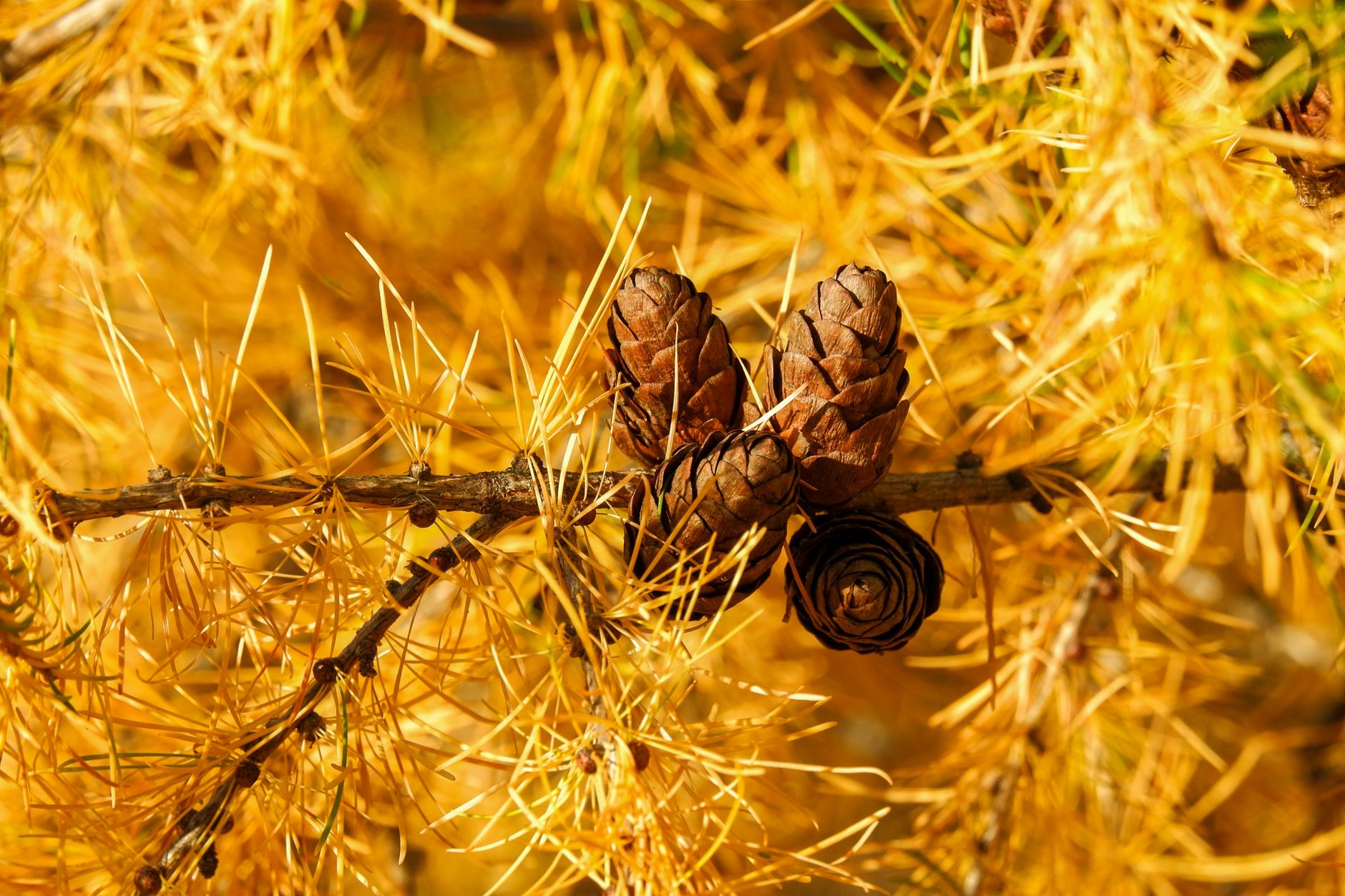
Three living species are called redwoods, and all three sit in the cypress family, Cupressaceae110. Giant sequoia (Sequoiadendron giganteum) is the largest tree by volume, growing only in about 75 to 94 groves on the western slope of California’s Sierra Nevada34. Coast redwood (Sequoia sempervirens) is the tallest, at about 380 feet, in a fog belt 450 miles long from central California into southern Oregon56. Dawn redwood (Metasequoia glyptostroboides) is the odd one: a deciduous conifer known first from fossils, then found alive in central China in the 1940s, native to a handful of valleys in Hubei, Hunan and Chongqing78. It is also the only one of the three most gardeners can actually grow, rated to USDA Zone 5 against Zone 7 for giant sequoia and Zone 8 for coast redwood91011.
- Largest: giant sequoia, about 52,500 cu ft of trunk in General Sherman12
- Tallest: coast redwood, about 380 ft5
- Oldest: giant sequoia, ring counts above 3,200 years133
- Only deciduous one: dawn redwood, needles turn copper-orange and drop each fall7
- Rarest in the wild: dawn redwood, roughly 1,000 native trees at discovery and about 5,400 today14
- Discovery: the fossil genus was named in 1941; living trees were confirmed in 1946 and seed reached Western gardens in 194815
- Hardiest: dawn redwood, Zone 5, versus Zone 7 and Zone 891011
The word “redwood” covers three species that last shared a landscape tens of millions of years ago. Two of them are Californian and famous. The third was a fossil until 1946, and it is now planted on campuses and in city parks across North America and Europe, where most people walk past it without knowing what it is. This page sets the three side by side on size, range, foliage, ecology, and garden behavior. The broader background on the Sierra species is on the giant sequoia trees pillar page.
The three-column comparison
| Trait | Dawn redwood (Metasequoia glyptostroboides) | Giant sequoia (Sequoiadendron giganteum) | Coast redwood (Sequoia sempervirens) |
|---|---|---|---|
| Family | Cupressaceae1 | Cupressaceae10 | Cupressaceae11 |
| Native range | Small valleys in Hubei, Hunan and Chongqing, central China7 | Western Sierra Nevada, a 260-mile belt under 15 miles wide16 | Coastal strip 450 mi long, 5-35 mi wide, central California to southern Oregon6 |
| Native elevation | About 750-1,500 m (2,460-4,920 ft)9 | About 4,000-8,000 ft17 | Sea level to 3,000 ft6 |
| Foliage | Deciduous; soft flat needles turning copper-orange before dropping7 | Evergreen; scale-like awl-shaped needles clasping the twig16 | Evergreen; flat feather-like sprays2 |
| Cones | About 1/2 to 1 in long8 | Egg-shaped, 2-3.5 in, about 200 seeds13 | Rounded, under 1 in2 |
| Typical height today | 100-130 ft, ancient trees over 160 ft7 | 250-275 ft typical, record about 310 ft313 | Tallest tree on Earth, about 380 ft5 |
| Trunk diameter | Often over 10 ft, with buttressed bases7 | 15-20 ft typical, record about 35 ft3 | To 20 ft d.b.h.6 |
| Maximum age | The 1943 discovery tree is thought to be about 400 years old14 | Over 3,200 years133 | Greater than 2,200 years6 |
| Water strategy | Wet, seasonally flooded ground7 | Sierra snowpack and snowmelt2 | Coastal fog, roughly 40% of its moisture18 |
| Fire adaptation | None; it evolved in wet landscapes, not fire-prone ones7 | Thick non-resinous bark, serotinous cones, needs fire to regenerate1913 | Thick fibrous bark; resprouts after fire from stumps and burls618 |
| Wild population | About 5,400 native trees14 | About 75 groves totaling 35,607 acres3 | About 5% of the original old growth remains5 |
| USDA hardiness (Gymnosperm Database) | Zone 59 | Zone 710 | Zone 811 |
| Pest reputation | No serious pests; described as strongly pest-resistant820 | Cankers, mites, honey fungus in cultivation20 | High tannin content resists insects and disease18 |
What they have in common
All three are conifers in the cypress family11011. All three have fibrous reddish bark, soft foliage, and small seeds relative to their eventual size. And all three are remnants: Save the Redwoods League describes the lineage as one whose ancestors spread across the Northern Hemisphere millions of years ago and then retreated as the climate cooled and dried, leaving giant sequoia in the Sierra and coast redwood in the coastal fog belt45.
The fossil record for dawn redwood makes the point most sharply. Metasequoia grew about 60 million years ago across what is now eastern Russia, Europe, China, Japan, and North America21. When the Arnold Arboretum planted its first dawn redwoods in 1948, it described them as the first of their kind to grow in North America in over two million years21.
Dawn redwood: the one that came back
In 1941 the Japanese paleobotanist Shigeru Miki named the fossil genus Metasequoia from deposits roughly five million years old15. In the same year, Professor T. Kan noticed a large deciduous conifer known locally as “shui-sa,” or water fir, at Modaoxi in what is now Hubei15. The forester Zhan Wang collected specimens in 1943, and in 1946 W. C. Cheng and H. H. Hu announced that Miki’s fossil genus was alive15.
What happened next is why the tree is now common in cultivation. In 1947 the Arnold Arboretum’s director Elmer D. Merrill sent $250 to fund a seed collection. Two shipments reached Boston in January and February 1948, and the arboretum redistributed at least 600 packets, more than a kilogram of seed, to gardens worldwide, just before the 1949 revolution closed China to Western botanists until 198015. Tyler Arboretum in Pennsylvania received two seeds from Arnold in 1948, planted them that year, and now has 19 dawn redwoods22.
The wild population remains small. Roughly 1,000 native trees existed at the time of discovery, and about 5,400 grow there today14. The 1943 tree still lives and is thought to be around 400 years old14.
Dawn redwood is deciduous, which no other redwood is. Its needles turn copper-orange and fall, leaving a bare, fluted, buttressed trunk through winter7. It grows fast: some plantings reached 100 feet in 30 years14, and the Gymnosperm Database records trees at Longwood Gardens at 41.5 meters, about 136 feet9. The species has its own page here: the dawn redwood, the living fossil found in China in the 1940s.
Giant sequoia: the largest
Giant sequoia holds the volume record and the age record among the three. General Sherman contains about 52,500 cubic feet of trunk wood, weighing close to 1,400 tons12. Ring counts on stumps in Converse Basin exceed 3,200 years133.
Its range is the smallest of the three in area. The Forest Service counts about 75 groves totaling 35,607 acres along a 260-mile belt on the west slope of the Sierra313; Save the Redwoods League counts about 94 groves, the difference reflecting how grove names are split4. The Gymnosperm Database puts the total occupied area at 124 square kilometers, roughly 2 percent of the coast redwood’s range10.
Fire is central to the species. Bark up to 18 inches thick and free of resin insulates the trunk1913, while cones can hold seed closed for 20 years or more and release it within one to two weeks after fire heat dries them19. Without fire, the species suffered widespread reproductive failure through the 1900s23. That is explained on why giant sequoias need fire.
Coast redwood: the tallest
Coast redwood is the height champion, at about 380 feet for the tallest known individual5, with FEIS recording a measured maximum of 364 feet6. It lives more than 2,200 years6 and reaches 20 feet d.b.h.6.
Two traits set it apart from its Sierra cousin. First, fog: the NPS credits fog with roughly 40 percent of the tree’s moisture, absorbed through the foliage18. Second, sprouting. Coast redwood clones itself from stumps and basal burls, producing circles of trunks around a parent root crown186. Giant sequoia does not do this beyond about 20 years of age3.
Only about 5 percent of the original old-growth coast redwood forest remains, most of it now protected5. For a visitor comparison of the two Californian species’ parks, see Redwood National Park vs Sequoia National Park.
Which one can you actually plant?
Hardiness is the deciding factor for most people, and here the ranking reverses. The Gymnosperm Database rates dawn redwood to Zone 5, giant sequoia to Zone 7, and coast redwood to Zone 891011. Dawn redwood also tolerates the widest range of soils and does best in wet or riparian ground, where the other two would struggle920.
Giant sequoia wants deep, well-drained soil and cool summers; it does poorly in hot, humid climates. Coast redwood wants humid, foggy air. Dawn redwood is the pragmatic choice in the eastern and midwestern United States, and the only one of the three that will take standing water and a cold winter.
If you are choosing between the two evergreens, the detailed comparison is on giant sequoia vs coast redwood for landscaping, and the full planting guide is how to grow a giant sequoia.
Frequently Asked Questions
What is a dawn redwood?
Are dawn redwoods related to giant sequoias?
Which redwood is the biggest?
Do dawn redwoods lose their needles?
Yes. It is one of a small number of deciduous conifers. The needles turn copper-orange in autumn and drop, and the tree leafs out again in spring7.
How many dawn redwoods are left in the wild?
Which redwood is easiest to grow at home?
Which redwood lives the longest?
Related Articles
Sources
- Metasequoia glyptostroboides — Yale Nature Walk, Yale University. Accessed 2026-09-09.
- What’s the Difference? Coast Redwoods vs. Giant Sequoias — Save the Redwoods League. Accessed 2026-09-09.
- FEIS: Sequoiadendron giganteum — U.S. Forest Service, Fire Effects Information System. Accessed 2026-09-09.
- Giant Sequoias — Save the Redwoods League. Accessed 2026-09-09.
- Coast Redwoods — Save the Redwoods League. Accessed 2026-09-09.
- FEIS: Sequoia sempervirens — U.S. Forest Service, Fire Effects Information System. Accessed 2026-09-09.
- Dawn Redwoods — Save the Redwoods League. Accessed 2026-09-09.
- Dawn Redwood — City of Hot Springs, Arkansas. Accessed 2026-09-09.
- Metasequoia glyptostroboides — The Gymnosperm Database. Accessed 2026-09-09.
- Sequoiadendron giganteum — The Gymnosperm Database. Accessed 2026-09-09.
- Sequoia sempervirens — The Gymnosperm Database. Accessed 2026-09-09.
- The General Sherman Tree — National Park Service. Accessed 2026-09-09.
- Sequoiadendron giganteum, Silvics of North America — U.S. Forest Service. Accessed 2026-09-09.
- Dawn Redwood: A Living Fossil — University of Illinois Extension. Accessed 2026-09-09.
- The Living Fossil — Arnold Arboretum, Harvard University. Accessed 2026-09-09.
- Giant Sequoia (Sequoiadendron giganteum) — University of California Agriculture and Natural Resources. Accessed 2026-09-09.
- Exploring Giant Sequoia Groves — National Park Service, Sequoia & Kings Canyon. Accessed 2026-09-09.
- About the Trees — National Park Service, Redwood National and State Parks. Accessed 2026-09-09.
- Giant Sequoias — National Park Service, Sequoia & Kings Canyon. Accessed 2026-09-09.
- Metasequoia glyptostroboides — University of Kentucky Nursery Crop Extension. Accessed 2026-09-09.
- Dawn Redwood — Arnold Arboretum, Harvard University. Accessed 2026-09-09.
- The Amazing Story of Tyler’s Dawn Redwood Trees — Tyler Arboretum. Accessed 2026-09-09.
- Giant Sequoias and Fire — National Park Service. Accessed 2026-09-09.