
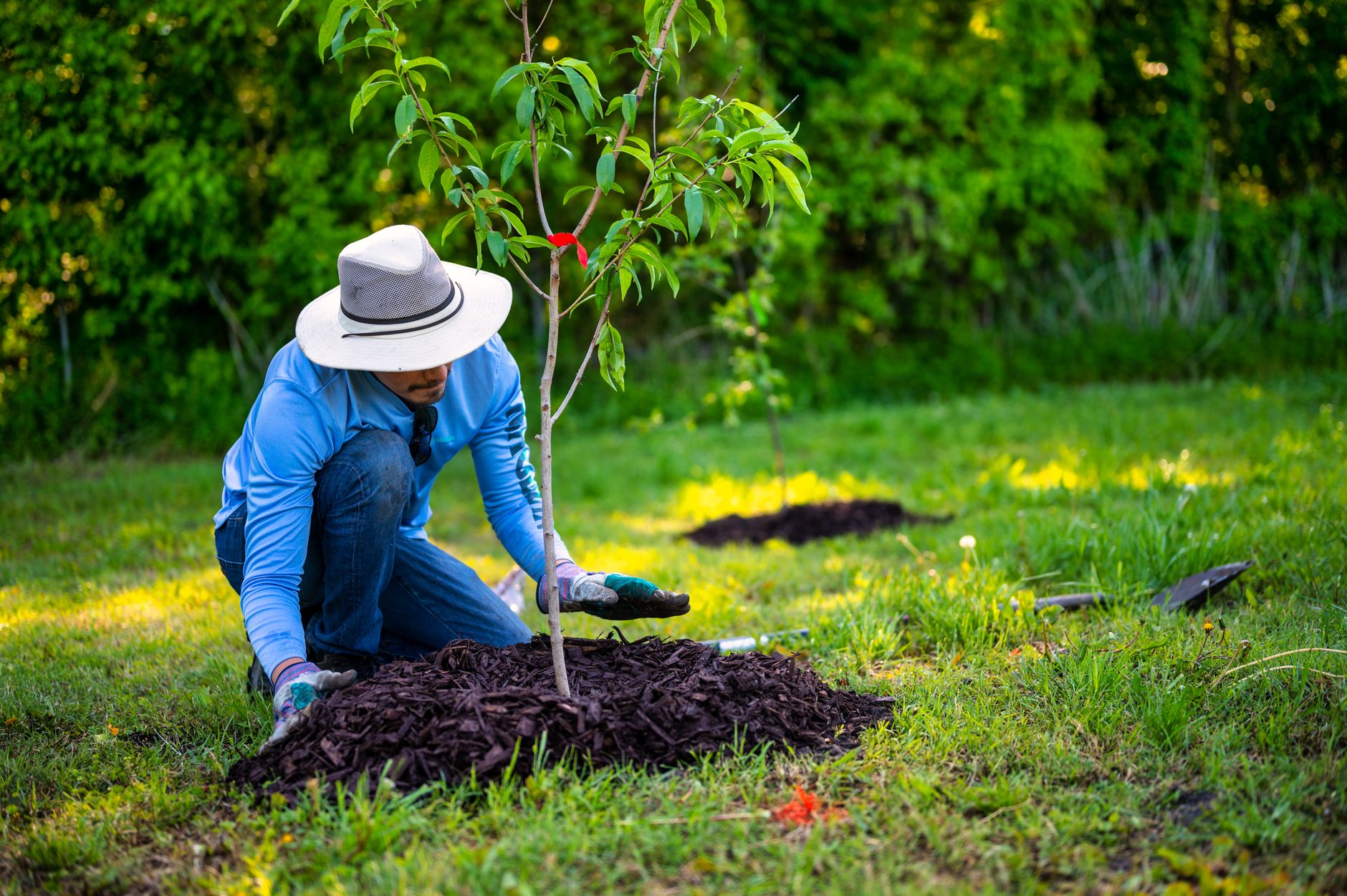
Caring for a giant sequoia is mostly about water. The species is the most moisture-demanding of the Sierra conifers and needs soil moisture of at least 15 to 20 percent year-round, yet it will not tolerate standing water, and overwatering causes root rot123. Drought is the main cause of death in young landscape trees, so the rule for the first two years is to check the soil weekly, water slowly and deeply when it is dry, mulch heavily, and keep watering until the ground freezes45. It wants full sun and deep, well-drained, acid soil, and it is intolerant of clay6. Fertilizer is optional and risky on a stressed tree, since UC IPM lists nutrient excess and salinity among its disorders57. Young trees in zones 5 and 6 need wind and winter protection for their first two or three years, potted trees overwinter in an unheated garage or under snow, and deer call for a small fence24.
- Water: never let the roots dry out completely; let the surface dry slightly between waterings; about two years of supplemental water in dry spells254
- Soil: loam, silt, or sand; acid pH; no clay, no standing water, no compaction368
- Mulch: substantial, to hold moisture5
- Fertilizer: not on a stressed tree; high nitrogen feeds spider mites59
- Winter: protect from wind for the first 2–3 years in zones 5–6; water until freeze-up; bronzing is harmless24
- Containers: 1–3 gallon pot for the first 1–2 years; overwinter cold, not indoors210
- Deer: a small protective fence where they are frequent2
Disclosure: some links on this page are affiliate links, marked by the products, tours and hotels they name. As an Amazon Associate, sequoia.info earns from qualifying purchases. A purchase through these links may earn the site a commission at no cost to you, and it never affects what is recommended. How this works.
Sequoiadendron giganteum is not a fussy tree once established in the right place. The work is in the first two or three years, and nearly all of it is about water. This page covers watering, soil, mulch, and fertilizer; protection for the first winter, from deer, and in a container; and the problems that come up most, with what the sources say to do about each. Choosing the site is covered on the pages about whether a giant sequoia belongs in your backyard and hardiness zones, and the whole process, from seed to mature tree, in the guide to how to grow a giant sequoia.
Watering
In its native groves the tree lives on snowmelt moving through granite soils all summer11. UC forestry researchers call it the most moisture-demanding of the Sierra mixed conifers and put its need at 15 to 20 percent soil moisture year-round1. A garden has to supply that by hand for about two years.
- Never let the roots dry out completely. Welker’s Grove Nursery calls drought the major cause of death in young landscape sequoias4.
- Let the surface dry slightly between waterings. National Sequoias says overwatering causes root rot; Jonsteen‘s seedling guidance reduces success to a sunny location and letting the root zone dry between waterings212.
- Water slowly and deeply, not often and lightly. Trees for a Change recommends deep, infrequent soaking in the first several years and in later droughts13. A West Virginia extension agent told the owner of a declining 11-year-old tree to check soil moisture weekly with a meter, water slowly when it reads dry, and expect about two years of supplemental watering during dry periods5.
- Keep watering until the ground freezes. Winter winds freeze-dry a tree that goes into winter short of water4.
A soil moisture meter, the tool the extension agent recommended, is the one purchase this page suggests. The site earns a commission on purchases made through product links, which does not affect what is recommended.
Drought stress has a signature. Trees and Shrubs Online notes that drought browns older foliage uniformly across the whole tree, whereas fungal dieback is patchy8.
Soil
NC State Extension lists loam, silt, or sand with an acid pH below 6.0 and good drainage, and calls the species intolerant of clay soils and drastic climate changes6. UC forestry says it does best on deep, well-drained sandy loams1. Trees and Shrubs Online names soil compaction and poor drainage as the two main enemies in cultivation and notes that it struggles on shallow chalk and grows slowly on poor silty or sandy soil8. The Wildflower Center adds low tolerance of calcareous soil14.
Welker’s Grove prefers loose, rich, pH-balanced, well-drained, moist soil and warns against swampy ground and high water tables4. A BC nursery database says the tree will not tolerate standing water3. Constantly soggy soil invites Phytophthora crown and root rot15.
If the site is clay, plant something else. The West Virginia tree in the extension case had gone from a saturated 2019 to a hot, dry 2020 in clay, and the agent’s assessment was that the species has limited success in that state for that reason5.
Mulching
The West Virginia extension agent advised substantial mulch to retain moisture, alongside weekly moisture checks5. Keep it off the trunk. Feeder roots are in the top 2 feet of soil, most within 3 feet, so a wide mulch ring also protects them from compaction by foot traffic and mowers116.
Fertilizer
The sources disagree. Welker’s Grove considers sequoias voracious feeders and sells warm- and cool-season blends keyed to a 70 °F soil temperature, while allowing that experienced gardeners can use standard soil enrichment4. Against that, UC IPM lists nutrient excess and salinity among the species’ disorders, and its spider mite guidance notes that high nitrogen increases mite reproduction on conifers79. The West Virginia extension agent’s instruction was not to fertilize a stressed tree until it recovers5.
The synthesis: a tree in good soil with enough water needs little, a browning tree needs water and not fertilizer, and anything applied should be modest.
First-winter protection
National Sequoias, which grows the tree in Michigan, advises winter protection for young trees in zones 5 and 6 for their first two or three years, with wind protection to prevent discoloration2. Welker’s Grove explains the discoloration: trees under about a year old, occasionally up to five, turn burgundy, purplish-red, rust, or bronze after a cold snap that follows unseasonable warmth. Seedlings buried in snow do not discolor; only those exposed to drying wind do. The color change is harmless, and adequate soil water reduces it4.
The program for a first winter in a cold zone is water until freeze-up, a windbreak on the exposed side, and patience with the color. The zone ratings are on the giant sequoia hardiness zones page.
Deer and other animals
Where deer are frequent, National Sequoias recommends a small protective fence around young trees2. No source specific to giant sequoia on rodents or staking could be found for this page. Sapsuckers can weaken established trees by drilling thousands of holes that open entry points for disease, a problem the American Conifer Society notes on its ‘Pendulum’ page17.
Container trees and overwintering
A 1- to 3-gallon container suits the first one or two years, after which the tree should go into the ground2. Jonsteen’s largest seedling ships in a 2-gallon pot10. No source states how long a tree can stay in a pot beyond that; the practical answer is a few years in nursery pots, and indefinitely only under bonsai management, covered on the giant sequoia bonsai and giant sequoia in a pot pages.
Overwintering a potted tree is about dehydration, not cold. Welker’s Grove says the ideal is to water the pot well and leave it outside to be buried in snow; without snow, keep it in a well-drained cold frame or an unheated garage or cellar and thaw it periodically418. National Sequoias also recommends an unheated garage2. A heated house is the wrong place: it disrupts dormancy, and the tree loses its seasonal rhythm19.
Root pruning, if a container tree needs it, is done in winter dormancy, removing no more than about 20 percent of the root ball and keeping soil intact on at least 75 percent of it to protect the fine white feeder roots19.
Problems and their fixes
UC IPM’s problem index for giant sequoia lists scales, spider mites, Botrytis blight, canker diseases, needle blight and cast, nutrient and salt disorders, and water deficit or excess7. A 1986 Forest Service review concluded the species is susceptible to many diseases and insects at every stage from seed to old age20. Outside its native range it is more prone to all of them621. The ones that actually show up in gardens, with what to do:
| Problem | What it looks like | Cause | Fix |
|---|---|---|---|
| Seedling browning | Extensive browning of a young seedling, often indoors | Root trouble, too little moisture, or indoor air; small brown tips on older needles are normal | Move outdoors after frost, shade first; correct watering222 |
| Damping-off | Seed rots, or seedlings collapse at the soil line | Pythium, Fusarium, Rhizoctonia; wet medium, overhead misting, crowding, wrong temperature | Sterile mix, clean containers, bottom heat to 70–75 °F, water early in the day, fans, no waterlogging2324 |
| Spider mites (indoors and in drought) | Foliage bleaches or turns bronze, red, or yellow | Spruce spider mite; favored by drought, dust, high nitrogen, dry indoor air | Irrigate, wash foliage, conserve predators, horticultural oil if needed; cut nitrogen9 |
| Uniform browning of older foliage | Whole tree browns evenly | Drought stress | Slow, deep watering; mulch; no fertilizer until recovered58 |
| Patchy dieback, dead branches | Recently killed branches reddish-brown with yellowish pitch; older cankers grayish-brown and bare | Botryosphaeria canker; drought stress, hot sites, splash from rain or sprinklers | Prevention only: right site, deep watering, no overhead sprinklers; the tree will develop it in consistently hot climates regardless25 |
| Needle blight and cast | Needles brown and drop | Fungal needle diseases listed by UC IPM; a 2024 German study associated needle browning with Rhizosphaera and Pestalotiopsis on drought-stressed trees | Reduce drought stress; avoid wetting foliage; no giant-sequoia-specific treatment is documented in the sources726 |
| Gray mold | Fuzzy gray growth on seedlings or shoots | Botrytis blight in humid, still air | Air movement, less overhead water7 |
| Root and crown rot | Decline in soggy ground | Phytophthora | Drainage; do not plant in wet sites15 |
| Honey fungus | Decline, death | Armillaria; long documented on the species | No cure; avoid infected sites68 |
| Girdling roots | Slow decline years after planting | Circling roots from a pot | Remove girdling roots; the West Virginia case combined this with waterlogging then drought5 |
| Winter bronzing | Burgundy or bronze foliage on a young tree after a cold snap | Drying wind, not cold | Harmless; wind protection and soil water reduce it4 |
Two of these deserve a closer look.
Browning seedlings. The commonest complaint, and usually an indoor problem. When a beginner posted that all five seedlings from a kit had collapsed near a window, the replies on the Bonsai Empire forum said that living-room conditions, with stagnant dry air and weak light, are near-certain death for most trees; the fix is to move seedlings outdoors after frost, starting in shade and acclimating to sun22. National Sequoias distinguishes normal small brown tips on older needles from extensive browning, which signals root trouble or insufficient moisture2. The symptoms are worked through on the page about why a giant sequoia seedling turns brown.
Cankers. The disease that kills giant sequoias in the wrong climate. UC IPM lists the species as a common host of Botryosphaeria canker, which infects drought-stressed trees and trees grown away from their native habitat, especially at warmer sites, and spreads in splashing rain or sprinkler water. Management is prevention; the page states that the tree will develop the disease in consistently hot climates even with good care25. Trees and Shrubs Online reports the related Neofusicoccum parvum on trees in Geneva and Botryosphaeria dothidea dieback in drought-stressed trees in Bulgaria, probably now widespread in Europe8. The one thing a gardener controls is drought stress. The 2024 German study of ten diseased planted trees found that every one had experienced precipitation deficits and extreme summer heat, and the authors treat drought as the stress that lets the canker and rot fungi in26.
A first-two-years calendar
- Planting day: full sun, drained soil, well clear of structures, since a tree 20 feet from a house has damaged a foundation; water in deeply; mulch wide, not against the trunk5627
- Growing season, years 1–2: check soil moisture weekly; water slowly and deeply when dry; let the surface dry between waterings25
- Late fall: water until the ground freezes; put up a windbreak in zones 5–6; fence against deer24
- Winter: expect bronzing on exposed young trees; do nothing4
- Year 3 onward: water in droughts; watch for uniform browning (water) versus patchy dieback (canker); prune dead or damaged lower branches close to the trunk4813
Frequently Asked Questions
How often should I water a giant sequoia?
Do giant sequoias need a lot of water?
Should I fertilize a giant sequoia?
Why is my giant sequoia turning brown?
How do I protect a giant sequoia in its first winter?
Can a giant sequoia stay in a pot over winter?
Related Articles
Sources
- Giant Sequoia (Sequoiadendron giganteum) — UC Agriculture and Natural Resources, Forestry Research and Outreach. Accessed 2026-09-06.
- FAQs — National Sequoias. Accessed 2026-09-06.
- Giant Sequoia — GardenWorks plant database. Accessed 2026-09-06.
- Giant Sequoia Landscape Questions (drought) — Welker’s Grove Nursery. Accessed 2026-09-06.
- Giant sequoia browning, West Virginia — Ask Extension. Accessed 2026-09-06.
- Sequoiadendron giganteum — NC State Extension Plant Toolbox. Accessed 2026-09-06.
- Giant Sequoia — UC Statewide Integrated Pest Management Program. Accessed 2026-09-06.
- Sequoiadendron giganteum — Trees and Shrubs Online, International Dendrology Society. Accessed 2026-09-06.
- Pine and Spruce Spider Mites — UC Statewide Integrated Pest Management Program. Accessed 2026-09-06.
- Giant Sequoia XL Tree Seedling — Jonsteen Company. Accessed 2026-09-06.
- Giant Sequoias and Climate — National Park Service, Sequoia & Kings Canyon. Accessed 2026-09-06.
- Giant Sequoia Seed Grow Kit — Jonsteen Company. Accessed 2026-09-06.
- How to Grow Giant Sequoia — Trees for a Change. Accessed 2026-09-06.
- Sequoiadendron giganteum — Lady Bird Johnson Wildflower Center. Accessed 2026-09-06.
- How to Grow Redwoods — Gardener’s Path. Accessed 2026-09-06.
- Sequoiadendron giganteum, Silvics of North America — USDA Forest Service. Accessed 2026-09-06.
- Sequoiadendron giganteum ‘Pendulum’ — American Conifer Society. Accessed 2026-09-06.
- Giant Sequoia Bonsai Care — Welker’s Grove Nursery. Accessed 2026-09-06.
- Giant Sequoia Bonsai Questions — Welker’s Grove Nursery. Accessed 2026-09-06.
- Diseases and insects of giant sequoia (Parmeter, 1986) — USDA Forest Service Treesearch. Accessed 2026-09-06.
- Sequoiadendron giganteum, Fire Effects Information System — USDA Forest Service. Accessed 2026-09-06.
- Dying Giant Sequoia Seedlings — Bonsai Empire forum. Accessed 2026-09-06.
- Damping-Off — Penn State Extension. Accessed 2026-09-06.
- Sequoiadendron giganteum, Woody Plant Seed Manual — USDA Forest Service (Krugman and Boe). Accessed 2026-09-06.
- Botryosphaeria Canker — UC Statewide Integrated Pest Management Program. Accessed 2026-09-06.
- Fungal pathogens associated with dieback of planted giant sequoia in Germany — PubMed Central, 2024. Accessed 2026-09-06.
- Giant sequoia near house foundation, Eugene, Oregon — Ask Extension. Accessed 2026-09-06.