
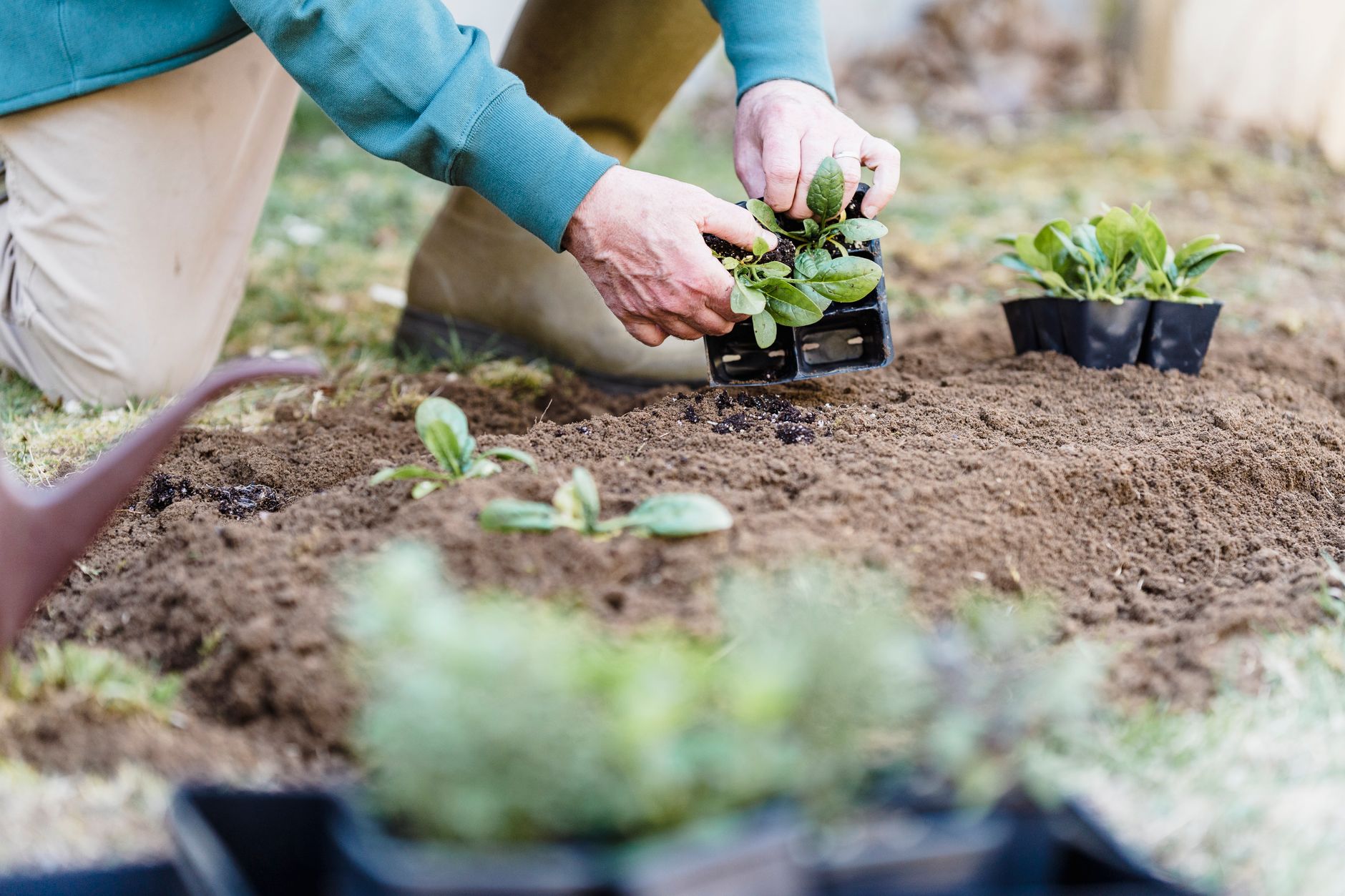
Planting a giant sequoia seedling starts with the site: full sun, deep, well-drained, non-clay soil, and enough room that the tree’s mature root system, which can spread 100-150 feet, stays clear of foundations and utilities12. Extension guidance documents a case of foundation damage from a giant sequoia planted only about 20 feet from a house, and specialist growers recommend keeping the species well clear of structures, power lines, septic systems, and paving34. Dig the hole no deeper than the root ball and considerably wider, so the loosened soil gives roots room to spread outward rather than down5. Water deeply and do not let the root zone dry out for at least the first two years, since drought is described as the leading cause of death in young landscape giant sequoias67. Staking, when a seedling genuinely needs it, should use wide, flexible ties attached loosely and removed after one growing season8.
- Site: full sun, at least 6 hours, well-drained acid soil; the species is explicitly described as intolerant of clay9
- Spacing from structures: roots spread 100-150 feet, mostly within about 4-5 feet of the surface; extension advisors recommend consulting an arborist before planting near a foundation110
- Spacing between trees: as close as 6 feet for a windbreak or screen, 30-60 feet apart for specimen trees2
- Hole size: no deeper than the root ball; at least twice, and preferably up to five times, as wide5
- Watering: never let roots dry out completely; expect roughly two years of consistent supplemental watering through dry spells611
- Mulch: apply a substantial layer to hold soil moisture around a newly planted tree11
- Staking: only if needed, using wide flexible ties attached loosely, removed after one growing season8
Once you have a seedling from a nursery, covered in Where to Buy Giant Sequoia Seedlings, or one you have grown from seed following Giant Sequoia Seeds, the planting itself is where a lot of young trees succeed or fail. This page walks through site selection, spacing, digging the hole, watering, and staking, in order, using what specialist giant sequoia sources and general tree-planting guidance actually document. For the fuller ongoing care picture once the tree is in the ground, see Giant Sequoia Care, part of the How to Grow a Giant Sequoia guide.
Step 1: Choose the site
Giant sequoia needs full sun, at least six hours a day, and deep, well-drained soil; it is explicitly described as intolerant of clay soils9. It also wants a soil pH on the acid side of neutral, and does poorly in soil that stays soggy or sits over a high water table92. In its native range, the species is the most moisture-demanding of the Sierra’s mixed conifers and needs year-round soil moisture of at least 15-20%, which is a hint that “well-drained” does not mean “dry”: the ideal site drains freely after rain but does not go bone-dry between waterings12. Because a mature tree can eventually reach well over 100 feet, this is also a decision about a multi-generational landscape feature, not a quick-turnaround shrub; the Wildflower Center’s guidance is blunt that the tree is useful only on very large properties9.
Step 2: Plan spacing from buildings, utilities, and other trees
This step gets skipped more often than any other, and it is the one most likely to cause expensive regret. A giant sequoia’s root system can extend 100-150 feet from the trunk at maturity, with the great majority of that spread staying within about 4-5 feet of the surface1. Extension guidance describes redwood and sequoia root systems generally as widespread and shallow, typically 2-4 times the width of the canopy, and recommends planning any building footprint against the tree’s expected mature canopy and root zone, with a consulting arborist involved for anything closer10. That is not a theoretical warning: one documented case in Eugene, Oregon involved a homeowner whose giant sequoia, planted about 20 feet from a 1960s house, was linked to foundation cracks and misaligned doors, with the extension agent confirming the tree could plausibly affect the foundation at that distance3. Specialist nurseries echo the same advice in plainer terms: keep giant sequoia away from power lines and structures because of its eventual size, and away from foundations, retaining walls, drains, septic systems, and paving413.
For spacing between multiple sequoias, growers use two different targets depending on the goal: as close as 6 feet apart works for a windbreak or screen planting, while specimen trees meant to develop their full individual form need 30-60 feet of separation2. If you are planting near power lines specifically, note that the tall, domed crown of a mature giant sequoia has been documented as a lightning target in southern England where it grows above the surrounding canopy, a detail worth factoring into placement near structures you would rather not have struck14.
Step 3: Dig the hole
None of the giant-sequoia-specific research gives a species-particular hole size, so the guidance here follows general nursery and extension planting practice, which applies to a young conifer of this kind. In well-drained soil, dig the hole no deeper than the height of the root ball, so the top of the root system ends up level with, not below, the surrounding grade, and dig it at least twice, and preferably up to five times, as wide as the root ball, since loosened soil around the roots, not just underneath them, is what actually helps new roots establish quickly5. In poorly drained soil, extension guidance instead recommends setting the root ball 2-4 inches higher than the surrounding grade rather than digging as deep5. Because giant sequoia roots spread wide rather than deep even at maturity, loosening a broad area around the hole matters more than digging one that is especially deep1.
Step 4: Set the tree and backfill
Place the seedling so its root collar sits at or slightly above grade, not buried. If the seedling came from a container, check the outside of the root ball for roots that have started circling the pot and gently loosen or straighten them before backfilling; a documented case of a declining giant sequoia found girdling roots, meaning roots that had circled inside the original container and later constricted the trunk, as a contributing factor alongside drought stress6. Backfill with the native soil you dug out rather than a fully amended mix, watering as you go to settle the soil and eliminate large air pockets around the roots.
Step 5: Mulch
Apply a substantial layer of mulch around the base once the tree is planted, extending out to at least the edge of the planting hole. Extension guidance on a stressed giant sequoia specifically recommended a heavy mulch layer to help retain soil moisture, paired with a caution not to fertilize a tree that is already stressed until it has recovered11. Keep mulch a few inches clear of the trunk itself to avoid holding moisture against the bark.
Step 6: Water on a schedule for the first two years
Drought is described as the major cause of death in young landscape giant sequoias, and the fix is straightforward but requires consistency: never let the root zone dry out completely, and keep watering until the ground freezes in fall so winter wind does not desiccate the tree over its first winter7. One documented case recommended checking soil moisture weekly with a meter and watering slowly and deeply whenever it read dry, with an expectation of roughly two years of this kind of consistent supplemental watering through dry spells before a newly planted tree is established enough to rely mostly on natural rainfall6. Deep, infrequent soaking rather than frequent shallow watering is the general recommendation for the first several years and again in any later drought15.
Step 7: Stake only if the tree needs it
The giant-sequoia-specific research does not document staking guidance for this species, so what follows is general nursery and extension practice for a young tree of this size and applies here by extension rather than as sequoia-specific advice. Staking is often unnecessary for a healthy young tree with an adequate root system; it is mainly warranted where the tree has a weak root system relative to its top growth, stands in a very windy site, or faces a real risk of being knocked over. Where staking is used, attach the trunk to the stakes loosely, with wide, flexible material such as canvas strapping or wide tree ties rather than wire or rope threaded through hose, since a loose attachment that still allows some trunk movement helps the tree build a stronger trunk than a rigid tie does. Leave stakes in place for one growing season, removing them in fall for a spring planting, and check before removal that the root system no longer shifts in the soil when the trunk is gently pushed; if it still moves or the stem still bends excessively, reattach loosely for one more season rather than removing for good8.
What to buy before you plant
A few supplies make the first two seasons easier: a soil moisture meter to avoid guessing at the weekly watering check described above, several inches of mulch, and, if staking turns out to be necessary, wide flexible tree ties rather than wire. Amazon carries all of these; the site earns a commission on qualifying purchases made through Amazon links, which does not affect what is recommended here. No specific brand is named, since the research behind this page did not test or document particular products.
Frequently Asked Questions
How far from my house should I plant a giant sequoia?
How big a hole do I need to dig?
In well-drained soil, dig no deeper than the root ball and at least twice, preferably up to five times, as wide. In poorly drained soil, set the root ball 2-4 inches above grade instead of digging deep5.
How often should I water a newly planted giant sequoia?
Does a giant sequoia seedling need to be staked?
Only if it has a weak root system, stands in a very windy site, or is at risk of being knocked over. When staking is used, ties should be loose, wide, and flexible, and removed after one growing season8.
How far apart should I space multiple giant sequoias?
As close as 6 feet for a windbreak or screen, or 30-60 feet apart if you want each tree to develop its full individual form2.
Should I fertilize a newly planted seedling?
Not if it shows any sign of stress; extension guidance specifically advises against fertilizing a stressed giant sequoia until it has recovered. Mulching for moisture retention is the priority instead11.
What soil does a giant sequoia seedling need?
Related Articles
Sources
- Giant Sequoia — California State Parks. Accessed 2026-09-06.
- Giant Sequoia Landscape Questions — Welker’s Grove Nursery. Accessed 2026-09-06.
- FAQ: Giant sequoia near a house — Ask Extension (Eugene, Oregon). Accessed 2026-09-06.
- FAQs — National Sequoias. Accessed 2026-09-06.
- Planting Trees Correctly (HGIC 1001) — Clemson Cooperative Extension Home & Garden Information Center. Accessed 2026-09-09.
- FAQ: Giant sequoia browning — Ask Extension (West Virginia case). Accessed 2026-09-06.
- Giant Sequoia Landscape Questions — Welker’s Grove Nursery. Accessed 2026-09-06.
- Staking and Guying Trees — University of Minnesota Extension. Accessed 2026-09-09.
- Sequoiadendron giganteum — Lady Bird Johnson Wildflower Center. Accessed 2026-09-06.
- Giant Sequoia Root Systems — Ask Extension. Accessed 2026-09-06.
- FAQ: Giant sequoia browning — Ask Extension (West Virginia case). Accessed 2026-09-06.
- Giant Sequoia (Sequoiadendron giganteum) — UC Agriculture and Natural Resources. Accessed 2026-09-06.
- How to Grow Giant Sequoia — Trees for a Change. Accessed 2026-09-06.
- Sequoiadendron giganteum — Trees and Shrubs Online, International Dendrology Society. Accessed 2026-09-06.
- How to Grow Giant Sequoia — Trees for a Change. Accessed 2026-09-06.