
Giant sequoia seeds are cheap, tiny, and slower to trust than most conifer seed. As of September 2026, TreeHelp sells 40 hand-sorted seeds for $6.00, and Sheffield’s Seed Company sells a 2025 crop collected at Mountain Home, California, tested at 36 percent germination12. The USDA Woody Plant Seed Manual reports 30 to 73 percent germination across seedlots, with the best result, a 55 percent average, coming from a 24-hour leach in running water followed by six weeks of cold stratification at 36 °F (2 °C)3. Seeds germinate best at 59–70 °F under a covering of no more than 1/8 inch, and the first sprouts appear about two weeks after sowing, continuing for a month or more34. Collecting cones or seeds in Sequoia, Kings Canyon, or Yosemite National Parks is illegal under 36 CFR 2.156.
- Seed size: about 78,500 cleaned seeds per pound, roughly 230 per cone3
- Germination to expect: 30–73 percent by seedlot; 37.8 percent average in a 1981 Forest Service trial34
- Protocol: soak 24 hours, then 30–60 days in the refrigerator, then sow 1/8 inch deep at 59–70 °F134
- Storage: 10 or more years frozen at 5–9 percent moisture; about a year refrigerated13
- Price: 40 seeds for $6.00 at TreeHelp, as of September 20261
- Legal: no cone or seed collecting in national parks; national forests require a permit57
Disclosure: some links on this page are affiliate links, marked by the products, tours and hotels they name. As an Amazon Associate, sequoia.info earns from qualifying purchases. A purchase through these links may earn the site a commission at no cost to you, and it never affects what is recommended. How this works.
A giant sequoia seed looks like a flake of oatmeal and weighs almost nothing. This page covers where to buy seed of Sequoiadendron giganteum, what a packet contains, the germination rates in the Forest Service seed literature, the stratification and sowing protocol behind those numbers, and the first few weeks. It is the seed-specific companion to the full guide on how to grow a giant sequoia.
What a giant sequoia seed is
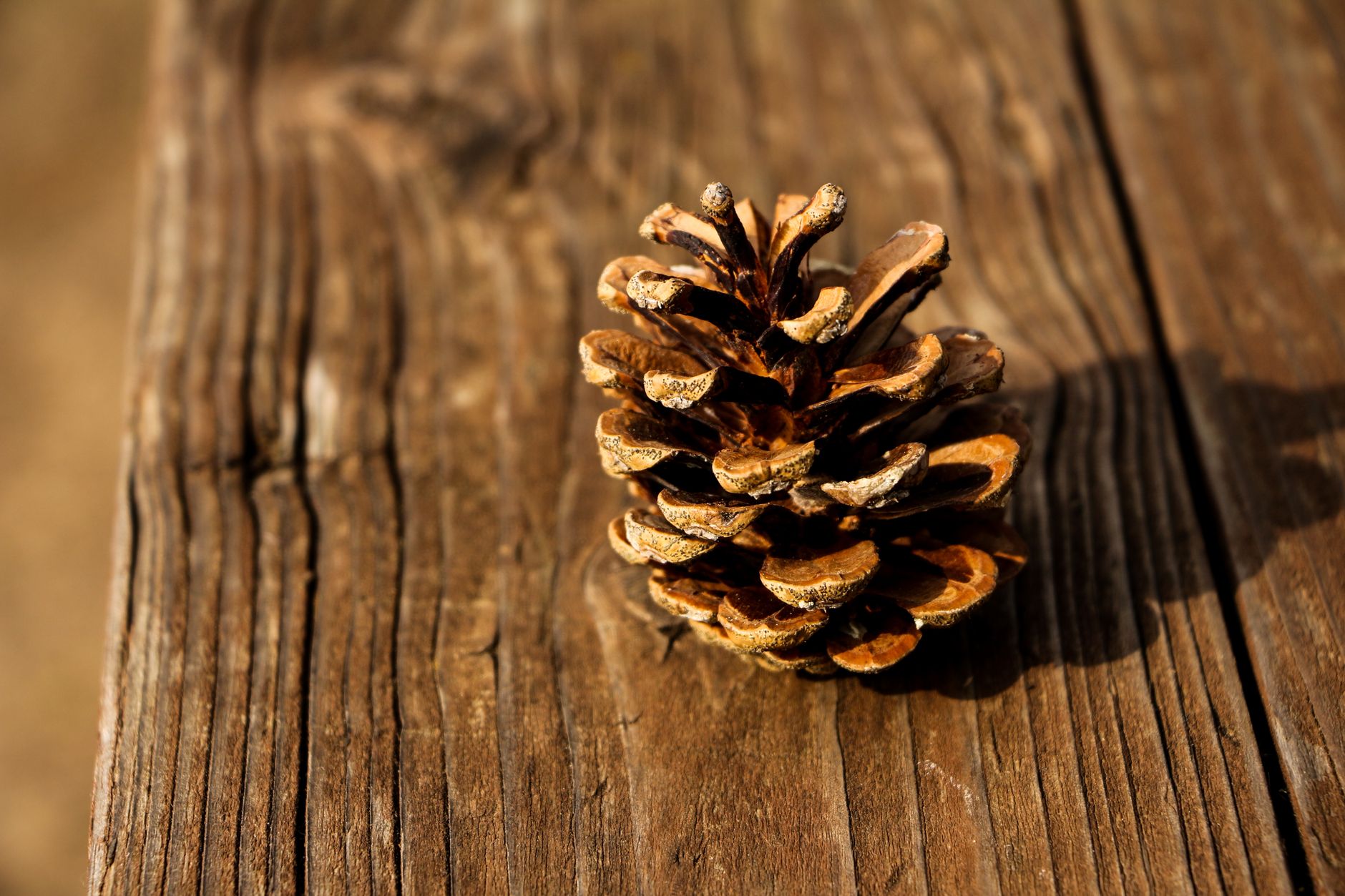
The cones are egg-shaped and 2 to 3.5 inches long, and each holds about 200 to 230 seeds38. Cleaned seed runs about 78,500 to the pound, with a range of 51,530 to 90,620 depending on the seedlot; the NPS rounds the figure to 91,000 per pound39. A mature tree carries 10,000 to 30,000 cones at once and can hold viable seed in closed green cones for 20 years or more, releasing it when fire heat, a Douglas squirrel, or a cone beetle dries the scales89.
Seed lying on the forest floor tests at about 1 percent viability8. Commercial seed comes from cones, and the Seed Manual notes that squirrel-cut cones are a major legitimate collection source in the groves3.
Where to buy giant sequoia seeds
The site earns a commission on purchases made through product links, which does not affect what is recommended. Prices below are as listed on each vendor’s page on September 6, 2026, and should be checked before ordering.
| Vendor | What you get | Price | Stated germination | Notes |
|---|---|---|---|---|
| TreeHelp.com | 40 hand-sorted seeds | $6.00 | not stated | Instructions: 24-hour soak, 30-day stratification, sow 1/8 in deep; refrigerated seed keeps a year; minimum zone 61 |
| Sheffield’s Seed Company (Locke, NY) | Packet, 2025 crop from Mountain Home, CA; 94,347 seeds/lb | not shown on the inventory page | 36 percent, 99 percent purity | Same soak-and-stratify instructions; minimum zone 62 |
| TreeSeeds.ca (Canada) | Packet | not recorded | not stated | Recommends 2–3 weeks of refrigerated stratification after wetting10 |
| Jonsteen Company | Seed grow kit: seed, soil-less medium, perlite, mini-greenhouse, instructions | $10.99 | described as high-germination seed | Free replacement seed if it fails; also sold through Amazon, Walmart, Etsy, and eBay11 |
Sheffield’s is the only vendor that publishes a tested germination percentage and a provenance, and 36 percent is a respectable figure for this species23. The Jonsteen kit is a seed packet with a container and instructions attached; whether that is worth the extra five dollars is covered on the page about giant sequoia seed grow kits.
For anyone who would rather skip germination entirely, a roughly one-year-old seedling costs $9.99 from Jonsteen or $11.99 from National Sequoias as of September 2026, and the odds are far better1213. See where to buy giant sequoia seedlings.
Why you cannot collect your own in the parks
Federal regulation 36 CFR 2.1 prohibits possessing, destroying, removing, digging, or disturbing plants or plant parts in any national park, and the NPS applies that explicitly to seeds, along with flowers, leaves, branches, and roots56. A superintendent can designate certain fruits, nuts, or berries for hand-gathering, but no such designation covers sequoia cones in Sequoia, Kings Canyon, or Yosemite5. Picking up a fallen cone in the Giant Forest and taking it home is a violation. Sequoia and Kings Canyon direct visitors to the Superintendent’s Compendium for the current rules and can be reached at 559-565-334114.
National forests are stricter than most people assume. San Bernardino National Forest requires a permit before anyone removes seeds, cones, or plant specimens, with fees that depend on product and quantity and applications that can take weeks7. Rules for Sequoia National Forest and Giant Sequoia National Monument were not available at the time of writing; call the ranger district before collecting anything there.
Germination rates: what the numbers actually say
The published figures vary because seedlots vary. A 1981 Forest Service trial by Lauren Fins averaged 37.8 percent across all treatments and found that differences between seed sources were large and statistically significant, more so than differences between treatments4.
| Source | Germination | Conditions |
|---|---|---|
| USDA Woody Plant Seed Manual | 30–73% | Range across seedlots3 |
| Seed Manual, best treatment | 55% average | 24-h leach, 6 weeks at 2 °C without medium3 |
| Seed Manual, long stratification | 41% (35% with fungicide) | Overnight soak, 91 days at 2.2–2.8 °C3 |
| Fins 1981 | 37.8% average | All treatments pooled4 |
| Silvics of North America | 20–40% | Seed from green cones8 |
| Silvics of North America | 52% | Seed from 5-year-old cones8 |
| Sheffield’s Seed, 2025 crop | 36% | Vendor test2 |
| Wildflower Center | 30–40% | General guidance15 |
From a packet of 40 seeds, expect 12 to 20 seedlings if everything goes right, and fewer from a weak seedlot. Sow the whole packet.
The stratification protocol
Giant sequoia seed shows some dormancy. It germinates without cold treatment, but slowly and unevenly; stratification makes germination prompt3. Fins found that seed with no stratification, or only seven days, reached the same final percentage as seed stratified for 60 days but took far longer, with stragglers still emerging after four months4. Seed that comes up together is easier to protect from damping-off.
The steps, from the Seed Manual and the Fins trial:
- Soak. Put the seed in water for 24 hours. The Seed Manual’s best result used running water to leach the seed; Fins used an overnight soak in aerated water34. A jar changed a few times over the day is the home version.
- Surface-dry the seed briefly so it is damp, not wet3.
- Chill. Seal the seed in a plastic bag in the refrigerator at about 36 °F (2 °C), the figure in the Seed Manual and close to what a household refrigerator holds. The Seed Manual’s best result used six weeks with no medium in the bag; Fins recommends at least 60 days; TreeHelp and Sheffield’s print 30 days; TreeSeeds.ca suggests two to three weeks123410. Superlative Trees, a UK grower, stratifies in damp sand or vermiculite for two to six weeks and warns that longer risks mold16.
- Skip the fungicide unless you have a mold problem. In the Seed Manual trial, fungicide-treated seed germinated at 35 percent against 41 percent untreated; Fins found Captan slowed germination slightly without changing the final count34.
- Sow light seed at double the rate. Seeds that float or feel empty germinate poorly; Fins advises sowing them at twice the density rather than discarding them4.
Seed that is not sown right away stores well. The Seed Manual reports 10 or more years of viability frozen at −18 °C with 5 to 9 percent moisture; the Wildflower Center says a plastic bag in the freezer; TreeHelp says a year in the refrigerator1315.
Sowing
Depth is the detail most people get wrong, always too deep. Container nurseries cover stratified seed very lightly, about 3 mm, and bareroot beds are sown on the surface under about 6 mm of aged sawdust3. Vendors print 1/8 inch12. California State Parks puts it in field terms: the seed must germinate within a half-inch of the surface in moist mineral soil17.
Temperature: a constant 59–70 °F (15–21 °C) is optimum, and alternating 86/68 °F also works. A constant 43 °F is too cold and a constant 86 °F too warm3. Light and dark cycles gave the same result as continuous light3.
Sun is the counterintuitive hazard. Optimal germination in the wild happens in about half-strength sunlight, because seed in full sun dries out before it germinates; State Parks says 10 to 20 days of full sun can kill the embryo1718. Superlative Trees keeps sealed containers in shade at about 68 °F until sprouting, then moves seedlings to a sunny spot outdoors16.
Use a sterile, soil-less mix and clean containers. Damping-off, the collapse of seedlings at the soil line caused mainly by Pythium, is flagged as a serious problem for this species in nursery beds, and the Seed Manual’s advice is to irrigate early in the day, shake water off the foliage, and run fans for air movement319.
The first weeks
A new germinant looks like a blade of grass and is about an inch tall when the seed coat drops off17. In the wild, most first-year seedlings die of desiccation, with frost heaving, fungi, shading, and browsing well behind18. In a tray, the mirror-image failure is overwatering, which invites damping-off and root rot1920.
Penn State’s damping-off guidance applies directly: avoid overhead misting and crowding, keep the medium below waterlogged, and hold the root zone at 70–75 °F with bottom heat if the room is cold, since soil under 68 °F before germination or over 77 °F after emergence favors the fungi19. Jonsteen’s kit page reduces it to two rules, a sunny location and letting the root zone dry between waterings11.
Once up, the seedlings belong outdoors. Bonsai forum regulars told a beginner whose five kit-grown seedlings had collapsed by a window that a living room, with stagnant dry air and weak light, is near-certain death for most trees; the fix is to move seedlings outside after frost, starting in shade21. National Sequoias, a Michigan nursery, says seedlings tolerate indoors only temporarily20.
Growth in the first season is modest. Superlative Trees expects 2 to 10 inches (5 to 25 cm); a US nursery’s range is 4 to 8 inches1622. The taproot may reach 10 to 15 inches by the second season, which is one reason a deep pot beats a shallow one18. What to do from there, including the move to a 1- to 3-gallon container for the first year or two, is on the giant sequoia care page, and problems specific to young seedlings are covered under why a giant sequoia seedling turns brown.
Frequently Asked Questions
Do giant sequoia seeds need stratification?
What is the germination rate of giant sequoia seeds?
How long do giant sequoia seeds take to germinate?
How deep do you plant giant sequoia seeds?
Can I collect sequoia cones in Sequoia National Park?
How long do giant sequoia seeds stay viable?
Related Articles
Sources
- Sequoiadendron giganteum, Giant Sequoia Seeds — TreeHelp.com. Accessed 2026-09-06.
- Sequoiadendron giganteum, Giant Sequoia — Sheffield’s Seed Company. Accessed 2026-09-06.
- Sequoiadendron giganteum, Woody Plant Seed Manual — USDA Forest Service (Krugman and Boe). Accessed 2026-09-06.
- Effects of Stratification on Germination of Giant Sequoia Seed — Tree Planters’ Notes 32(2), Lauren Fins, USDA Forest Service, 1981. Accessed 2026-09-06.
- 36 CFR § 2.1 Preservation of natural, cultural and archeological resources — Cornell Legal Information Institute. Accessed 2026-09-06.
- Collecting Plants — National Park Service. Accessed 2026-09-06.
- Non-Wood Forest Products — USDA Forest Service, San Bernardino National Forest. Accessed 2026-09-06.
- Sequoiadendron giganteum, Silvics of North America — USDA Forest Service. Accessed 2026-09-06.
- Giant Sequoias — National Park Service, Sequoia & Kings Canyon. Accessed 2026-09-06.
- Giant Sequoia — TreeSeeds.ca. Accessed 2026-09-06.
- Giant Sequoia Seed Grow Kit — Jonsteen Company. Accessed 2026-09-06.
- Giant Sequoia Small Tree Seedling — Jonsteen Company. Accessed 2026-09-06.
- Giant Sequoia Small Seedling — National Sequoias. Accessed 2026-09-06.
- Laws & Policies — National Park Service, Sequoia & Kings Canyon. Accessed 2026-09-06.
- Sequoiadendron giganteum — Lady Bird Johnson Wildflower Center. Accessed 2026-09-06.
- Growing Giant Sequoia from Seed — Superlative Trees. Accessed 2026-09-06.
- Giant Sequoia Germination — California State Parks. Accessed 2026-09-06.
- Sequoiadendron giganteum, Fire Effects Information System — USDA Forest Service. Accessed 2026-09-06.
- Damping-Off — Penn State Extension. Accessed 2026-09-06.
- FAQs — National Sequoias. Accessed 2026-09-06.
- Dying Giant Sequoia Seedlings — Bonsai Empire forum. Accessed 2026-09-06.
- How to Grow Giant Sequoia — Trees for a Change. Accessed 2026-09-06.