
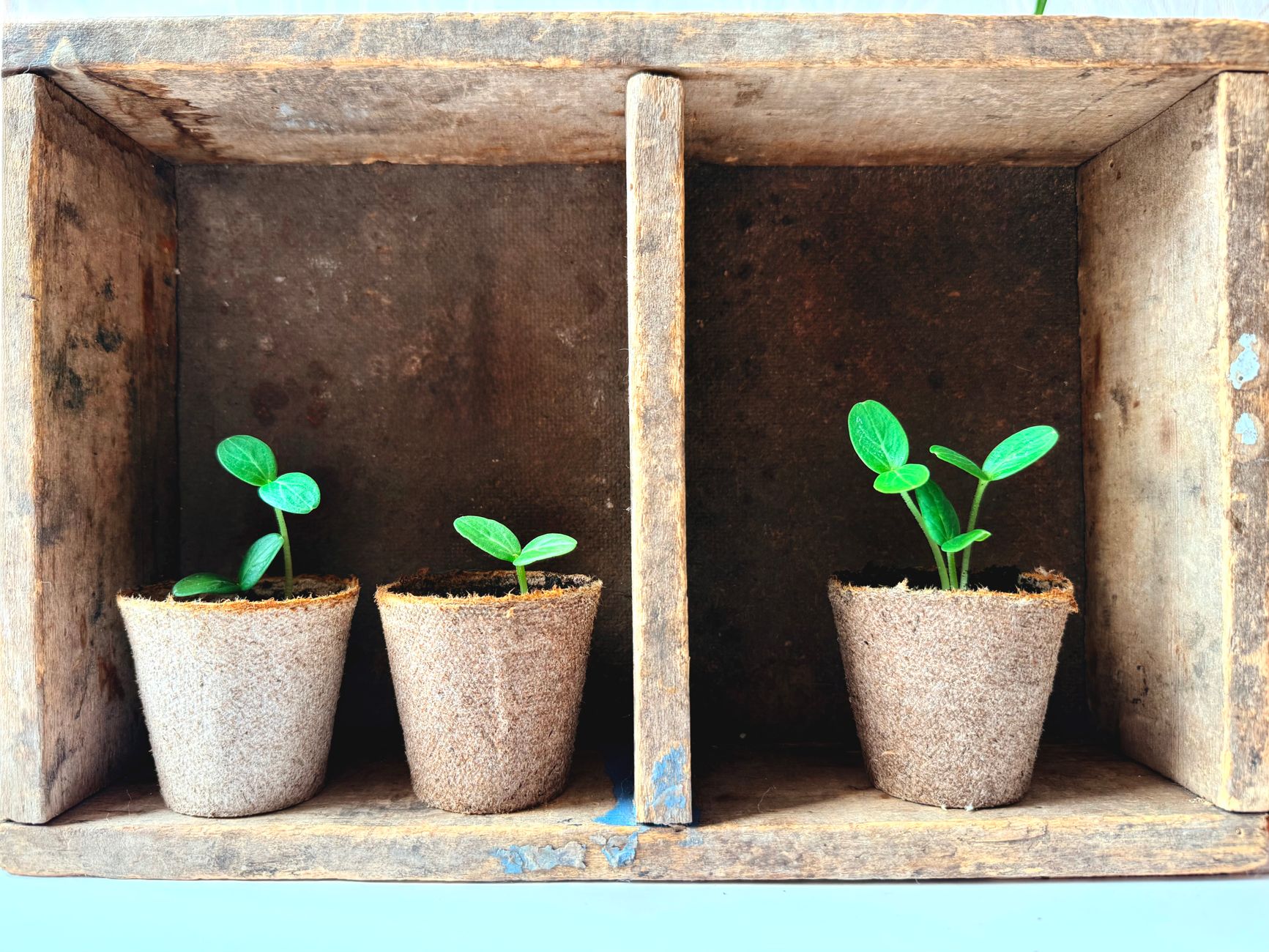
Giant sequoia seed grow kits work in the sense that the seed inside them germinates at the same 30 to 73 percent rate the USDA seed manual reports for the species, and they fail in the same way most home-grown conifers fail: the seedling dies in the months after it sprouts, usually indoors12. The best-known kit, from the Jonsteen Company in Humboldt County, California, costs $10.99 as of September 2026 and contains seed, a soil-less medium, perlite, a mini-greenhouse container, and instructions from stratification through transplanting3. It carries a 100 percent guarantee: free replacement seed if the seed fails to germinate or the seedling dies, backed by a toll-free help line3. A one-year-old seedling from the same company costs $9.99, which is the better buy for anyone who wants a tree rather than a project4.
- Kit price: $10.99 from Jonsteen as of September 2026; also sold through Amazon, Walmart, Etsy, and eBay3
- Contents: seed, soil-less medium, perlite, mini-greenhouse, step-by-step instructions3
- Germination to expect: 30–73 percent by seedlot; 37.8 percent average in a Forest Service trial12
- Guarantee: free replacement seed if germination fails or the seedling dies3
- Main failure: seedlings kept indoors, where dry stagnant air and weak light kill them56
- Alternative: a live seedling for $9.99 to $11.99, or bare-root stock from $11.64478
Disclosure: some links on this page are affiliate links, marked by the products, tours and hotels they name. As an Amazon Associate, sequoia.info earns from qualifying purchases. A purchase through these links may earn the site a commission at no cost to you, and it never affects what is recommended. How this works.
Giant sequoia seed kits sell as gifts on Amazon, Walmart, Etsy, and eBay, and a fair share of them end up as a cup of dead sprouts on a windowsill in March3. This page sets out what a kit actually contains, what the germination science says the odds are, why the seedlings that do come up so often die, and what to buy instead if the point is a living tree of Sequoiadendron giganteum rather than the experience of growing one. The broader process is on the page about how to grow a giant sequoia.
What is in the box
The site earns a commission on purchases made through product links, which does not affect what is recommended.
The Jonsteen Company’s Giant Sequoia Seed Grow Kit is the kit most people mean. As of September 2026 its product page lists the price at $10.99, with shipping calculated at checkout, and describes the contents as high-germination seed, a soil-less growing medium, perlite, a mini-greenhouse container, and step-by-step instructions covering stratification through transplanting3. The listing does not give a per-kit seed count. The company’s classroom version says seed is selected so that each kit produces at least one tree9.
The guarantee is the part that separates the kit from a $6 seed packet. Jonsteen offers a free replacement of the seed if it fails to germinate or if the seedling dies, and staffs a toll-free Tree Help Line at 1-888-387-33793. The company sells the same kit through Amazon, Walmart, Etsy, and eBay3. Prices on those marketplaces could not be verified for this page and vary with the seller; the $10.99 figure is Jonsteen’s own.
For comparison, TreeHelp sells 40 hand-sorted giant sequoia seeds for $6.00 with the same soak-and-stratify instructions and no container10. The kit’s extra five dollars buys the greenhouse cup, the medium, the instructions, and the replacement promise. See the giant sequoia seeds page for the packet vendors compared.
The realistic odds
The seed in a kit is the same species, subject to the same biology, as seed in a packet. The USDA Woody Plant Seed Manual reports germination of 30 to 73 percent across seedlots, with the best documented treatment, a 24-hour leach followed by six weeks of cold stratification, averaging 55 percent1. A 1981 Forest Service trial averaged 37.8 percent across all treatments and found that the seed source mattered more than anything the grower did2. Sheffield’s Seed Company’s 2025 crop tests at 36 percent11.
Those are nursery figures, obtained with controlled temperature, sterile media, and fans. A kit on a kitchen counter will do worse. Germination is best at a constant 59–70 °F; a constant 43 °F is too cold and 86 °F too warm1. Seed sown too deep does not come up, and seed left in full sun for 10 to 20 days can die before germinating12. The kit instructions cover this, and the mini-greenhouse holds humidity, but a cup on a sunny sill in a heated room swings through both extremes in a day.
The honest arithmetic is that a kit with a handful of seeds will usually produce one to a few sprouts, sometimes none, in which case the guarantee applies. The classroom kit’s promise of at least one tree per kit is a statement about seed selection, not a promise about what happens next9.
Why the seedlings die
Germination is not the hard part. The hard part is the first year, and the kit format almost guarantees the mistakes that kill seedlings.
They stay indoors. When a beginner posted on the Bonsai Empire forum that all five of the seedlings from a kit had collapsed near a window, the experienced replies were blunt: comfortable living-room conditions, with stagnant dry air and weak light, are near-certain death for most trees, and the fix is to move seedlings outdoors after the last frost, starting in shade and acclimating to sun5. National Sequoias, a Michigan nursery, says seedlings tolerate indoor conditions only temporarily and need outdoor planting for long-term survival6. Welker’s Grove Nursery, in the Sierra foothills near Shaver Lake, adds that a heated indoor environment disrupts dormancy and the tree loses its seasonal rhythm13.
Damping-off. The Seed Manual flags damping-off and related fungi as serious problems for this species in nursery beds, and the recommended controls, irrigating early in the day, shaking water off the foliage, and running fans, are hard to reproduce in a sealed cup1. Penn State’s guidance is that the disease is favored by excess moisture, overhead misting, crowding, and a medium that is too cold before germination or too warm after it; prevention is a sterile mix, clean containers, bottom heat to hold 70–75 °F, and never waterlogging14.
Overwatering. Once the seedling is up, the greenhouse lid becomes a liability. National Sequoias says overwatering causes root rot, and Jonsteen’s own kit page reduces success to two factors: a sunny location and letting the root zone dry between waterings36.
Drying out. The opposite failure, and the one that kills most seedlings in the wild, where desiccation is the leading cause of first-year death15. A seedling in a small cup in a warm room can go from wet to dry in a day.
Sunlight at the wrong time. Seed needs shade to germinate and the seedling needs sun to grow, in that order1215. Kits that go straight onto a south-facing sill can cook the seed; seedlings kept in the dim spot where the seed germinated then starve.
Skipped stratification. The least fatal mistake. Unstratified seed reaches the same final germination percentage; it just takes weeks longer and comes up unevenly over as long as four months2. A grower who gives up after three weeks may have thrown out viable seed.
The page on why a giant sequoia seedling turns brown goes through the symptoms one by one.
Doing it right, if you do it
Treat the kit as a seed packet with a nice cup. Soak the seed 24 hours, stratify it in the refrigerator for 30 to 60 days, sow no deeper than 1/8 inch in the medium supplied, and keep the cup at 59–70 °F in bright shade until the sprouts show1210. Then take the lid off, move the seedlings to a brighter spot, let the surface dry between waterings, and get them outdoors after frost, into shade first and sun over a couple of weeks35. Expect 2 to 10 inches of growth in the first season16. Move the survivor into a 1- to 3-gallon pot for its first year or two, and plant it out after that6.
None of that is difficult. It is simply not what a kit on a windowsill invites.
What to buy instead if you just want a tree
If the goal is a giant sequoia in the ground, skip germination. The first summer is where most seedlings die, in the wild and in kits alike; in native groves, first-summer mortality averages 39 percent, and it slows sharply only after two or three years1517. A nursery seedling has already survived that stage.
| Option | What it is | Price, as of September 2026 | Source |
|---|---|---|---|
| Jonsteen small seedling | About 1 year old, test-tube-size root plug | $9.99 | 418 |
| Jonsteen medium seedling | 1–2 years old, soup-can-size plug | $19.99 | 19 |
| Jonsteen XL seedling | 2–3 years old, 2-gallon container | $59.99 | 20 |
| National Sequoias small sapling | About 1 year old, Michigan-grown from California seed | $11.99 | 7 |
| Cold Stream Farm (Michigan) bare-root | 3–6 in seedlings; larger grades to 2–3 ft | $11.64 each for 1–3, down to $2.92 at 100+; 2–3 ft from $31.08 | 8 |
| Welker’s Grove Nursery (Auberry, CA) | Container-grown trees in three grades | $25, $30, $35 | 21 |
Jonsteen’s live trees carry a guarantee of their own: if a tree dies despite honest care, the company sends a free small replacement for the cost of shipping18. Welker’s Grove is inspected free of Phytophthora ramorum and authorized to ship to every US state22. The full comparison, including shipping notes, is on the page about where to buy giant sequoia seedlings.
One more thing to rule out before buying anything: whether the tree can live where you are. The straight species is rated for USDA zones 6 to 8 by most sources and Zone 7 by the two most scholarly databases, and it fails in hot, humid climates regardless of care232425. Check the giant sequoia hardiness zones page first, and the honest space assessment on whether a giant sequoia belongs in your backyard.
A note on collecting your own seed
Kits and packets exist partly because collecting is not an option in the obvious places. Under 36 CFR 2.1, removing or possessing plants or plant parts, and the NPS names seeds explicitly, is prohibited in national parks, which covers every cone on the ground in Sequoia, Kings Canyon, and Yosemite2627. National forests require a permit, with rules that vary by forest28.
Frequently Asked Questions
Are giant sequoia seed kits worth it?
What is the germination rate of a giant sequoia seed kit?
Why did my giant sequoia kit seedlings die?
Can you grow a giant sequoia indoors from a kit?
Does the Jonsteen kit have a guarantee?
Yes. If the seed fails to germinate or the seedling dies, the company sends free replacement seed, and it runs a toll-free help line at 1-888-387-33793.
Are the Amazon giant sequoia seed kits the same as Jonsteen's?
Jonsteen sells its kit through Amazon, Walmart, Etsy, and eBay as well as its own site, where the price is $10.99 as of September 20263. Marketplace prices and third-party sellers could not be verified for this page.
How long does a seed kit take to produce a tree?
Related Articles
Sources
- Sequoiadendron giganteum, Woody Plant Seed Manual — USDA Forest Service (Krugman and Boe). Accessed 2026-09-06.
- Effects of Stratification on Germination of Giant Sequoia Seed — Tree Planters’ Notes 32(2), Lauren Fins, USDA Forest Service, 1981. Accessed 2026-09-06.
- Giant Sequoia Seed Grow Kit — Jonsteen Company. Accessed 2026-09-06.
- Giant Sequoia Small Tree Seedling — Jonsteen Company. Accessed 2026-09-06.
- Dying Giant Sequoia Seedlings — Bonsai Empire forum. Accessed 2026-09-06.
- FAQs — National Sequoias. Accessed 2026-09-06.
- Giant Sequoia Small Seedling — National Sequoias. Accessed 2026-09-06.
- Giant Sequoia (Sequoiadendron giganteum) — Cold Stream Farm. Accessed 2026-09-06.
- Education: Life Cycle of a Tree Classroom Germination Project — Jonsteen Company. Accessed 2026-09-06.
- Sequoiadendron giganteum, Giant Sequoia Seeds — TreeHelp.com. Accessed 2026-09-06.
- Sequoiadendron giganteum, Giant Sequoia — Sheffield’s Seed Company. Accessed 2026-09-06.
- Giant Sequoia Germination — California State Parks. Accessed 2026-09-06.
- Giant Sequoia Bonsai Questions — Welker’s Grove Nursery. Accessed 2026-09-06.
- Damping-Off — Penn State Extension. Accessed 2026-09-06.
- Sequoiadendron giganteum, Fire Effects Information System — USDA Forest Service. Accessed 2026-09-06.
- Growing Giant Sequoia from Seed — Superlative Trees. Accessed 2026-09-06.
- Sequoiadendron giganteum, Silvics of North America — USDA Forest Service. Accessed 2026-09-06.
- Frequently Asked Questions — Jonsteen Company. Accessed 2026-09-06.
- Giant Sequoia Medium Tree Seedling — Jonsteen Company. Accessed 2026-09-06.
- Giant Sequoia XL Tree Seedling — Jonsteen Company. Accessed 2026-09-06.
- Giant Sequoia Trees — Welker’s Grove Nursery store. Accessed 2026-09-06.
- About Welker’s Grove Nursery — Welker’s Grove Nursery. Accessed 2026-09-06.
- Sequoiadendron giganteum — NC State Extension Plant Toolbox. Accessed 2026-09-06.
- Sequoiadendron giganteum — The Gymnosperm Database. Accessed 2026-09-06.
- Botryosphaeria Canker — UC Statewide Integrated Pest Management Program. Accessed 2026-09-06.
- 36 CFR § 2.1 Preservation of natural, cultural and archeological resources — Cornell Legal Information Institute. Accessed 2026-09-06.
- Collecting Plants — National Park Service. Accessed 2026-09-06.
- Non-Wood Forest Products — USDA Forest Service, San Bernardino National Forest. Accessed 2026-09-06.