
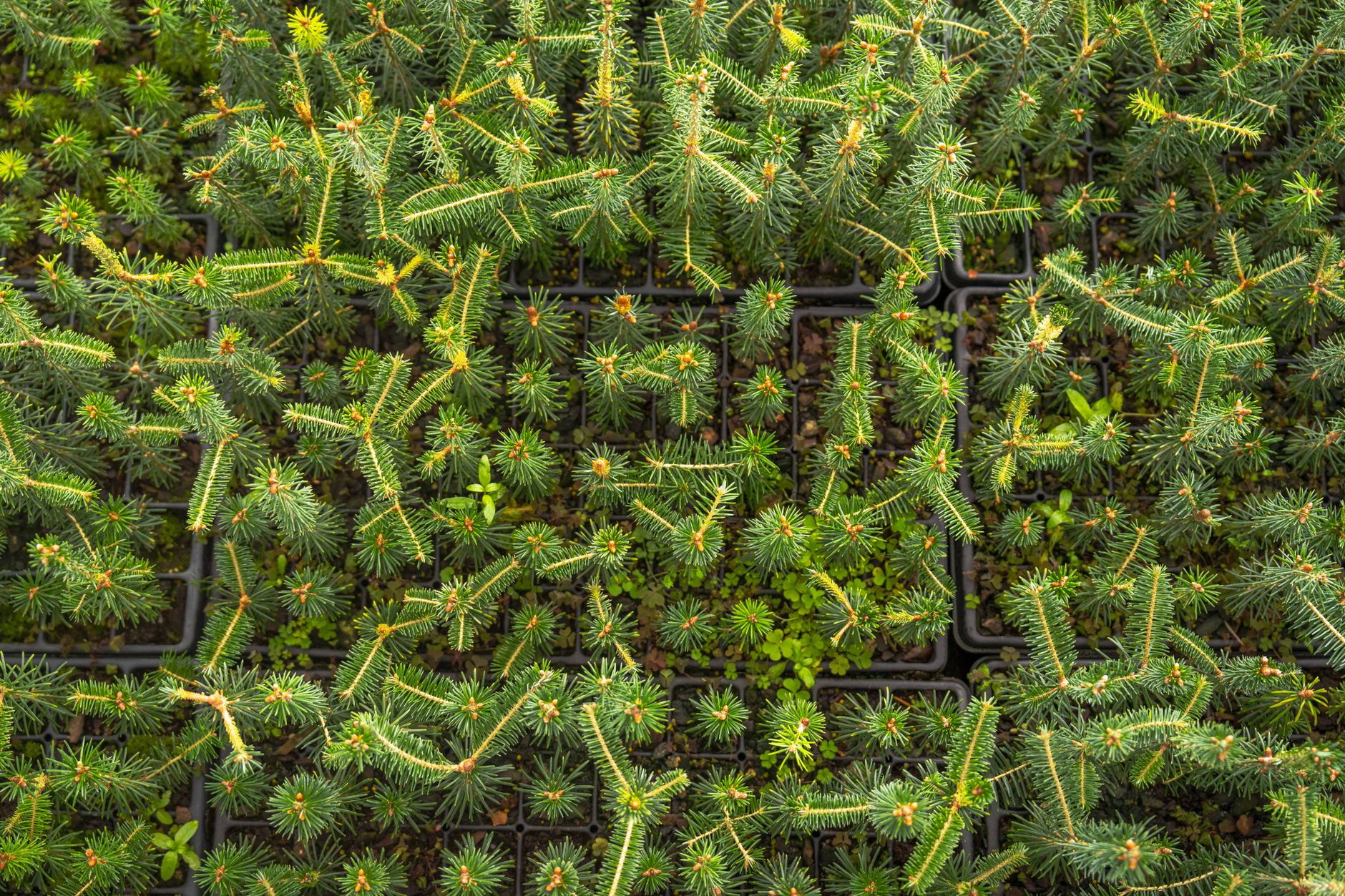
A giant sequoia seedling turning brown has one of a handful of causes, and the pattern of the browning is the fastest way to tell them apart. Uniform browning of older foliage across the whole plant points to drought stress, while patchy, branch-by-branch dieback points to a canker fungus, most often one that takes hold after the plant has already been weakened by heat or dry roots12. Overwatering causes root rot and is a leading killer of container-grown seedlings, while underwatering is the leading killer of young trees planted in the ground34. Seedlings moved indoors browning near a window are usually suffering from dry, stagnant air rather than disease5. Small brown tips on older, inner needles with the newest growth still green is normal shedding, not a problem at all3.
- Overwatering / root rot: extensive browning plus soggy soil signals root rot from overwatering, not underwatering3
- Underwatering / drought: uniform browning of older foliage across the whole tree is the drought-stress pattern2
- Heat stress: roots above about 90°F and air above about 100°F stress the tree even with adequate water6
- Transplant shock: girdling roots plus a wet-to-dry weather swing browned an 11-year-old tree in one documented case1
- Humidity and fungal disease: Botryosphaeria canker and related fungi cause patchy, branch-specific dieback, mainly in hot, humid, or drought-stressed sites78
- Winter burn: young trees exposed to wind after a cold snap following unseasonable warmth turn burgundy, rust, or bronze; it is cosmetic, not fatal4
- Normal shedding: small brown tips on the oldest, innermost needles are routine and not a sign of illness3
A seedling that was green a month ago and is now partly brown is alarming, but the research on giant sequoia problems points to a short list of repeat offenders. This page works through each one as a symptom, a likely cause, and a fix, in the order a grower should check them. For the basics of watering and siting a young tree in the first place, see Giant Sequoia Care and the pillar guide, How to Grow a Giant Sequoia.
Overwatering and root rot
Symptom: browning that spreads rather than stays at the needle tips, often starting at the base of the plant, in soil that stays wet or a pot with poor drainage.
Likely cause: National Sequoias, a commercial grower, states plainly that overwatering causes root rot, and that while small brown tips on older needles are normal, extensive browning signals either root trouble or insufficient moisture, not the reverse3. Waterlogged, poorly drained soil is also flagged by other growers as a direct cause of root and crown rot9. A soggy root zone starves roots of oxygen, and the fine white feeder roots that giant sequoia relies on for water and nutrient uptake die back first.
Fix: let the soil dry slightly between waterings rather than keeping it constantly saturated3. Check drainage before adding more water: a pot with no drainage hole, or a planting site that collects standing water, will not improve no matter how carefully you schedule irrigation. If the tree is in the ground, avoid swampy or high-water-table spots from the start9.
Underwatering and drought stress
Symptom: uniform browning of older foliage spread evenly across the whole plant, rather than concentrated on one branch or side.
Likely cause: drought is described as the major cause of death in young landscape giant sequoias, and the species is more moisture-demanding than most other Sierra conifers, needing year-round soil moisture of at least 15-20%1011. Trees and Shrubs Online notes specifically that drought alone tends to brown older foliage uniformly across the entire tree, which is the detail that separates it from a fungal problem2.
Fix: never let the root zone dry out completely, and keep watering right up until the ground freezes in fall so winter wind does not desiccate the tree over winter4. For a tree already showing drought stress, one extension case recommended checking soil moisture weekly with a moisture meter, watering slowly and deeply when it registers dry, and expecting roughly two years of consistent supplemental watering through dry spells before the tree is established enough to rely on natural rainfall1.
Heat stress
Symptom: browning that appears during or shortly after a heat wave, sometimes with no obvious drought (the soil may still be moist).
Likely cause: giant sequoia bonsai and container-growing guidance notes that the tree should be shaded once air temperatures exceed roughly 100°F, specifically to keep the root zone below about 90°F, implying that root-zone heat, not just air temperature, is the stressor6. Containers heat up faster than ground soil, which is one reason potted seedlings are more heat-vulnerable than the same tree planted out; see Growing a Giant Sequoia in a Pot for more on that trade-off.
Fix: move potted seedlings into partial shade during the hottest part of summer afternoons, and mulch the root zone of in-ground trees to buffer soil temperature. This does not replace adequate watering; heat and drought stress typically arrive together.
Transplant shock
Symptom: browning that develops in the weeks or months after a seedling is moved to a new pot or planted in the ground, sometimes with no clear watering mistake.
Likely cause: one documented case involved an 11-year-old giant sequoia in West Virginia that browned after going from a saturated growing season to a hot, dry one without supplemental irrigation; the responding extension agent also found girdling roots on the same tree, meaning the roots were circling inside the original container rather than spreading outward, a common problem in pot-grown stock that is not corrected before planting1. The combination of a compromised root system and a stressful weather swing is what triggered the visible browning.
Fix: before planting a container-grown seedling, check the root ball for roots that circle the outside of the pot and gently loosen or straighten them so they will grow outward rather than continue circling and eventually girdle the trunk. After transplanting, expect the tree to need closer-than-normal attention to soil moisture for at least the first year or two while new roots establish1.
Humidity and fungal disease
Symptom: patchy or branch-specific dieback rather than even browning across the whole tree; recently killed branches may show a reddish-brown color with yellowish pitch, while older, longer-dead cankers look grayish-brown and bare of needles.
Likely cause: giant sequoia is a documented host of Botryosphaeria canker, a fungus that typically infects trees already stressed by drought or grown outside their native climate, especially in warmer or more humid locations, and that spreads mainly through splashing rain or overhead irrigation7. A 2024 study of ten diseased planted giant sequoias in Germany found crown and shoot dieback, needle browning, and basal wood discoloration linked to nine fungi newly reported on the species; every diseased tree in the study had experienced a precipitation deficit and extreme summer heat beforehand, which the researchers treat as the predisposing stress that let the fungi take hold8. Outside its native range, the US Forest Service’s species review states that giant sequoias of all ages are highly susceptible to, and sometimes rapidly killed by, several organisms that would not threaten a tree growing in the Sierra Nevada12. This is also the core reason the species performs poorly in hot, humid climates such as the Southeast; see Giant Sequoia Hardiness Zones for the regional picture.
Fix: water at the base rather than overhead, avoid wetting the foliage where possible, and keep the tree as unstressed as possible on the drought and heat fronts above, since fungal cankers in this species are described as secondary invaders of an already-weakened tree rather than a primary threat to a healthy one78.
Winter burn
Symptom: young trees, generally under about a year old and occasionally up to five, turn burgundy, purplish-red, rust, or bronze after a cold snap that follows a spell of unseasonable warmth.
Likely cause: Welker’s Grove Nursery, a commercial giant sequoia grower, describes this pattern in detail: seedlings that are buried in snow do not discolor, but ones left exposed to drying winter wind do, and the color change is cosmetic rather than a sign the tree is dying4. Adequate soil water going into winter reduces how severe the discoloration gets4. In colder zones, National Sequoias recommends winter-protecting young trees for their first two to three winters, including storing potted trees in an unheated garage over the coldest stretches13.
Fix: water well before the ground freezes, mulch the root zone, and where practical give young trees wind protection through their first few winters. The color typically returns to green with new growth the following season; treat winter bronzing as a cosmetic warning about wind exposure and soil moisture, not a diagnosis of disease.
Normal inner-needle shedding
Symptom: small, isolated brown tips confined to the oldest needles closest to the trunk, while the newest growth at the branch tips stays green.
Likely cause: this is not a problem. National Sequoias’ own guidance states directly that small brown tips on older needles are normal, and draws the line at “extensive” browning as the threshold that actually signals root trouble or insufficient moisture3. Evergreen conifers continuously shed their oldest foliage as new growth replaces it; a giant sequoia doing this is behaving normally.
Fix: none needed. If you are unsure whether what you are seeing is normal shedding or a real problem, check whether the browning is limited to old, interior needles (normal) or spreading to new growth and whole branches (not normal, and worth working through the causes above).
Frequently Asked Questions
Why are my giant sequoia seedlings dying indoors?
Comfortable indoor conditions, meaning warm, dry, stagnant air and comparatively weak light, are described as near-certain death for most seedlings kept in a living room; the fix is to move them outdoors after the last frost, starting in shade and gradually acclimating to full sun5. A heated indoor environment also disrupts the tree’s normal dormancy cycle14.
How do I tell drought stress from a fungal problem?
Drought tends to brown older foliage uniformly across the whole tree, while fungal cankers cause patchy, branch-by-branch dieback with a visible transition between dead and living tissue2.
Is brown, dying inner foliage always a bad sign?
No. Small brown tips confined to the oldest needles, closest to the trunk, are normal shedding. Extensive browning that spreads to newer growth is the signal to check watering and roots3.
Can overwatering and underwatering cause the same symptom?
Should I fertilize a browning seedling to help it recover?
No. Extension guidance on a stressed giant sequoia specifically advised against fertilizing until the tree has recovered, since feeding a stressed root system can add further stress rather than help1.
Will a seedling that turned brown from winter cold recover?
Usually. Winter bronzing in young trees is described as harmless and reversible with the return of the growing season, especially if the tree had adequate soil moisture going into winter4.
What does transplant shock look like versus a disease?
Related Articles
Sources
- FAQ: Giant sequoia browning — Ask Extension (West Virginia case). Accessed 2026-09-06.
- Sequoiadendron giganteum — Trees and Shrubs Online, International Dendrology Society. Accessed 2026-09-06.
- FAQs — National Sequoias. Accessed 2026-09-06.
- Giant Sequoia Landscape Questions — Welker’s Grove Nursery. Accessed 2026-09-06.
- Dying giant sequoia seedlings — Bonsai Empire forum. Accessed 2026-09-06.
- Giant Sequoia Bonsai Care — Welker’s Grove Nursery. Accessed 2026-09-06.
- Botryosphaeria Canker — UC Statewide Integrated Pest Management Program. Accessed 2026-09-06.
- Giant sequoia disease study — PMC / peer-reviewed journal, 2024. Accessed 2026-09-06.
- Grow Redwoods: Giant Sequoia, Coast Redwood, and Dawn Redwood — Gardener’s Path. Accessed 2026-09-06.
- Giant Sequoia Landscape Questions — Welker’s Grove Nursery. Accessed 2026-09-06.
- Giant Sequoia (Sequoiadendron giganteum) — UC Agriculture and Natural Resources. Accessed 2026-09-06.
- Sequoiadendron giganteum — Fire Effects Information System, USDA Forest Service. Accessed 2026-09-06.
- FAQs — National Sequoias. Accessed 2026-09-06.
- Giant Sequoia Bonsai Questions — Welker’s Grove Nursery. Accessed 2026-09-06.