
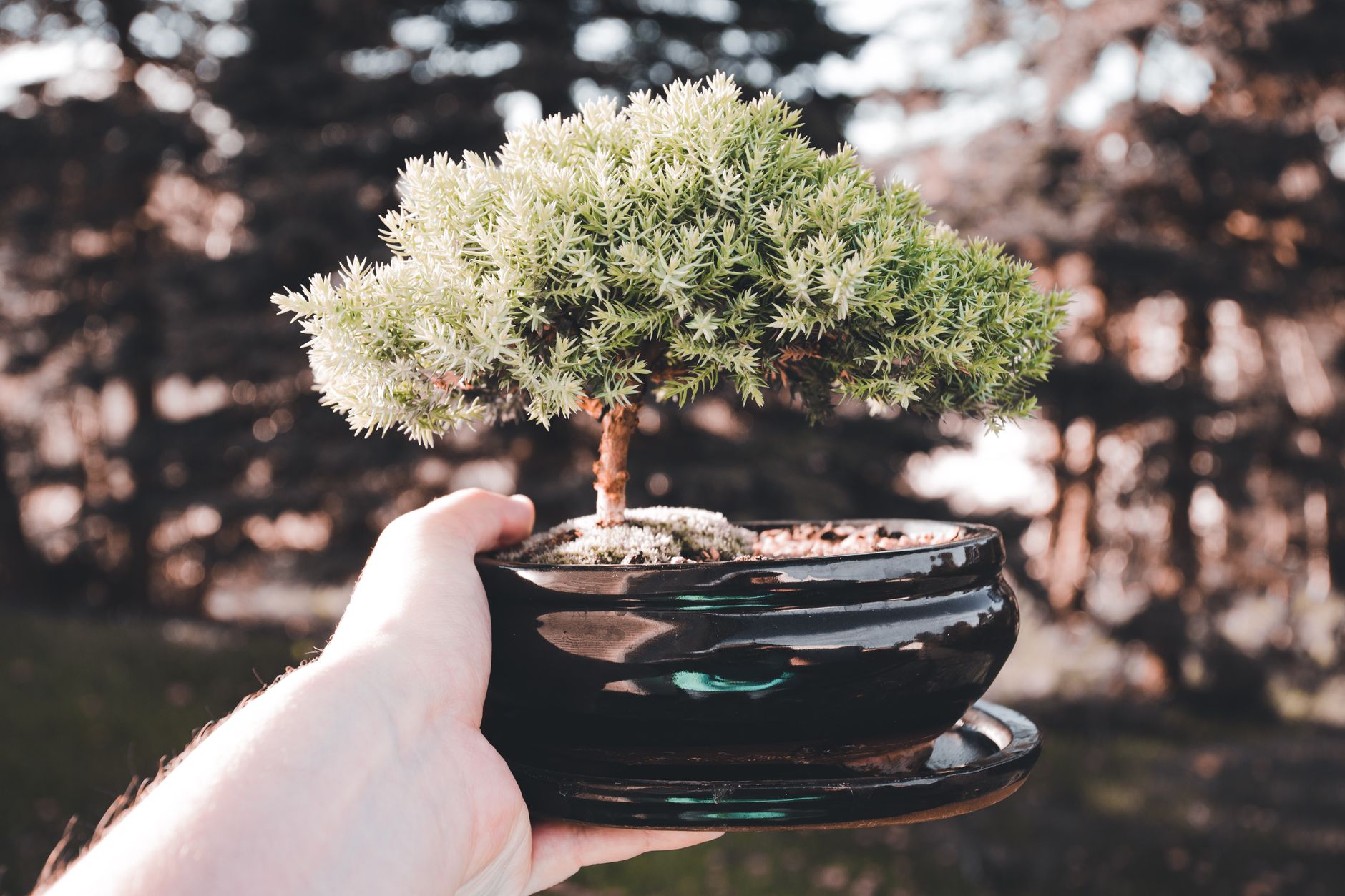
Giant sequoia bonsai is possible, but the species is described as seldom used for the practice, unlike its close relatives coast redwood and dawn redwood, which are standard bonsai subjects1. The core difficulty is water: unlike most bonsai species, giant sequoia wants constantly moist, never-dry soil, which cuts against typical bonsai discipline, and roots must be kept below about 90°F even when the tree needs part-day direct sun2. Root pruning has to be conservative, removing no more than about 20% of the root ball at a repotting and keeping soil intact on at least 75% of it to protect fine feeder roots, done only during winter dormancy3. Giant sequoia does not typically resprout from old wood or the base the way coast redwood does, so bonsai styling on this species relies on shaping existing branches and encouraging back-budding rather than cutting hard and waiting for new shoots4. A documented UK progression shows it can be trained successfully over several years with selective branch removal, jinning (deadwood carving), and annual foliage plucking5.
- Giant sequoia is rarely used for bonsai compared with coast redwood and dawn redwood, which are the standard redwood bonsai subjects1
- The species needs constantly moist soil and must not be allowed to dry out, unlike most bonsai trees2
- Shade the tree when air temperature exceeds about 100°F, to keep the root zone below roughly 90°F2
- Root-prune only in winter dormancy, removing no more than about 20% of the root ball at a time3
- Giant sequoia does not typically resprout from old wood, unlike coast redwood, which limits recovery from hard pruning mistakes4
- A heated indoor environment disrupts the tree’s normal dormancy and seasonal rhythm6
- One documented UK bonsai, developed 2005-2009, used branch removal, jinning, and annual foliage plucking to shape a naturalistic silhouette5
Disclosure: some links on this page are affiliate links, marked by the products, tours and hotels they name. As an Amazon Associate, sequoia.info earns from qualifying purchases. A purchase through these links may earn the site a commission at no cost to you, and it never affects what is recommended. How this works.
Giant sequoia is not the redwood most bonsai growers reach for, and the research bears that out. This page lays out what is actually documented about growing one as bonsai: whether it can be done at all, what makes it harder than the redwood species usually used, and the care routine that specialist sources describe. For growing a full-size tree instead, start with How to Grow a Giant Sequoia; for a tree in a large but ordinary container rather than bonsai training, see Growing a Giant Sequoia in a Pot.
Can giant sequoia actually be bonsai'd
Yes, with qualifications. Bonsai Empire’s redwood care guide states that giant sequoia is seldom used for bonsai, while coast redwood and dawn redwood are standard subjects in the practice1. That is not the same as saying it cannot be done. A documented example exists: UK bonsai artist Craig Coussins developed a giant sequoia bonsai between 2005 and 2009 using selective branch removal and jinning (the technique of carving and preserving deadwood on a live tree) to echo the species’ natural silhouette, with hard foliage plucking once a year in early summer and again in September, wiring done in June, and heavy fertilization with a commercial feed5. Welker’s Grove Nursery, a California conifer specialist, sells giant sequoia bonsai stock directly and describes the species’ care as unique mainly in its water demands rather than in being unsuited to bonsai altogether72.
The honest summary: it is a workable but minority-interest bonsai subject, better documented through general redwood bonsai practice and one detailed progression than through a large body of specialist literature. No bonsai club or society article specific to giant sequoia bonsai technique could be found to expand on this beyond what is covered below.
Why it is harder than coast redwood or dawn redwood
Three traits set giant sequoia apart from the redwoods more commonly used for bonsai.
It wants constantly moist soil. Bonsai discipline for most species involves managed dry-down between waterings to control vigor and size. Giant sequoia works differently: Welker’s Grove’s bonsai care page states that unlike most bonsai species, giant sequoia wants constantly moist, not muddy, soil and must never be allowed to dry out completely2. That makes it less forgiving of a missed watering day than many standard bonsai species.
It does not resprout from old wood. Coast redwood resprouts vigorously from burls and basal buds, sometimes called fairy rings, which gives bonsai growers a safety net: a hard prune or dieback can often be recovered by encouraging new basal growth4. Giant sequoia does not typically resprout this way4. In practice, this means bonsai styling on giant sequoia has to work with the branches the tree already has, relying on back-budding near existing growth rather than cutting deep and waiting for the trunk to throw new shoots.
Its roots fill a pot fast and need conservative handling. Welker’s Grove’s bonsai FAQ specifies that root pruning should happen only when moving to a smaller pot, only during winter dormancy, removing no more than about 20% of the root ball at a time, and keeping soil intact on at least 75% of the root ball to protect the fine white feeder roots the tree depends on3. Bonsai Empire’s general redwood guidance recommends repotting every two years with considerable root pruning because redwood roots fill pots quickly1, so a giant sequoia bonsai needs frequent but careful repotting rather than the longer intervals some other conifers tolerate.
Care routine, as documented
Light and heat. Give the tree a sunny position with some shade in the hottest stretch of summer, consistent with general redwood bonsai guidance1. Welker’s Grove is more specific for giant sequoia: shade it once air temperature passes roughly 100°F, with the underlying goal of keeping the root zone below about 90°F, since heat stress in this species shows up at the roots as much as in the foliage2.
Water. Keep the soil constantly moist through the growing season; this is the trait growers most often get wrong by applying standard bonsai dry-down technique2. General redwood bonsai guidance calls for lots of water in summer in a well-draining but moisture-retentive soil mix1.
Winter. In cold climates, the real danger to a containerized giant sequoia is dehydration, not the cold itself. Water thoroughly before the ground freezes, and keep the pot in a well-drained cold frame or buried in snow rather than moving it into a heated house8. A heated indoor environment disrupts the tree’s normal dormancy cycle and seasonal rhythm even if the tree survives for a while6. Frost protection matters more for container specimens than for trees in open ground, which is standard advice across redwood bonsai generally1.
Feeding. Do not try to miniaturize the tree by starving it. Feed generously and control size through pruning instead, which is the opposite instinct from some other bonsai species2. The 2005-2009 UK progression used heavy fertilization with a commercial feed as part of its development5.
Pruning and wiring. Remove the abundant buds that tend to appear near pruning scars, a general redwood-bonsai habit1. In the documented UK example, foliage was hand-plucked once a year in early summer and again in September, with wiring done in June5. Because the species does not resprout from old wood, style decisions should assume that a cut branch is gone for good rather than a future new shoot4.
Pests. Redwood bonsai in general is described as rarely troubled by pests1. The one documented nuisance in the UK progression was wasps stripping bark to build nests, which is a specimen-specific problem rather than a routine care issue5.
Propagation. Standard redwood bonsai propagation methods are seed, cuttings, or air layering1. For starting material, see Giant Sequoia Seeds and Where to Buy Giant Sequoia Seedlings; a small, inexpensive seedling is a reasonable way to begin training without committing a larger, more expensive tree to an experimental technique.
Where to get stock and supplies
Welker’s Grove Nursery in Auberry, California sells giant sequoia bonsai stock directly, alongside its landscape-size trees and other conifers7. Jonsteen‘s XL seedling, which ships in roughly a 2-gallon container, is one option for starting bonsai training from a slightly more developed young tree rather than a fresh seedling9. For wire, shallow bonsai pots, root hooks, and pruning shears, Amazon carries a wide range of general bonsai tool brands; the site earns a commission on qualifying purchases made through Amazon links, which does not affect what is recommended. No specific tool model is named here because the research behind this page did not document giant sequoia growers recommending particular brands.
Should you try it
The honest case for giant sequoia bonsai is modest. It is a documented, achievable project, not a fringe impossibility, but it demands more consistent watering discipline than most bonsai species and offers less room for error when pruning goes wrong, since the tree will not resprout to bail you out. Growers drawn to giant sequoia specifically, rather than to bonsai as a general hobby, may find more reward in a full-size tree grown from seed or a nursery seedling, covered in How to Grow a Giant Sequoia, or in a large-pot compromise covered in Growing a Giant Sequoia in a Pot, which does not require the same level of root-pruning precision.
Frequently Asked Questions
Can you bonsai a giant sequoia?
Why is giant sequoia harder to bonsai than coast redwood?
Coast redwood resprouts vigorously from burls and basal buds, giving bonsai growers room to recover from hard pruning. Giant sequoia does not typically resprout this way, so styling has to work with existing branches4.
Does a giant sequoia bonsai need to dry out between waterings like other bonsai?
No. Unlike most bonsai species, giant sequoia wants constantly moist soil and should not be allowed to dry out completely2.
Can I keep a giant sequoia bonsai indoors?
How often should a giant sequoia bonsai be repotted?
General redwood bonsai guidance calls for repotting roughly every two years with considerable root pruning, since redwood roots fill pots quickly; for giant sequoia specifically, root pruning should be conservative, no more than about 20% of the root ball at a time, and done only in winter dormancy13.
What is the biggest risk to a giant sequoia bonsai in winter?
Dehydration, not cold. Water the tree well before the ground freezes and keep it in a well-drained cold frame or under snow rather than bringing it into a heated house8.
Related Articles
Sources
- Redwood — Bonsai Empire. Accessed 2026-09-06.
- Giant Sequoia Bonsai Care — Welker’s Grove Nursery. Accessed 2026-09-06.
- Giant Sequoia Bonsai Questions — Welker’s Grove Nursery. Accessed 2026-09-06.
- What’s the Difference: Coast Redwoods vs. Giant Sequoias — Save the Redwoods League. Accessed 2026-09-06.
- Giant Sequoia progression — Bonsai Empire. Accessed 2026-09-06.
- Giant Sequoia Bonsai Questions — Welker’s Grove Nursery. Accessed 2026-09-06.
- Welker’s Grove Nursery — Welker’s Grove Nursery. Accessed 2026-09-06.
- Giant Sequoia Bonsai Care — Welker’s Grove Nursery. Accessed 2026-09-06.
- Giant Sequoia XL Tree Seedling — Jonsteen Company. Accessed 2026-09-06.
- Dying giant sequoia seedlings — Bonsai Empire forum. Accessed 2026-09-06.