
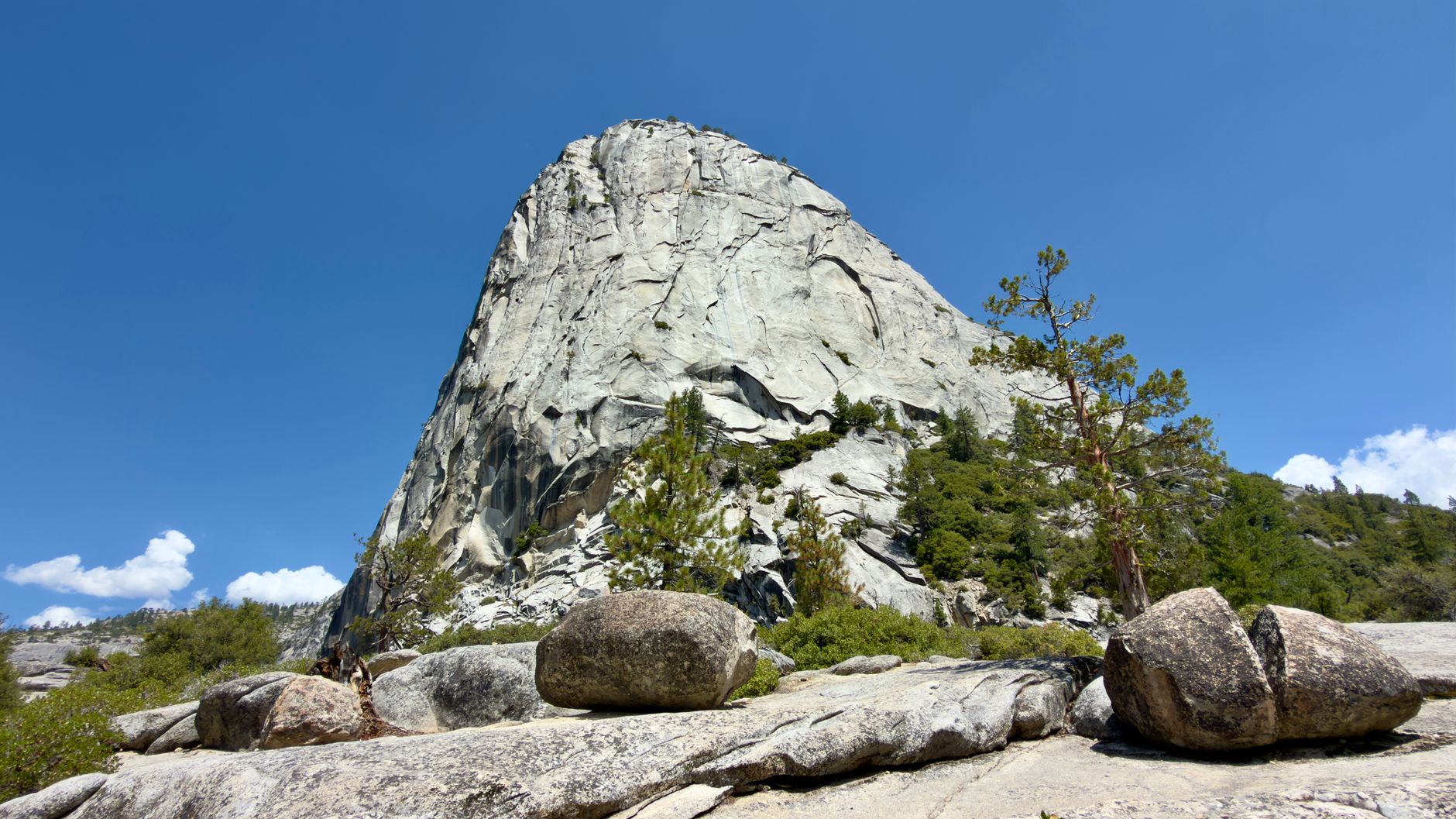
The land now inside Sequoia and Kings Canyon National Parks is the homeland of the Mono (Monache), Yokuts, Tübatulabal, Paiute, and Western Shoshone peoples1. The National Park Service lists 15 federally recognized tribes and 11 additional state-recognized and other tribes with ancestral ties to these parks1. Hospital Rock, in the foothills along the Generals Highway, was a village of hundreds of Mono, Yokuts, and Tübatulabal people; its pictographs are sacred and their meaning is not public2. Deliberate burning by Native peoples was one of the forces that kept Sierra forests open, and the National Park Service names the decline of that burning after about 1860, alongside sheep grazing and government fire suppression, as a reason fire frequency in Giant Forest collapsed3.
- Peoples named by the parks: Mono (Monache), Yokuts, Tübatulabal, Paiute, Western Shoshone1
- Affiliated tribes today: 15 federally recognized, plus 11 state-recognized and other tribes1
- Hospital Rock: a village of hundreds; pictographs sacred, meaning not publicly known2
- Fire before 1860: widespread fires in Giant Forest every 6 to 35 years for two millennia3
- What changed after 1860: sheep grazing, the decline of Native American burning, then formal fire suppression3
- Displacement: forced relocation and reorganization beginning in the 1860s14
- Continuing today: basket making, traditional land management, and language work1
Two threads run through this page. The first is who lived in and around the giant sequoia groves, as the National Park Service and affiliated tribes describe it. The second is what deliberate, low-intensity burning did to these forests, and why fire scientists spent the second half of the twentieth century rediscovering a practice that had already been abandoned. Both belong in the history of Sequoia National Park, and neither is finished history: the tribes are present, and the burning has resumed under a different name.
A caution about sourcing. Much of what circulates online about specific bands, village names, and origin stories in this range is unsourced or contested. This page names only the peoples the parks name and states only what official sources state.
The peoples of these lands
The National Park Service describes Sequoia and Kings Canyon as the homelands of the Mono (Monache), Yokuts, Tübatulabal, Paiute, and Western Shoshone1. That is a description of a region, not a map of exclusive territories; the Sierra Nevada’s western slope, crest, and eastern escarpment supported different peoples in different ecological zones, connected by trade routes over the passes.
Fifteen federally recognized tribes hold ancestral ties to the parks. Among them the park lists the Big Sandy Rancheria Band of Western Mono Indians, the Bishop Paiute Tribe, the Fort Independence Indian Community of Paiute Indians, the North Fork Rancheria of Mono Indians, and the Tule River Tribe1. Eleven further tribes, state-recognized or otherwise affiliated, include the Southern Sierra Miwuk Nation, the Wukchumni Tribe, and the Tübatulabal Tribe1.
Displacement, forced relocation, and forced reorganization from the 1860s onward substantially changed those peoples’ relationships to these lands14. The parks state it plainly rather than gently, which is the right way to state it.
Hospital Rock
The clearest surviving evidence of village life inside the park boundary sits in the foothills along the Generals Highway, between the Ash Mountain entrance and Giant Forest. Hospital Rock was a village of hundreds of Mono, Yokuts, and Tübatulabal people. Pictographs painted on the rock face are sacred, and their meaning is not publicly known2.
There is a picnic area at the site and the pictograph panel is a short walk from the road. It is worth stopping. It is not worth touching anything: pigment on granite is fragile, and skin oils wreck it.
What cultural burning was
Cultural burning was not fire prevention in the modern sense, though it worked as that too. It was cultivation.
The National Park Service’s account of Indigenous fire practice describes the pattern most directly for Yosemite Valley to the north, where people periodically set fires to promote the growth of milkweed, dogbane, sedge root, and bunch grass, maintaining meadows and oak woodlands that provided food, medicine, and the raw material for baskets, string, and shelter5. Sediment cores from Yosemite Valley show a marked increase in ash deposits after people began living there5. The Southern Sierra Miwuk Nation, one of the tribes NPS lists as tied to Yosemite’s burning tradition, is also among the tribes with ancestral ties to Sequoia and Kings Canyon15.
Those are plant-scale objectives, repeated at short intervals. The forest-scale consequence was a landscape of open stands with little accumulated fuel, which is exactly the condition a giant sequoia grove needs to keep producing new trees.
What the fire record shows
Giant sequoia wood keeps a fire diary. Each fire that scars a trunk leaves a mark that can be dated to the year by counting rings, and the parks have used those scars to reconstruct two thousand years of fire history.
The result: widespread fires recurred in Giant Forest at intervals of about 6 to 35 years, depending on the period, and the frequency was highest during a warm, drought-prone stretch between roughly 800 and 1300 CE3. In the Redwood Mountain drainage, fire came about every 7 to 15 years6. The Forest Service’s fire effects review calls giant sequoia forest a fire climax community with presettlement intervals of 5 to 25 years7.
Then the record breaks. Around 1860 fire frequency drops sharply, and the National Park Service attributes the change to three overlapping causes: intensive sheep grazing that consumed the fine fuels fire travels on, decreased Native American burning, and the government fire suppression policy that followed3.
It is important to be precise about what this evidence supports. Fire scars record that fires happened and how often; they do not distinguish a lightning strike from a lit fire. What the parks assert is that Native burning was part of the regime, and that its removal was part of the collapse. The scale of the resulting problem is not in dispute: fire exclusion is the single most significant human impact on the species, per the Forest Service’s silvics manual8.
What came after
The consequences arrived slowly and then all at once. A century and a half of fuel accumulation left sequoia groves with deep duff and dense understory fir, and when fire returned in drought years it burned hot enough to kill trees that had survived dozens of previous fires. The National Park Service estimates that the 2020 and 2021 wildfires killed 13 to 19 percent of all large giant sequoias on Earth9. That story is told in full on the page about the Castle, KNP Complex, and Windy fires.
The corrective, when it came, was fire deliberately set. Researchers began studying the question in 1963 and 1964, and Sequoia and Kings Canyon began prescribed burning in 19686. The practice and its results are covered under why rangers deliberately burn sequoia groves and why giant sequoias need fire.
The tribes today
Descendants of these peoples continue traditional land management, basket making, which the parks describe as an essential part of tribal traditions, and language preservation work1. The parks employ tribal liaison staff, including a Cultural Resources Program Manager, and consult with affiliated tribes on management decisions1.
One thread of the parks’ recorded history runs directly through that relationship. When Hale Tharp became the first documented Euro-American settler in Giant Forest in 1858, he did not find it alone: Chief Chappo invited him to the village, and Monache and Yokuts guides led him on the high routes10. The page on Hale Tharp covers what followed.
Visiting with some care
- Pictographs and bedrock mortars are archaeological sites protected by federal law. Look, photograph, do not touch, do not chalk, do not add anything.
- Do not collect anything from the ground, including obsidian flakes and acorns.
- The meaning of the Hospital Rock pictographs is not public knowledge, and interpretations you find online are not authoritative2.
- Ranger programs and park exhibits are the place to ask questions; park staff work with affiliated tribes on what is appropriate to share.
Frequently Asked Questions
Which Native American peoples lived in the sequoia groves?
The National Park Service describes Sequoia and Kings Canyon as the homelands of the Mono (Monache), Yokuts, Tübatulabal, Paiute, and Western Shoshone peoples1.
How many tribes are affiliated with Sequoia and Kings Canyon today?
Twenty-six. The parks list 15 federally recognized tribes and 11 additional state-recognized and otherwise affiliated tribes with ancestral ties1.
What is Hospital Rock?
A village site in the park’s foothills that was home to hundreds of Mono, Yokuts, and Tübatulabal people, with pictographs painted on the rock. The pictographs are sacred and their meaning is not publicly known2.
What is cultural burning?
Deliberate, low-intensity burning used to cultivate specific plants and maintain open meadow and oak woodland. In the Sierra, NPS describes fires set to promote milkweed, dogbane, sedge root, and bunch grass for food, medicine, and basketry material5.
Did Native burning affect the giant sequoias?
The parks name decreased Native American burning as one of three causes, alongside sheep grazing and government fire suppression, of the sharp drop in fire frequency in Giant Forest after about 18603. Frequent low-intensity fire is what sequoia reproduction depends on.
Are today's prescribed burns the same as cultural burning?
Can visitors learn about this history in the park?
Related Articles
Sources
- American Indians of Sequoia and Kings Canyon — National Park Service, Sequoia & Kings Canyon. Accessed 2026-09-09.
- Hospital Rock Pictographs — National Park Service. Accessed 2026-09-09.
- Giant Sequoias and Fire — National Park Service, Sequoia & Kings Canyon. Accessed 2026-09-09.
- History & Culture — National Park Service, Sequoia & Kings Canyon. Accessed 2026-09-09.
- Indigenous Fire Practices Shape Our Land — National Park Service. Accessed 2026-09-09.
- Whitaker Prescribed Fire — National Park Service. Accessed 2026-09-09.
- Fire Effects Information System: Sequoiadendron giganteum — U.S. Forest Service. Accessed 2026-09-09.
- Sequoiadendron giganteum, Silvics of North America — U.S. Forest Service. Accessed 2026-09-09.
- Giant Sequoias Face New Threats — National Park Service. Accessed 2026-09-09.
- Tharp’s Log Wayside — National Park Service. Accessed 2026-09-09.