
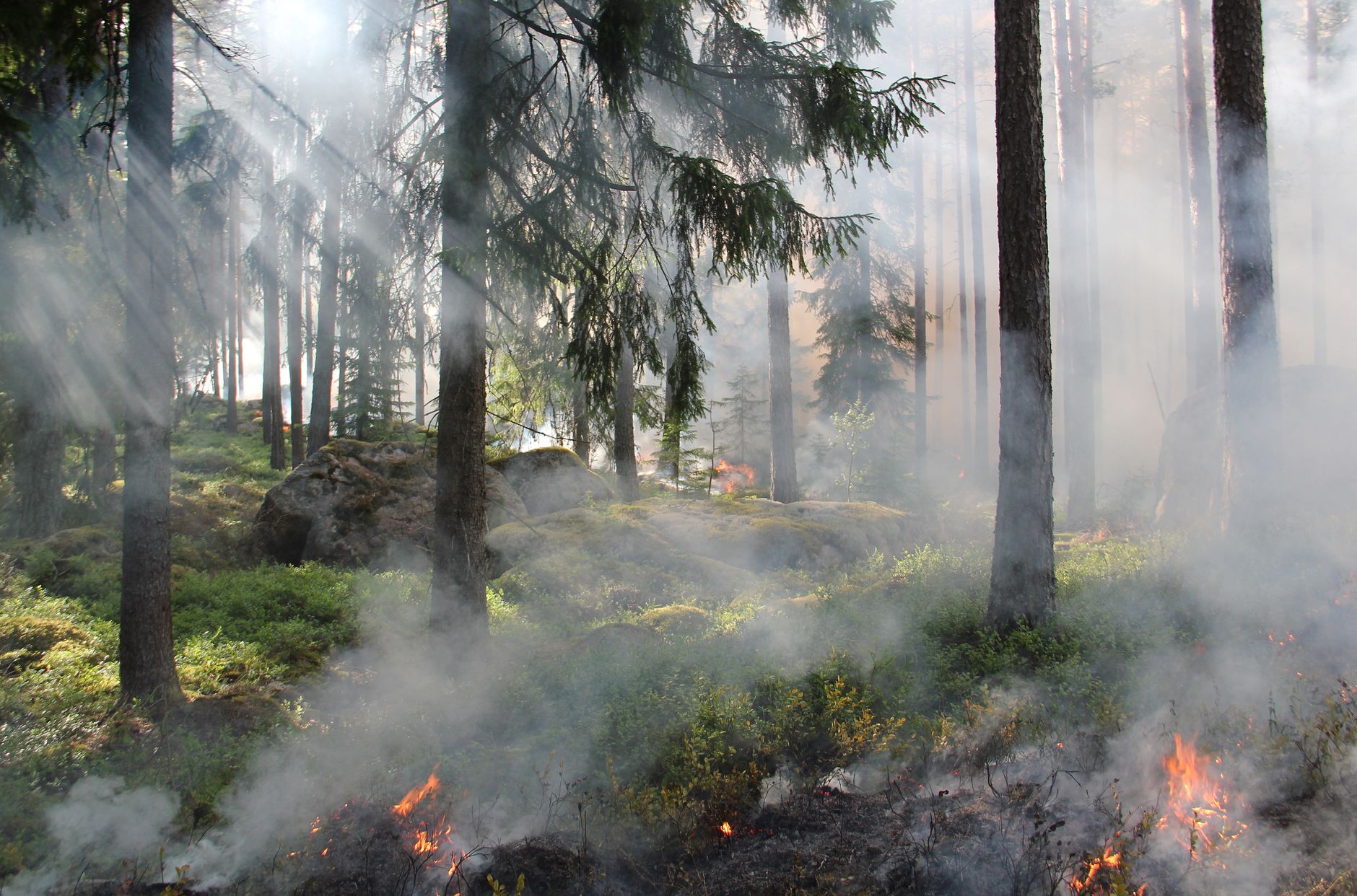
Sequoia and Kings Canyon National Parks light deliberate, controlled fires in giant sequoia groves because the trees need fire to reproduce and because a century of fire suppression left enough fuel on the ground to kill them. Researchers from the National Park Service and the University of California began studying the question in 1963 and 1964, and the parks started prescribed burning in 1968, making Redwood Mountain the birthplace of prescribed fire in the western United States1. Before about 1860, widespread fires recurred in Giant Forest every 6 to 35 years2. The payoff came in 2021, when the KNP Complex Fire burned through Giant Forest at low intensity on ground that had been burned deliberately since 197934.
- Program start: 1968, after research beginning in 1963–641
- Historic fire interval: every 6–35 years in Giant Forest, every 7–15 years at Redwood Canyon12
- Giant Forest treated since: 1979, including a 245-acre burn around the General Sherman Tree in 20193
- Whitaker burn, June 2012: 504 acres at Redwood Mountain, 429 on park land and 75 on UC Berkeley land1
- Why it works: fire clears fuel, exposes bare mineral soil, and opens sunlit canopy gaps young sequoias need2
- What it prevented: low-severity fire in Giant Forest during the 2021 KNP Complex, against 40% of Redwood Mountain Grove burning at moderate-to-high severity45
- The backlog: more than 85% of all grove acreage burned in wildfires between 2015 and 2021, against about 25% in the previous century6
Setting fire to the largest trees on Earth on purpose sounds like vandalism until you look at the tree-ring record. Giant sequoia groves burned constantly for two thousand years, and the trees are built for it. This page explains what a prescribed burn is meant to accomplish in a sequoia grove, how the parks decide when to light one, and the evidence that the practice works. Start with the pillar guide to giant sequoia trees if you want the biology first.
What fire does for a giant sequoia
Three things, all of them necessary.
It opens the cones. A mature sequoia can hold closed green cones in its crown for around 20 years. Heat dries the cone scales and they part, releasing seed7.
It makes a seedbed. Sequoia seeds are tiny and will not germinate through a thick layer of duff and needles. Fire burns that layer off and exposes bare mineral soil.
It makes a hole in the canopy. This is the part people miss. The National Park Service is explicit that establishment of mature sequoias historically depended on fires intense enough to kill the tree canopy in small patches, letting enough light down for young sequoias to grow2. Giant sequoia is a pioneer species. It colonizes disturbance. A grove with no gaps produces no new monarchs.
Meanwhile the adult trees are close to fireproof at ground level. Bark on an old sequoia can reach roughly 18 inches thick and carries almost no resin7. Details on that are in the page on giant sequoia bark, and the seed side is covered under giant sequoia cones and seeds.
What happened when the fires stopped
Fire scars preserved in sequoia wood give an unusually precise record. In Giant Forest, widespread fires recurred at intervals of about 6 to 35 years depending on the period, with the highest frequency between roughly 800 and 1300 CE2. In the mixed conifer forest of the Redwood Mountain drainage, fire came about every 7 to 15 years1. The Forest Service’s fire effects database describes giant sequoia forest as a fire climax community with presettlement intervals of 5 to 25 years8.
That pattern collapsed around 1860. The National Park Service attributes the drop to intensive sheep grazing that stripped the fine fuels fire travels on, the suppression of Native American burning, and then formal government fire suppression policy2. The Forest Service’s silvics manual calls fire exclusion the single most significant human impact on the species9.
A grove that has missed ten fire cycles is not a grove that simply looks tidier. It is a grove with a deep bed of dead needles and branches on the floor and a thicket of shade-tolerant white fir growing up underneath the sequoias, forming a continuous ladder from the ground to the canopy. That is the condition the parks have spent five decades trying to undo.
How the program started
National Park Service and University of California researchers began studying sequoias’ relationship with fire in 1963 and 1964. Sequoia and Kings Canyon began prescribed burning in 1968, and the Redwood Mountain area is credited as the birthplace of prescribed fire in the western United States1. Giant Forest has been burned deliberately since 19793.
Fifty-plus years in, the treated acreage still lags the need. Most park land in the Redwood Mountain drainage had not burned since the 1970s by the time the 504-acre Whitaker burn went in during June 2012, a joint project with UC Berkeley’s Center for Forestry covering 429 acres of park land and 75 acres of university land1.
How a burn is planned
A prescribed burn is planned fire ignited under chosen conditions by qualified park staff, not fire that got away and turned out well2. The constraints are weather, fuel moisture, and smoke.
Smoke is often the binding one. For the Whitaker burn, fire managers worked with the San Joaquin Valley Air Pollution Control District to pick air quality windows that would limit local smoke impacts, with daily conversations to confirm that smoke would disperse east rather than settling into the valley1. That coordination narrows the window for a burn in any given season.
The other constraint is timing against the fire year itself. Burns typically go in during spring and fall shoulder seasons, when fuels are dry enough to carry fire but conditions are not extreme. If you are visiting and smell smoke without seeing a closure, a prescribed burn is a likely explanation. The parks announce planned burns in advance; the 2019 Sherman burn, 245 acres around the General Sherman Tree to reduce fuels and promote regeneration, was publicized before it was lit3.
The 2021 test
In September 2021 the KNP Complex Fire, started by lightning, burned into Sequoia National Park and reached Giant Forest10. Giant Forest had been burned deliberately for 42 years by that point, including the 2019 treatment around General Sherman3.
The fire burned through it at low intensity. Crews wrapped the base of the General Sherman Tree and other named trees in fire-resistant aluminum foil as insurance, and the tree survived without significant damage11. Across the whole KNP Complex, 69 percent of the grove acreage burned at low severity12.
Redwood Mountain Grove, the largest sequoia grove on Earth, had no comparable recent treatment across most of its area. Forty percent of it burned at moderate-to-high severity in the same fire5. Surveys in 2022 and 2023 found that natural regeneration there was not sufficient, and NPS planted 65,000 sequoia seedlings in the grove in 202413.
That is the clearest side-by-side the parks have. One grove burned by rangers on schedule for four decades, one grove not, one fire, two outcomes. The full accounting of the 2020 and 2021 losses is on the page about the Castle, KNP Complex, and Windy fires.
Why it is not done everywhere
Scale and money. More than 85 percent of all giant sequoia grove acreage burned in wildfire between 2015 and 2021, compared with about 25 percent in the preceding century6. The groves are spread across national park, national forest, state, tribal, and private ownership, which is why Save the Redwoods League works through the Giant Sequoia Lands Coalition to coordinate restoration and expand prescribed fire across those boundaries14.
Prescribed fire also carries real risk and real smoke, and both are politically expensive. The alternative, as 2020 and 2021 demonstrated, is more expensive still.
Frequently Asked Questions
Why do the parks deliberately set fires in sequoia groves?
When did prescribed burning in Sequoia National Park start?
In 1968, following research begun by the National Park Service and the University of California in 1963 and 1964. Redwood Mountain is described as the birthplace of prescribed fire in the western United States1.
How often did sequoia groves burn naturally?
Does a prescribed burn hurt the big trees?
Rarely. Mature sequoia bark runs up to about 18 inches thick and contains little resin, so a low-intensity ground fire scorches the base without killing the tree7. Prescribed burns are lit under conditions chosen to keep fire on the ground.
Did prescribed burning save the General Sherman Tree?
Will smoke from a prescribed burn ruin a visit?
It can obscure views for a day or two, and burns are usually scheduled for spring and fall rather than peak summer. Fire managers coordinate with the San Joaquin Valley Air Pollution Control District to pick windows with good dispersal1.
Can sequoias recover from fire without help?
Usually, but not from high-severity fire that kills every seed-bearing adult in a patch. That is why NPS planted 65,000 seedlings at Redwood Mountain in 2024 after surveys found natural regeneration insufficient13.
Related Articles
Sources
- Whitaker Prescribed Fire — National Park Service. Accessed 2026-09-09.
- Giant Sequoias and Fire — National Park Service, Sequoia & Kings Canyon. Accessed 2026-09-09.
- Sherman Prescribed Burn Planned in Sequoia National Park — National Park Service. Accessed 2026-09-09.
- KNP Complex Fire — National Park Service. Accessed 2026-09-09.
- Exploring Giant Sequoia Groves — National Park Service. Accessed 2026-09-09.
- Giant Sequoias Face New Threats — National Park Service. Accessed 2026-09-09.
- Giant Sequoias — National Park Service, Sequoia & Kings Canyon. Accessed 2026-09-09.
- Fire Effects Information System: Sequoiadendron giganteum — U.S. Forest Service. Accessed 2026-09-09.
- Sequoiadendron giganteum, Silvics of North America — U.S. Forest Service. Accessed 2026-09-09.
- Climate Change — National Park Service, Sequoia & Kings Canyon. Accessed 2026-09-09.
- The General Sherman Tree — National Park Service. Accessed 2026-09-09.
- Wildfires Kill Unprecedented Numbers of Large Sequoia Trees — National Park Service. Accessed 2026-09-09.
- Restoring Giant Sequoia Groves Following High-Severity Wildfires — National Park Service. Accessed 2026-09-09.
- Giant Sequoias — Save the Redwoods League. Accessed 2026-09-09.