
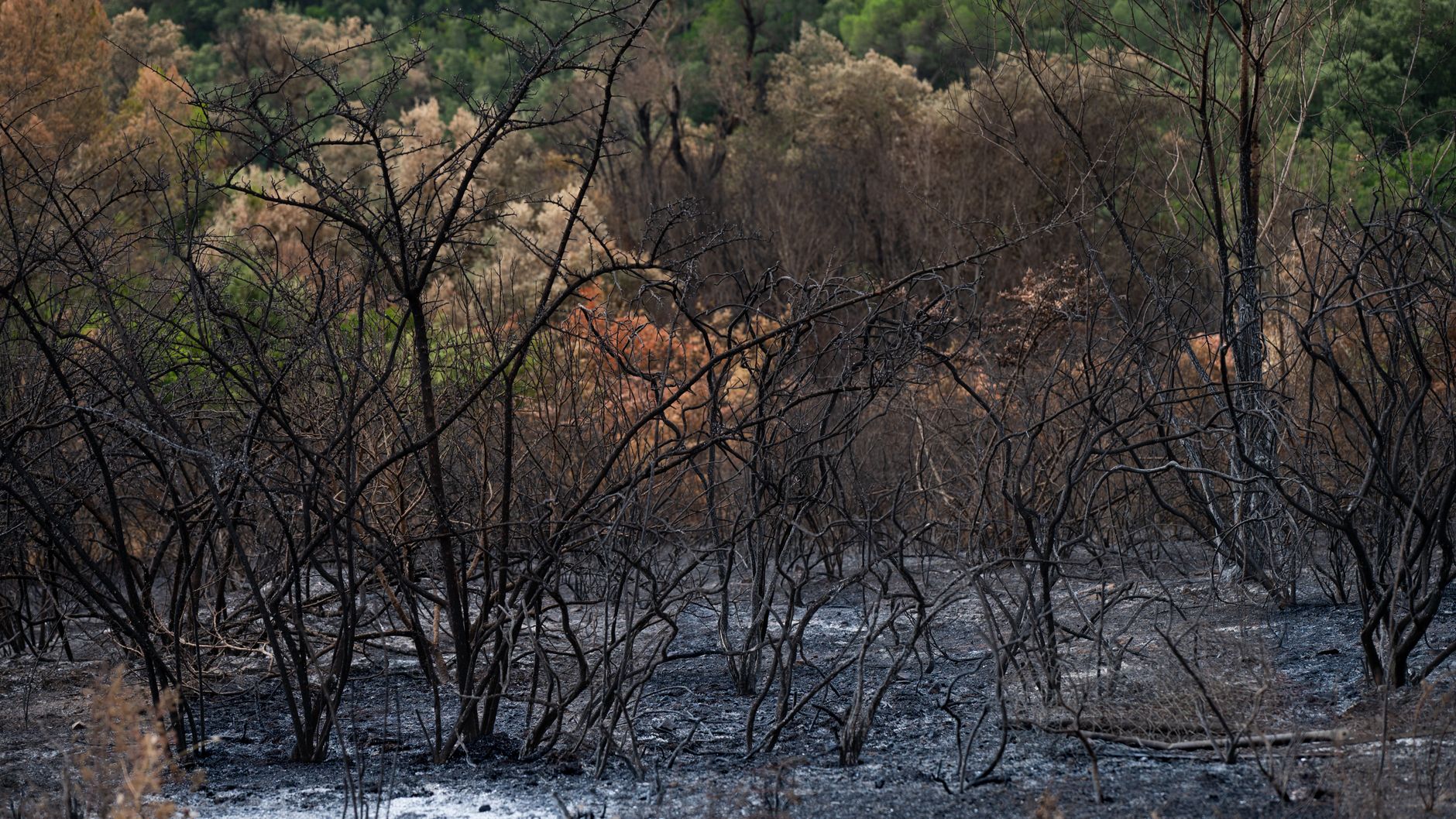
Redwood Mountain Grove, reached by a rough two-mile dirt road off Highway 180 near Grant Grove, is frequently called the largest remaining natural grove of giant sequoias on Earth, though the National Park Service’s own trail pages describe it only as “a very large grove” without publishing a specific acreage or tree count12. Sequoia and Kings Canyon together hold roughly 40 named groves ranging from one tree to tens of thousands1. In September 2021, the KNP Complex Fire burned 40 percent of Redwood Mountain Grove at moderate to high severity, killing many giant sequoias13. Its loop trails, including the 9.5-mile Redwood Mountain Trail and shorter Sugar Bowl and Hart Tree routes, have been closed since the fire because of hazardous conditions, though the National Park Service’s trail-conditions page reported the maintained trail cleared from the trailhead down Redwood Creek as of September 1, 2026124. The National Park Service has since planted 65,000 giant sequoia seedlings here as part of post-fire restoration5.
- Access road: about 2 miles of rough, unpaved road off Highway 180; drive slowly2
- Grove description: “a very large grove,” per NPS, with old growth and diverse plant life; no specific acreage published2
- Groves in the parks overall: about 40, from a single tree to tens of thousands1
- 2021 fire damage: 40% of the grove burned at moderate-to-high severity in the KNP Complex Fire13
- Loop trails: range from 6.5 to 10 miles, moderate incline; Redwood Mountain Trail is 9.5 miles12
- Trail status: closed since the 2021 fire due to hazardous conditions, though the maintained section from the trailhead down Redwood Creek was reported cleared as of September 1, 202624
- Restoration: 65,000 giant sequoia seedlings planted at Redwood Mountain in 20245
- Tallest known tree measured here: 94.9 m (about 311 ft), measured in 19986
Redwood Mountain Grove sits south of Grant Grove in Kings Canyon National Park, one of roughly 40 groves covered in the guide to where to see giant sequoias. It carries a reputation as the largest sequoia grove anywhere, extensive old-growth character, and a hard recent history: the 2021 KNP Complex Fire burned through much of it, and it is one of the parks’ active post-fire replanting sites. This page covers the size claim honestly, the road and trails, the fire, and what recovery work is underway.
Is Redwood Mountain Grove really the largest sequoia grove on Earth?
The claim is worth checking against the source. The National Park Service’s own trailhead and grove pages describe Redwood Mountain only as “a very large grove,” noted for its old-growth sequoias and the diversity of other plants growing alongside them, without giving a specific acreage figure or tree count that would let a reader verify a world ranking2. What the National Park Service does confirm: Sequoia and Kings Canyon National Parks together contain roughly 40 distinguishable giant sequoia groves, ranging from a single tree to tens of thousands, and Redwood Mountain’s grove complex, which extends down into Redwood Canyon below, is among the largest of those forty1.
The claim that Redwood Mountain is the largest sequoia grove in the world shows up widely in guidebooks and trip-planning writing, and it may well be accurate. This page states plainly what could and could not be confirmed on an official source: the grove is large by every account, but the specific number that would rank it against the world’s roughly 75 to 94 named giant sequoia groves was not found on a National Park Service or Forest Service page7.
The road and the trails
Redwood Mountain’s trailhead sits about two miles off Highway 180 down a road the National Park Service describes as “sometimes rough” and unpaved, with the advice to take it slowly2. From the trailhead, the main route is the Redwood Mountain Trail, a 9.5-mile loop with a moderate incline that travels along the ridge above Redwood Canyon for views before dropping to the canyon floor among the trees12. Other loop options in the grove range from 6.5 to 10 miles1. Two of the named routes are the Sugar Bowl Trail, at 6.5 miles with about 1,480 feet of climbing, and the Hart Tree Trail, at 7.3 miles with about 1,100 feet of climbing4.
Fire damage and current trail status
The KNP Complex Fire, ignited by lightning in September 2021, burned about 88,307 acres across 16 sequoia groves in Sequoia and Kings Canyon3. At Redwood Mountain specifically, 40 percent of the grove burned at moderate to high severity, and many giant sequoias were killed13. The National Park Service’s Redwood Mountain trailhead page states plainly that its trails “remain closed due to hazardous conditions related to the fire”2. That is consistent with the parks’ broader assessment that Redwood Mountain Grove saw some of the more severe burning among the groves affected by the 2021 fires; the mechanics of why some groves burned hot while others, like Giant Forest around General Sherman, burned at low intensity are covered on the giant sequoias and fire page and in the detailed account of the Castle, KNP Complex, and Windy Fires.
As of September 2026, the National Park Service’s trail-conditions page reports that the maintained trail from the trailhead down along Redwood Creek has been cleared, even as the longer loop trails, including Sugar Bowl and Hart Tree, remain listed as closed4. Trail status in a burned grove can change with storm damage and hazard-tree removal, so check the current trail-conditions page before a visit rather than relying on a fixed status.
What visitors see now, and the recovery underway
Visitors who do reach the grove should expect fire-killed trees, a more open forest structure than before 2021, and, the Park Service hopes, giant sequoia seedling regeneration along with resprouting wildflowers and shrubs23. Surveys in 2022 and 2023 found that natural regeneration at Redwood Mountain was not keeping pace on its own, prompting active replanting5. In 2024, the National Park Service planted 65,000 giant sequoia seedlings at Redwood Mountain Grove, part of a larger post-fire restoration effort that also included about 3,800 seedlings at Board Camp Grove, with additional groves slated for 20255. The seedlings came from a broader collection effort: in September 2022, cone collection at Redwood Mountain, Big Stump, Board Camp, and Cedar Flat groves supplied 110,000 sequoia seedlings grown under a $2.6 million Bipartisan Infrastructure Law restoration grant, alongside 150,000 mixed-conifer seedlings intended to support Pacific fisher habitat8.
Redwood Mountain Grove also has a longer history with fire management. NPS and University of California researchers began studying giant sequoias’ need for fire here in 1963 and 1964, Sequoia and Kings Canyon started prescribed burning in 1968, and Redwood Mountain is described by the National Park Service as the birthplace of prescribed fire in the western United States9. A 2012 prescribed burn in the area, the Whitaker burn, treated 504 acres9. Historically, fire returned to Redwood Canyon every 7 to 15 years before fire suppression interrupted that cycle in the twentieth century9.
A record height, if not a confirmed record acreage
While Redwood Mountain Grove’s acreage superlative could not be confirmed, one measurement is on record: a tree in the grove was measured at 94.9 meters, or about 311 feet, in 1998, among the tallest giant sequoias ever recorded6. That is taller than the U.S. Forest Service’s own stated maximum known height of 94.5 meters (310 feet) for the species, a small discrepancy between two measurement efforts rather than a contradiction about which is correct10. For more on how giant sequoias compare on height and volume across every major grove, see the 10 largest giant sequoias.
Frequently Asked Questions
Is Redwood Mountain Grove the largest sequoia grove in the world?
It is widely described that way, but the National Park Service’s own pages call it only “a very large grove” without publishing an acreage or tree count to confirm the ranking2.
How badly did fire damage Redwood Mountain Grove?
Can you still hike in Redwood Mountain Grove?
How do you get to Redwood Mountain Grove?
The trailhead is reached by about two miles of rough, unpaved road off Highway 180, south of Grant Grove2.
What is being done to help the grove recover?
Why is Redwood Mountain called the birthplace of prescribed fire?
Researchers began studying giant sequoias’ need for fire here in the early 1960s, and Sequoia and Kings Canyon started prescribed burning in 1968, with Redwood Mountain central to that early work9.
Is there a tall or famous tree in Redwood Mountain Grove?
A tree here was measured at about 311 feet in 1998, among the tallest giant sequoias on record, though it is not one of the named, publicly marked trees the way General Sherman or General Grant are6.
Related Articles
Sources
- Exploring Giant Sequoia Groves — National Park Service, Sequoia & Kings Canyon. Accessed 2026-09-09.
- Redwood Mountain Trailhead — National Park Service, Sequoia & Kings Canyon. Accessed 2026-09-09.
- Giant Sequoias and Fire — National Park Service, Sequoia & Kings Canyon. Accessed 2026-09-09.
- Trail Conditions — National Park Service, Sequoia & Kings Canyon, updated September 1, 2026. Accessed 2026-09-09.
- Restoring Giant Sequoia Groves Following High-Severity Wildfire — National Park Service. Accessed 2026-09-09.
- Sequoiadendron giganteum — The Gymnosperm Database. Accessed 2026-09-09.
- Giant Sequoias — Save the Redwoods League. Accessed 2026-09-09.
- SEKI Post-Fire Sequoia Restoration — National Park Service. Accessed 2026-09-09.
- Whitaker Prescribed Fire — National Park Service, Sequoia & Kings Canyon. Accessed 2026-09-09.
- Sequoiadendron giganteum, Silvics of North America — U.S. Forest Service. Accessed 2026-09-09.