
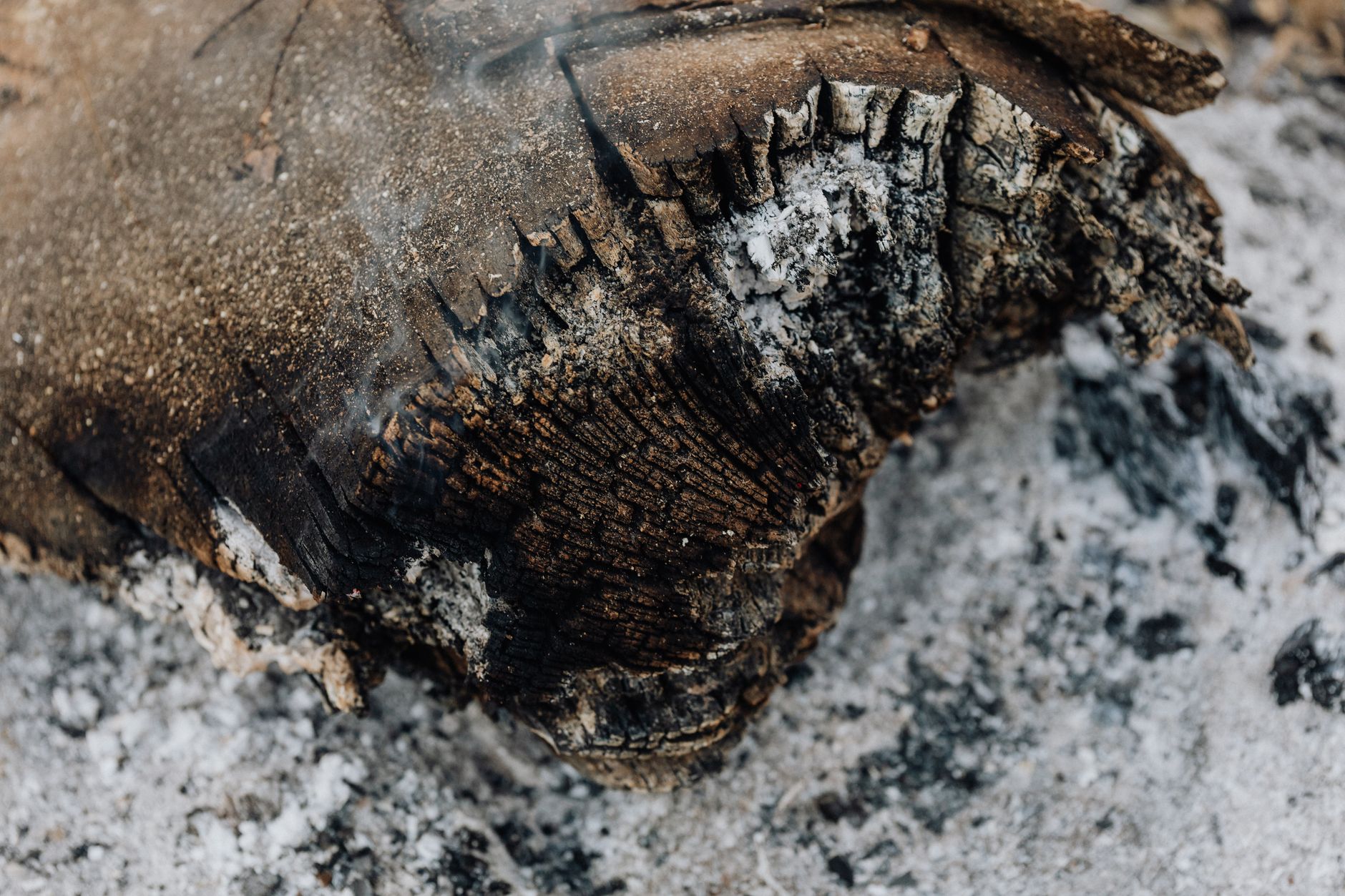
Three wildfires in two consecutive years killed more large giant sequoias than any comparable period on record. The 2020 Castle Fire, part of the SQF Complex, burned through 12 groves and killed an estimated 7,500 to 10,600 large sequoias12. The 2021 KNP Complex Fire burned 88,307 acres across 16 groves and killed an estimated 1,330 to 2,380, and the 2021 Windy Fire burned 97,528 acres and killed 931 to 1,2571. Taken together, the National Park Service estimates the 2020 and 2021 fires killed 13 to 19 percent of all large giant sequoias on Earth, roughly 8,431 to 11,897 trees3.
- Castle Fire (2020): 12 groves burned, 7,500–10,600 large sequoias killed12
- KNP Complex Fire (2021): 88,307 acres, 16 groves, 1,330–2,380 killed1
- Windy Fire (2021): 97,528 acres, 931–1,257 killed1
- “Large sequoia” means a trunk at least 4 ft (1.2 m) in diameter2
- Two-year total: 13–19% of the world’s large sequoias, about 8,431–11,897 trees3
- Grove acreage burned 2015–2021: more than 85%, against about 25% in the preceding century3
- Giant Forest survived the KNP Complex at low intensity because of prescribed burning going back to 19794
Giant sequoias evolved with fire and normally shrug it off. Between 2020 and 2021 that stopped being true in a dozen groves. This page sets out what each of the three fires did, where the mortality figures come from, why some groves burned catastrophically while others came through intact, and what has been planted since. For the underlying biology, see the pillar guide to giant sequoia trees and the page on why giant sequoias need fire.
The short version is that the trees did not fail. Fuel did. A century of fire exclusion left dead wood and dense young fir on the ground in groves that had historically burned every 6 to 35 years, and when fire finally arrived in drought conditions it climbed into sequoia crowns instead of creeping along the floor1.
The three fires, side by side
| Fire | Year | Acres burned | Groves affected | Estimated large sequoias killed |
|---|---|---|---|---|
| Castle Fire (SQF Complex) | 2020 | about 171,000 in and around Giant Sequoia National Monument5 | 121 | 7,500–10,60012 |
| KNP Complex Fire | 2021 | 88,3071 | 161 | 1,330–2,3801 |
| Windy Fire | 2021 | 97,5281 | not stated by NPS | 931–1,2571 |
Every figure in that table is an estimate with a wide band, and the bands do not add up neatly. The per-fire ranges sum to something above the NPS cumulative estimate of 8,431 to 11,897 trees, because the cumulative figure was produced by a separate assessment13. Save the Redwoods League phrases the same loss as roughly 17 percent of mature giant sequoias gone to extreme wildfire since 20156. NPS restoration planning documents say “as much as 19%” of the world’s large monarch sequoias7. All three statements describe the same disaster at different levels of precision.
The Castle Fire, 2020
The Castle Fire burned in September and October 2020 as part of the SQF Complex, mostly in Sequoia National Forest and Giant Sequoia National Monument south of the national parks. It burned nearly 171,000 acres in and around the monument5.
Inside grove boundaries the numbers are what matter. About 9,530 acres of sequoia grove burned, roughly a third of all grove area, with about half of that burning at moderate-to-high severity and nearly 30 percent at high severity2. The estimated 7,500 to 10,600 large sequoias killed represent 31 to 42 percent of the large sequoias standing inside the fire perimeter, and 10 to 14 percent of every large sequoia in the Sierra Nevada2.
Alder Creek, the grove Save the Redwoods League had bought the year before, shows what high severity means at grove scale: 38 percent of it burned at high severity and at least 108 old-growth sequoias died5. The worst mortality across the fire was on south-facing slopes that had not seen fire in a long time1.
The Castle Fire is the reason the mortality question changed shape. Before 2020, a fire that killed a handful of monarchs was notable. The Castle Fire killed them by the thousand.
The KNP Complex Fire, 2021
The KNP Complex began on September 9, 2021, when a lightning storm with more than 200 strikes ignited fires inside Sequoia National Park. It was contained on December 16, 20218. It grew to about 90,000 acres, most of it inside the parks9, with the assessed figure at 88,307 acres1.
The complex burned in 16 groves and killed an estimated 1,330 to 2,380 large sequoias1. Within grove boundaries it burned 4,374 acres, and the severity split was much kinder than the Castle Fire: 69 percent at low severity, 31 percent at moderate-to-high2.
That split was not luck. Giant Forest, home to the General Sherman Tree and most of the park’s famous named trees, has been treated with prescribed fire since 1979, including a 245-acre burn around General Sherman in 20194. When the KNP Complex reached it, the fire stayed on the ground. Crews wrapped the base of General Sherman and other named trees in fire-resistant aluminum foil as a precaution, and the tree came through without significant damage10. That story has its own page: why General Sherman was wrapped in foil.
Redwood Mountain Grove, the largest sequoia grove on Earth, had no comparable recent treatment. Forty percent of it burned at moderate-to-high severity11. Two groves, one fire, opposite outcomes.
The Windy Fire, 2021
The Windy Fire burned at the same time as the KNP Complex, in the southern part of the sequoia belt rather than inside the national parks. It covered 97,528 acres and killed an estimated 931 to 1,257 large sequoias1.
Combined, the two 2021 fires killed an estimated 2,261 to 3,637 large sequoias, or 3 to 5 percent of the Sierra Nevada population2.
Why the losses were unprecedented
Three things stacked up.
Fire exclusion. Tree-ring fire scars show that widespread fires recurred in Giant Forest every 6 to 35 years for two millennia, then dropped off sharply after about 1860 as sheep grazing removed fine fuels, Native American burning was suppressed, and government fire suppression took over1. A century and a half of that leaves a grove floor loaded with fuel and packed with shade-tolerant white fir that acts as a ladder into the canopy.
Drought. The 2012–2016 hotter drought stressed the trees badly. In 2014, the most severe drought year in the park’s 122-year record at the time, individual sequoias showed crown dieback ranging from none to more than 75 percent3. Most had recovered by the summer of 2015, but 33 sequoias died standing from native Phloeosinus bark beetles, a phenomenon not previously reported in the species3.
Scale. More than 85 percent of all giant sequoia grove acreage burned between 2015 and 2021, compared with about 25 percent in the preceding century. Six fires did nearly all of it: Rough in 2015, Railroad and Pier in 2017, Castle in 2020, and KNP Complex and Windy in 20213.
There is a fuller treatment of the science on the page asking whether giant sequoias are dying, and a population accounting at how many giant sequoias are left.
What has been done since
Surveys in 2022 and 2023 found that natural regeneration in Redwood Mountain Grove was not sufficient to replace what burned, which is unusual for a species that normally seeds heavily into burned ground12. Where a fire kills every mature tree in a patch, there is no seed source left.
So the parks are planting. In 2024, NPS planted 65,000 giant sequoia seedlings at Redwood Mountain and about 3,800 at Board Camp Grove, with Homer’s Nose, Dillonwood, and New Oriole Lake slated for 2025 and Suwanee Grove kept for monitoring only12. The seedlings came from a batch of 110,000 grown from cones collected at Redwood Mountain, Big Stump, Board Camp, and Cedar Flat in September 2022, funded with $2.6 million in Bipartisan Infrastructure Law Burned Area Rehabilitation money; 150,000 mixed-conifer seedlings are going in alongside for Pacific fisher habitat7. Save the Redwoods League planted more than 20,000 sequoia seedlings at Alder Creek in 20235.
Prescribed burning continues in parallel, and it remains the cheaper intervention by a wide margin. See why rangers deliberately burn sequoia groves.
Can you see the burn scars today?
Yes. As of September 2026 the KNP Complex footprint is still obvious from the road in places, and Redwood Mountain Grove in particular is a different forest from the one visitors saw in 202011. Burned groves are not closed as a rule, but hazard trees close individual trails without much notice, so check the park’s trail conditions page the week you go rather than relying on a map.
Frequently Asked Questions
How many sequoias died in the 2020 and 2021 fires?
What counts as a "large" sequoia in these counts?
A tree with a trunk at least 4 feet (1.2 m) in diameter. Smaller sequoias died in far greater numbers but are not tracked in the monarch counts2.
Did the General Sherman Tree survive?
Which grove was hit hardest?
Why did these fires kill sequoias when the trees are fire-adapted?
Because fuel loads built up over roughly 150 years of fire exclusion, so the fires burned hot enough to reach and kill sequoia crowns rather than staying on the ground1.
Is the damage being repaired?
Are giant sequoias endangered now?
They are not listed as endangered under the Endangered Species Act. Save the Redwoods League characterizes the situation as roughly 17 percent of mature trees lost to extreme wildfire since 2015, which is the scale of the concern6.
Related Articles
Sources
- Giant Sequoias and Fire — National Park Service, Sequoia & Kings Canyon. Accessed 2026-09-09.
- Wildfires Kill Unprecedented Numbers of Large Sequoia Trees — National Park Service. Accessed 2026-09-09.
- Giant Sequoias Face New Threats — National Park Service. Accessed 2026-09-09.
- Sherman Prescribed Burn Planned in Sequoia National Park — National Park Service. Accessed 2026-09-09.
- Alder Creek — Save the Redwoods League. Accessed 2026-09-09.
- Giant Sequoias — Save the Redwoods League. Accessed 2026-09-09.
- Post-Fire Sequoia Restoration — National Park Service. Accessed 2026-09-09.
- KNP Complex Fire — National Park Service. Accessed 2026-09-09.
- Climate Change — National Park Service, Sequoia & Kings Canyon. Accessed 2026-09-09.
- The General Sherman Tree — National Park Service. Accessed 2026-09-09.
- Exploring Giant Sequoia Groves — National Park Service. Accessed 2026-09-09.
- Restoring Giant Sequoia Groves Following High-Severity Wildfires — National Park Service. Accessed 2026-09-09.