
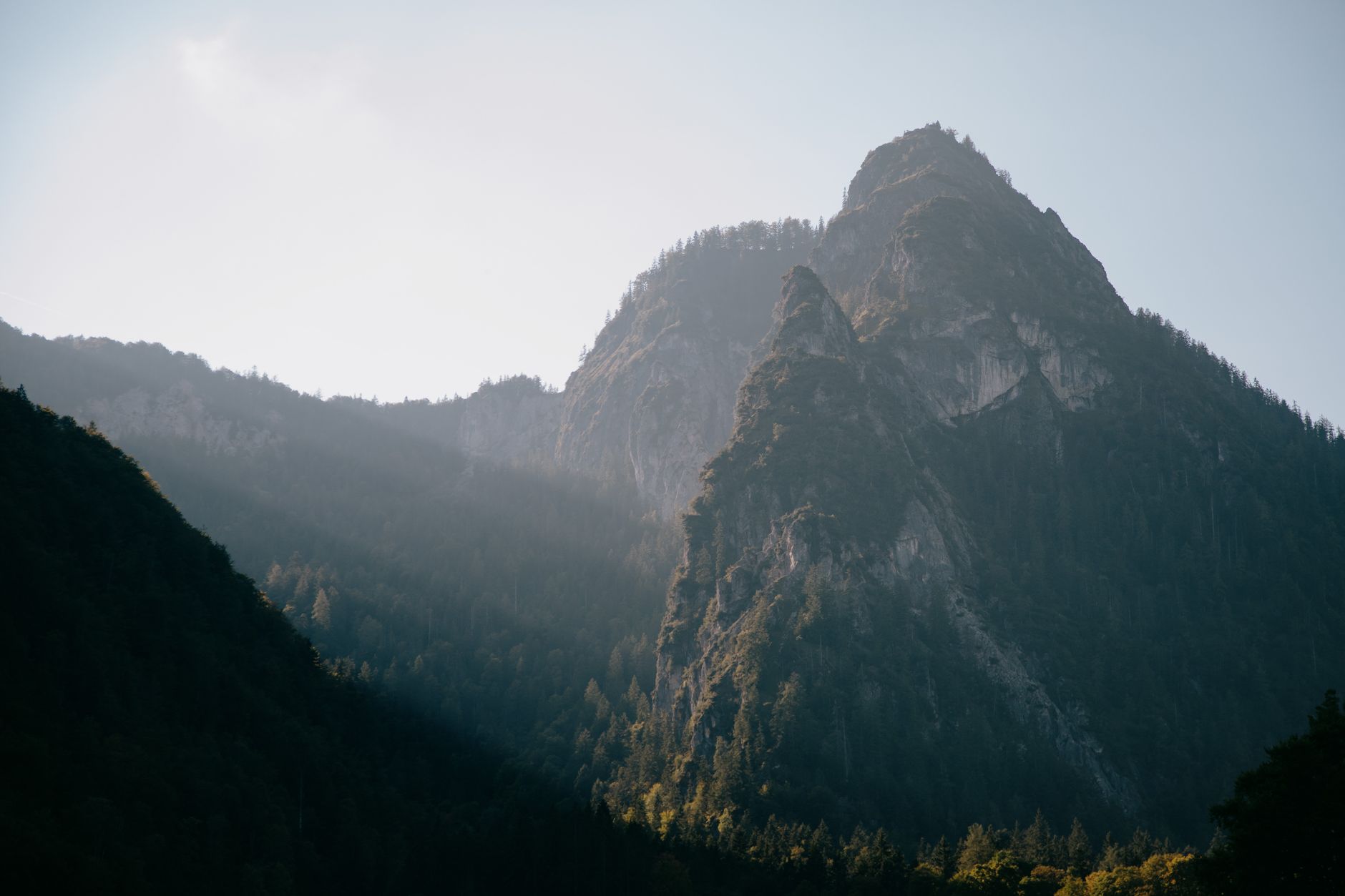
Sequoia and Kings Canyon do not publish official season dates for wildfire, and the National Park Service states plainly that fire or smoke may be present in the parks at any time1. In practice the risk concentrates in the dry half of the year. Nearly all precipitation in these mountains falls between December and May, summer rain is rare, and the groves sit dry from July onward2. Sequoia National Forest, which wraps around the parks, placed fire restrictions in effect from August 11 to November 30, 20263. Summer also brings the parks’ worst routine air quality: ground-level ozone and fine particulate matter often exceed federal health standards at lower elevations, while air above about 8,500 feet usually stays clean4. The two things to check before driving up are the AirNow Fire and Smoke Map and the park’s current fire and road-conditions pages145.
- Highest-risk months: roughly July through October, with the forest’s own restrictions running August 11 to November 30 in 202623
- The parks’ position: fire or smoke may be present at any time1
- Worst routine air quality: summer, when ozone and PM2.5 often exceed federal standards4
- Cleaner air: generally above 8,500 feet4
- The 2021 KNP Complex was ignited by lightning on September 9, 20216
- Check smoke: the AirNow Fire and Smoke Map at fire.airnow.gov47
- Check closures: the park’s road-conditions page, updated regularly, and the 24-hour line at 559-565-334115
Disclosure: some links on this page are affiliate links, marked by the products, tours and hotels they name. As an Amazon Associate, sequoia.info earns from qualifying purchases. A purchase through these links may earn the site a commission at no cost to you, and it never affects what is recommended. How this works.
Smoke is now a normal planning variable for a late-summer trip to the southern Sierra, in the same way that snow chains are a planning variable in February. It does not ruin most visits, and in many years the groves are clear all season. But the fires of 2020 and 2021 changed how the parks talk about it, and a visitor arriving in September should know where to look before committing to a four-hour drive. This page covers when the season runs, what smoke does to a visit, and exactly which pages to check. The broader planning picture is in the complete Sequoia National Park visitor guide.
When wildfire and smoke season is
The parks decline to draw a boundary around it. The NPS fire page states that fire and smoke may be present in the parks at any time, and that some of what burns is wildfire while some is deliberately set to keep the forest healthy1.
The climate makes the shape of the year obvious anyway. In the foothills, about 26 inches of precipitation falls, nearly all of it between January and mid-May, and summer rain is rare2. In the sequoia belt between 5,000 and 7,000 feet, 40 to 45 inches falls, mostly as snow from December to May2. By July the forest floor is dry, and it stays dry until the first substantial autumn storms. Summer thundershowers do occur at higher elevations, which is how lightning starts fires here2.
The most concrete season marker comes from the neighboring national forest. Sequoia National Forest fire restrictions were in effect from August 11 to November 30, 2026, banning wood campfires outside designated sites; gas stoves and propane fire pits with shut-off valves remained allowed with a California campfire permit3. Those dates are a reasonable proxy for the window when ignition risk is highest.
The recent record supports the same window. The KNP Complex was started by lightning on September 9, 20216. Six fires did the bulk of the damage to giant sequoias over the past decade: Rough in 2015, Railroad and Pier in 2017, Castle in 2020, and the KNP Complex and Windy fires in 20218.
| Month | What to expect, as of the 2026 season |
|---|---|
| December to May | Wet and snowy in the groves; wildfire risk low2 |
| June to July | Drying out; thunderstorms possible at elevation2 |
| August to September | Highest ignition risk; forest fire restrictions in effect3 |
| October to November | Risk persists until the first storms; forest restrictions ran to November 30 in 20263 |
What smoke actually does to a visit
Even without an active fire nearby, summer air here is not clean. The parks identify ozone and particulate matter 2.5 microns and smaller as the pollutants that cause the most harm, and both often exceed federal health standards during summer4. Much of that arrives from the San Joaquin Valley and settles against the mountain front.
Elevation matters more than distance. Air above roughly 8,500 feet usually stays good even when the valley and foothills are poor4. The parks also caution that their monitoring reflects lower elevations around Ash Mountain and below 4,000 feet, and is less accurate for higher areas such as the Giant Forest and Cedar Grove4. In other words, a bad reading at Three Rivers does not automatically mean a bad day at 6,700 feet, and a good reading there does not guarantee one.
The practical consequences of a smoky day are ordinary rather than dramatic: hazy or invisible views from Moro Rock and Panoramic Point, a sore throat on a climb, and a strong argument against strenuous hiking for anyone with asthma or a heart condition. The trees themselves are unaffected by a day of smoke, and the groves still read as groves.
The fires of 2020 and 2021, briefly
The reason smoke gets so much attention in this particular park is what happened in two consecutive years. The 2020 Castle Fire burned through 12 sequoia groves and killed an estimated 7,500 to 10,600 large sequoias, defined as trees at least four feet in trunk diameter9. That was 31 to 42 percent of the large sequoias inside the fire perimeter and 10 to 14 percent of every large sequoia in the Sierra Nevada10.
The following year, the KNP Complex burned 16 groves across 88,307 acres, killing an estimated 1,330 to 2,380 large sequoias, and the Windy Fire killed a further 931 to 1,2579. Taken together, the 2020 and 2021 fires killed roughly 8,431 to 11,897 trees, between 13 and 19 percent of all the large giant sequoias in the world8. More than 85 percent of all grove acreage burned between 2015 and 2021, against about 25 percent in the entire preceding century8.
The full account is in the Castle, KNP Complex, and Windy fires, and the ecology behind it, including why sequoias need fire and why these fires killed them anyway, is in why giant sequoias need fire.
Prescribed burns produce smoke too
Not every column of smoke over the parks is an emergency. The NPS notes that some fires burn naturally and others are set deliberately to maintain ecosystem health1. Sequoia and Kings Canyon began prescribed burning in 1968, and Redwood Mountain Grove is described as the birthplace of prescribed fire in the western United States11. The parks have burned in the Giant Forest since 1979, where the natural fire return interval is roughly 10 to 16 years; the 2019 Sherman burn treated 245 acres around the General Sherman Tree12.
Prescribed burns are scheduled when conditions allow, which means they can happen in spring or autumn as well as summer, and they do close trails and roads while crews work. Announcements go on the park’s fire page and news releases1. See why rangers deliberately burn sequoia groves.
How to check before you go
Four checks, in order of usefulness:
- The AirNow Fire and Smoke Map, at fire.airnow.gov. This is the tool the park itself points visitors to for regional fire and smoke mapping47. Look at it the evening before and again the morning you drive.
- AirNow’s readings for Three Rivers, California. The park directs visitors here for ratings and forecasts, with the caveat that the reading reflects the foothills rather than the groves4.
- The park’s fire page. It carries a listing of current fires in the parks and on nearby national forest land, plus a smoke section1.
- The road-conditions page and the phone line. Fires close roads and trails, and the road-conditions page is where the park posts current status; the park’s 24-hour information line is 559-565-334115. Road closures and their usual seasons are covered in Sequoia National Park road closures.
If you are camping, add the Sequoia National Forest alerts page, which is where fire restrictions and campfire bans are published3.
If you arrive and it is smoky
- Go higher. Air above about 8,500 feet is usually cleaner than the valley and the foothills4. That rules out most of the Giant Forest at around 6,700 feet, but it favors trailheads out of Mineral King, which sits at 7,800 feet and above13.
- Trade viewpoints for trees. Moro Rock and Panoramic Point are wasted in haze; the Congress Trail and the Grant Tree are not, since the subject is 30 feet away.
- Shorten the effort. Heavy exertion is the thing to cut on a high-particulate day, not the visit itself.
- Watch for closures rather than assuming them. Smoke drifting over the parks from a fire elsewhere in the Sierra does not close anything; a fire inside the boundary usually does15.
- Have a fallback. If the southern Sierra is socked in, the coast redwood parks are a different air shed entirely. See Redwood National Park vs Sequoia National Park.
Frequently Asked Questions
When is wildfire season in Sequoia National Park?
How serious are air quality problems at Sequoia National Park?
How do I check for smoke before visiting?
Does smoke close Sequoia National Park?
How many giant sequoias died in the 2020 and 2021 fires?
Can a giant sequoia survive a wildfire?
Historically, yes, routinely, which is why fire intervals of a few decades were normal for 2,000 years9. The severity of recent fires is what changed the outcome; that story is in why giant sequoias need fire.
Are campfires allowed during fire season?
In the parks, fires are permitted only in existing rings at campsites. On surrounding Sequoia National Forest land, the 2026 order banned wood campfires outside designated sites from August 11 to November 30, while allowing gas stoves and propane fire pits with shut-offs under a California campfire permit3.
Is autumn a bad time to visit because of fire?
Not inherently. October brings smaller crowds and open roads on the main routes, and many autumns pass without smoke in the groves. Check the fire and smoke map a day or two out rather than avoiding the season. See best time to visit Sequoia National Park.
Related Articles
Sources
- Fire in the Parks — National Park Service, Sequoia & Kings Canyon. Accessed 2026-09-09.
- Weather — National Park Service. Accessed 2026-09-09.
- Fire Restrictions, Sequoia National Forest — USDA Forest Service. Accessed 2026-09-09.
- Air Quality — National Park Service. Accessed 2026-09-09.
- Road Conditions — National Park Service, updated September 1, 2026. Accessed 2026-09-09.
- KNP Complex Fire — National Park Service. Accessed 2026-09-09.
- AirNow Fire and Smoke Map — AirNow. Accessed 2026-09-09.
- Giant Sequoias Face New Threats — National Park Service. Accessed 2026-09-09.
- Giant Sequoias and Fire — National Park Service. Accessed 2026-09-09.
- Wildfires Kill Unprecedented Numbers of Large Sequoia Trees — National Park Service. Accessed 2026-09-09.
- Whitaker Prescribed Fire — National Park Service. Accessed 2026-09-09.
- Sherman Prescribed Burn Planned in Sequoia National Park — National Park Service. Accessed 2026-09-09.
- Mineral King — National Park Service. Accessed 2026-09-09.