
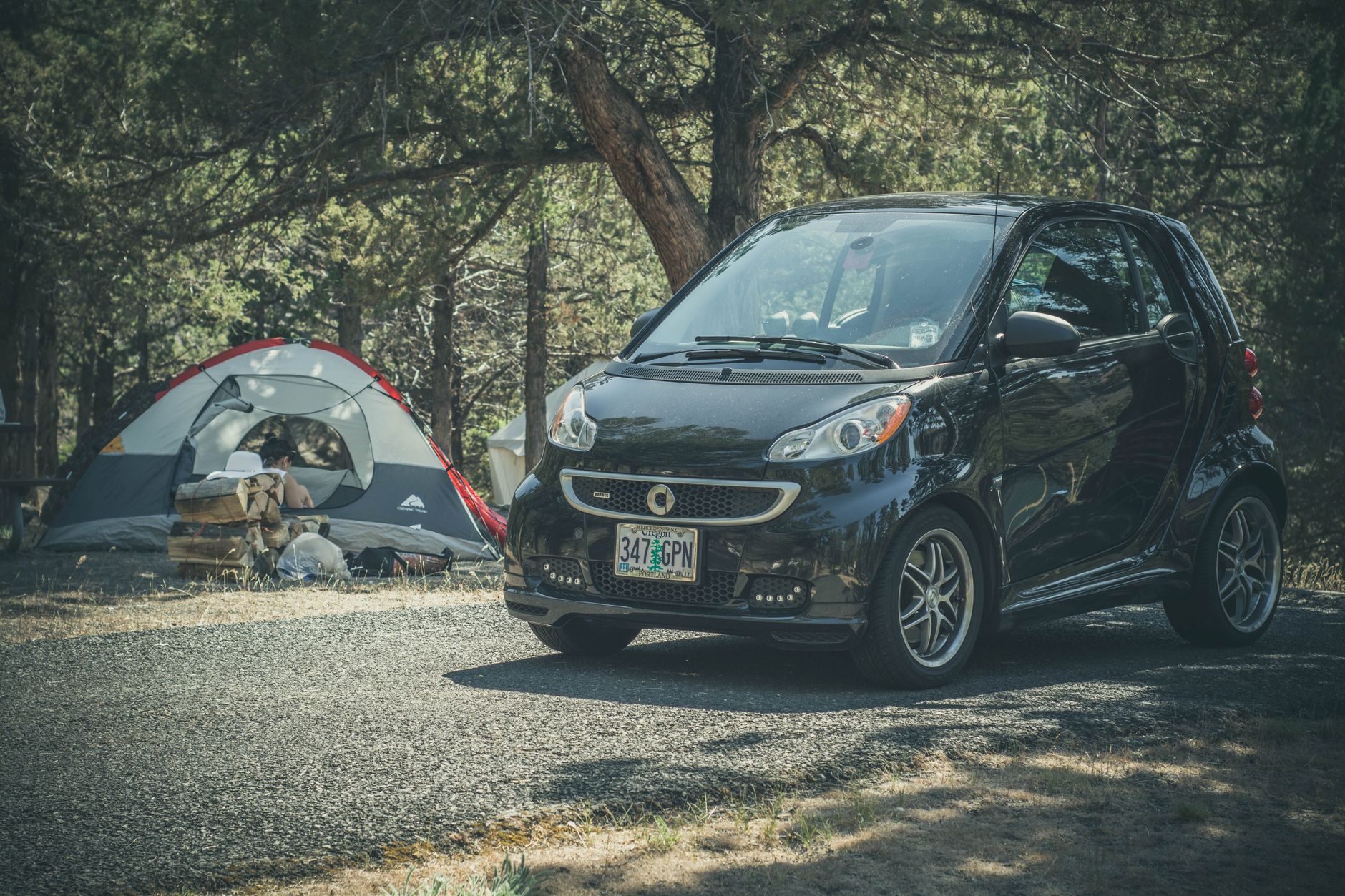
There is no free camping inside Sequoia or Kings Canyon National Parks. Every campground requires a fee, almost all need a Recreation.gov reservation, and roadside camping is explicitly prohibited1. Free dispersed camping is allowed on Sequoia National Forest land outside the parks, at no cost and with no permit for the camping itself, as long as you are on National Forest land, not in a developed campground, trailhead, or picnic area, and not inside the Hume Lake or Stony Creek recreation areas or along Highway 180 from the Hume Lake turnoff to the road’s end2. Camp at least 100 feet from any water source, and store food in a bear-proof container or your vehicle’s trunk2. A free California campfire permit is required for any open flame, including camp stoves, and is available online, at a ranger office, or at the Kings Canyon Visitor Center2. Under the fire restriction order in effect August 11 through November 30, 2026, wood campfires are banned everywhere in the forest except at specific designated campgrounds, even with a permit; gas, kerosene, or propane stoves and fire pits with a shutoff valve are still allowed with a valid permit, kept at least five feet from anything flammable3. Forest-wide, no one may camp more than 14 consecutive days within any 30-day period4.
- Inside the national parks: no free camping; roadside camping is prohibited and nearly every site requires a paid Recreation.gov reservation1
- Where dispersed camping is legal: Sequoia National Forest land, outside Hume Lake and Stony Creek recreation areas and the Highway 180 corridor past the Hume Lake turnoff2
- Cost: free, no permit required for the camping itself2
- Distance from water: at least 100 feet2
- Campfire permit: required for any open flame, including stoves; free at permit.preventwildfiresca.org, a ranger office, or the Kings Canyon Visitor Center2
- 2026 fire order: wood campfires banned outside designated campgrounds, Aug 11–Nov 30, 2026; only gas/propane stoves and shuttered fire pits with a permit are allowed3
- Stay limit: 14 consecutive days within any 30-day period, forest-wide4
- Food storage: bear-proof container or a vehicle trunk, not a tent or an open site2
Anyone searching for a way to camp near Sequoia National Park without paying a campground fee needs to know two things up front: it cannot happen inside the park boundary, and it can happen in the surrounding national forest, under a specific set of rules. This page lays out exactly where dispersed camping is legal, what a campfire permit requires, and the current fire restrictions. For paid options that are closer to the groves, see where to stay for Sequoia National Park.
No free camping inside the national parks
Sequoia and Kings Canyon National Parks do not allow free or roadside camping anywhere within their boundaries1. Camping is confined to designated campgrounds, standard sites run $32 a night, stock sites $40, and group sites $50 to $80, under the fee schedule that took effect in 20245. Nearly all sites require a Recreation.gov reservation, most on a one-month or four-month booking window, with a small number of first-come sites at Azalea and short-notice bookings at Crystal Springs5. There is no exception for a single night, a full car, or an empty-looking pullout: the parks’ own campground regulations state plainly that there is no roadside camping1. If the campgrounds are full, the free alternative is outside the park, in Sequoia National Forest or the Giant Sequoia National Monument it contains. For a full walk-through of booking a paid site instead, see how to get a Sequoia campsite.
Where dispersed camping is legal
Dispersed camping — camping outside a developed campground, usually pulled off a forest road — is free and requires no permit for the camping itself on Sequoia National Forest land managed by the Hume Lake Ranger District2. It is not allowed everywhere in the forest. Specifically prohibited are the Hume Lake and Stony Creek recreation areas, the stretch of Highway 180 from the Hume Lake turnoff to the end of the road, and any developed campground, trailhead, or picnic area2. Outside those exclusions, camp at least 100 feet from any water source, pack out all trash, and store food in a bear-proof container or locked in your vehicle’s trunk rather than left in the open2. The Hume Lake Ranger District office is at 35860 E. Kings Canyon Road, Dunlap, 559-338-2251, and is the office to call with questions about a specific road or area2.
Some of the more remote groves in the surrounding forest have limited facilities and may require a high-clearance vehicle to reach, which is a separate consideration from the camping rules themselves6. If dispersed camping does not appeal, established Forest Service campgrounds such as Stony Creek Campground, on the Generals Highway between Sequoia and Kings Canyon, and Hume Lake Campground both charge a fee but come with a picnic table, fire ring, and a known, mapped site7.
The campfire permit
Camping without a campfire is one thing; camping with one requires paperwork even outside the national parks. A free California campfire permit is required for any open flame on National Forest land — including camp stoves and lanterns, not just a wood fire — and is available at permit.preventwildfiresCA.org, at any ranger office, or at the Kings Canyon Visitor Center2. The permit is not the same as authorization to build any fire you like: it comes with its own conditions, and it is overridden by any active fire restriction order.
That override is in effect right now. Under the Sequoia National Forest fire restriction order running August 11 through November 30, 2026, wood-burning campfires and campfires or stove fires of any kind are prohibited everywhere except at specific designated locations: 23 campgrounds and facilities in the Hume Lake Ranger District and 15 in the Western Divide Ranger District3. Even with a valid campfire permit, only gas, kerosene, or propane stoves and fire pits equipped with a shutoff valve are allowed during the restriction, and only if kept at least 5 feet from anything flammable3. Smoking is restricted to enclosed vehicles, buildings, or permitted areas, and operating an engine off designated roads and trails is also banned under the same order3. Violations carry fines of up to $5,000 for an individual or $10,000 for an organization, with possible imprisonment3. Given how often these orders extend or change with fire conditions, check the current status on the Sequoia National Forest fire-restrictions page at fs.usda.gov before you leave, not before you left home3. The park’s own wildfire and smoke season is covered on wildfire season in Sequoia National Park.
How long you can stay
Sequoia National Forest applies a forest-wide limit of 14 consecutive days of camping within any 30-day period4. This applies to dispersed camping as much as to a developed campground, and it is enforced to prevent informal, semi-permanent camps from forming on public land.
What to bring
None of the dispersed sites described here have piped water, a bathroom, or a bear locker, which puts the burden of food storage and water on you. The research behind this page supports two specific gear needs: a way to keep food away from bears, since dispersed camping rules require bear-proof storage or a locked trunk rather than an open cooler2, and a way to treat water, since none of these sites have a potable source. This site earns a commission on products purchased through links to gear pages, which does not affect what is recommended. A hard-sided bear canister or a vehicle with a lockable trunk covers the food-storage requirement; a water filter or purification tablets cover drinking water pulled from a stream, which should never be assumed safe untreated. Specific bear-canister models approved for backcountry use in the parks themselves are covered on bear canisters in Sequoia and Kings Canyon, and general bear behavior and food-storage law inside the park is on bears in Sequoia National Park.
Frequently Asked Questions
Is there any free camping inside Sequoia National Park?
No. Every campground in the park charges a fee, and roadside or dispersed camping is explicitly prohibited within the park boundary1.
Where is the nearest free camping to Sequoia National Park?
In Sequoia National Forest, on National Forest land managed by the Hume Lake Ranger District, outside the Hume Lake and Stony Creek recreation areas and the restricted stretch of Highway 1802.
Do I need a permit to camp for free in Sequoia National Forest?
Not for the camping itself. You do need a free California campfire permit for any open flame, including a camp stove, available online, at a ranger office, or at the Kings Canyon Visitor Center2.
Are campfires allowed at dispersed campsites right now?
Wood-burning campfires are banned across Sequoia National Forest except at specific designated campgrounds under the fire restriction order in effect August 11 through November 30, 2026. Gas or propane stoves and fire pits with a shutoff valve are allowed with a permit3.
How far from water do I need to camp?
At least 100 feet from any water source2.
How long can I camp in one dispersed spot?
Up to 14 consecutive days within any 30-day period, under the forest-wide stay limit4.
Do I need a bear canister for dispersed camping near Sequoia?
The dispersed camping rules require food to be stored in a bear-proof container or a locked vehicle trunk, not left out in the open2. A hard-sided bear canister satisfies this even without a trunk to lock it in.
Related Articles
Sources
- Campground Regulations — National Park Service. Accessed 2026-09-09.
- Dispersed Camping — Hume Lake Ranger District (PDF) — USDA Forest Service, Sequoia National Forest. Accessed 2026-09-06.
- Fire Restrictions — Sequoia National Forest — USDA Forest Service. Accessed 2026-09-09.
- Camping & Cabins — Sequoia National Forest — USDA Forest Service. Accessed 2026-09-09.
- Sequoia and Kings Canyon National Parks Announce Campground Fee Increase and Booking Windows for 2023 — National Park Service. Accessed 2026-09-06.
- Explore the Forest — USDA Forest Service, Sequoia National Forest. Accessed 2026-09-06.
- Stony Creek Campground — USDA Forest Service. Accessed 2026-09-06.