
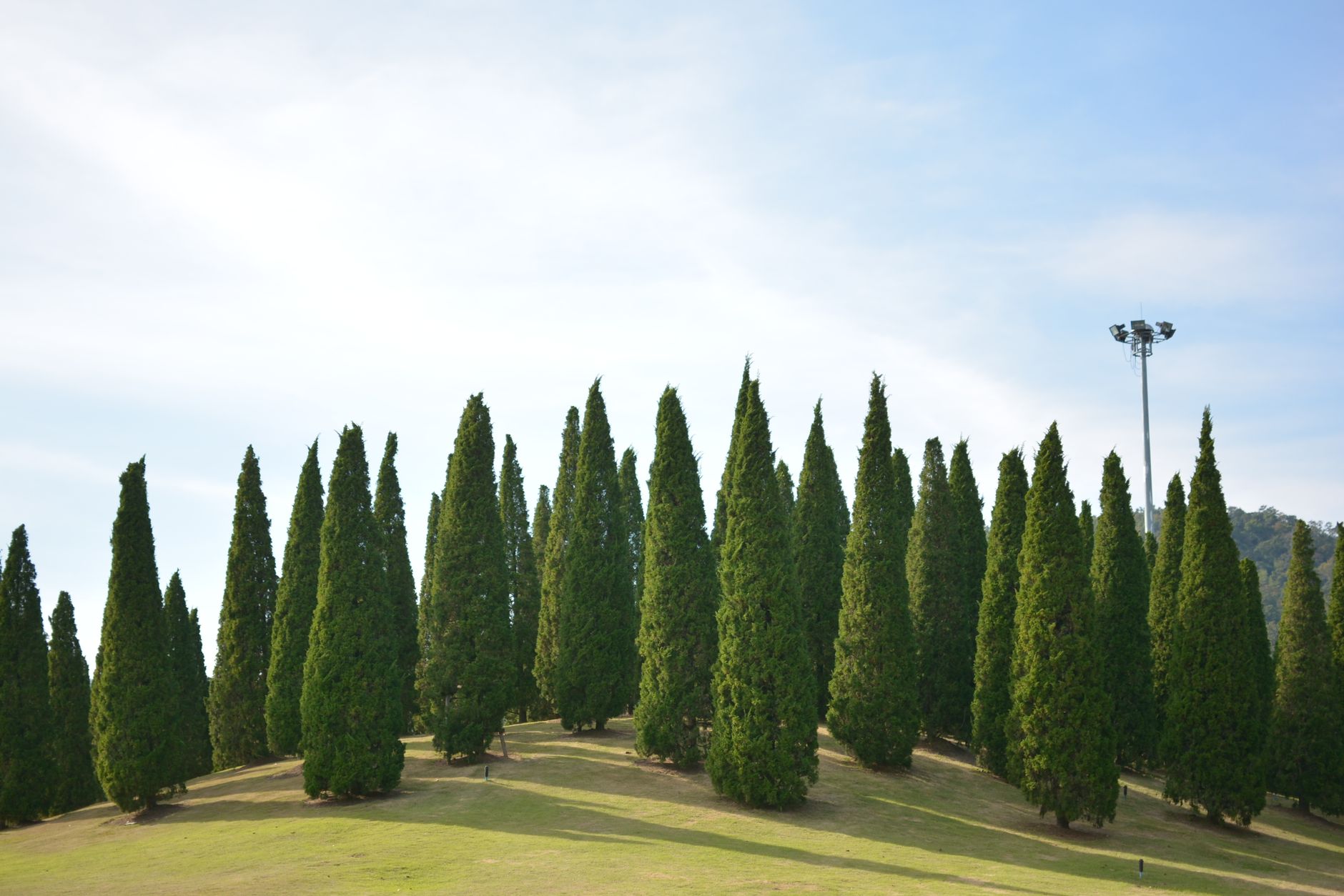
Giant sequoias are native to only about 94 groves on the west-facing slopes of the Sierra Nevada, but the species has been planted successfully far outside that range since the mid-1800s16. A giant sequoia near Eagle Point, Oregon measured 213 feet (64.95 m) in December 2020, the tallest planted specimen documented anywhere outside the tree’s native range, and the species is grown successfully from western Oregon north into southwestern British Columbia1. A 2024 laser-scanning study estimated roughly half a million giant sequoias and closely related coast redwoods now growing across the United Kingdom, descended from seed that first arrived in 18532. Planted giants also grow in France, Austria, Germany, Spain, Switzerland, Romania, New Zealand, and on the U.S. East Coast157.
- Native range: about 94 groves on Sierra Nevada west slopes; everywhere else, a giant sequoia was planted6
- Tallest known planted sequoia: 213 ft (64.95 m), measured near Eagle Point, Oregon in December 20201
- UK population estimate: roughly 500,000 giant sequoias and coast redwoods, from a 2024 study aggregating multiple tree databases2
- First UK seed: arrived in 1853, brought by Scottish grain merchant Patrick Matthew, with more seed and seedlings the same year from nurseryman William Lobb2
- Tallest measured UK specimen: 54.87 m (about 180 ft), at Benmore Botanic Garden in Argyll, Scotland2
- Austria’s tallest tree of any species: a giant sequoia in Dornbirn, at 57.8 m1
- Eastern U.S. record: the Pennsylvania state champion giant sequoia grows at Tyler Arboretum, from 1850s plantings by the Painter family7
- New Zealand: a giant sequoia measured at 462 cm in diameter and 45.4 m tall in 2013 is described as the country’s largest non-native tree1
The 94 or so native groves scattered through the Sierra Nevada are the only place giant sequoias grow wild, but the tree has traveled well. Nurseries began shipping giant sequoia seed out of California within a few years of the species becoming known to Western science, and it has since been planted, and thrived, across the Pacific Northwest, the eastern United States, the United Kingdom, continental Europe, and New Zealand. This page covers the planted giants the research for this site could document, grouped by region. For the natural groves themselves, start with where to see giant sequoias, the guide to every grove and park.
Pacific Northwest and western Canada
Giant sequoia is “widely and successfully grown” from western Oregon north into southwestern British Columbia, according to the Gymnosperm Database, and the region holds the tallest planted specimen documented anywhere outside the species’ native range: a tree near Eagle Point, Oregon measured at 213 feet (64.95 m) in December 20201.
Farther north, Seattle’s Washington Park Arboretum includes a giant sequoia in the Pinetum, its core conifer collection11. In British Columbia, a specimen on the University of British Columbia campus in Vancouver is documented in a university conifers course12, and a giant sequoia mapped near Victoria on Vancouver Island was recorded at roughly 50 meters tall13. None of these approach the Sierra Nevada’s biggest trees by trunk volume, but they show how far north the species tolerates planting, well past its native latitude.
United Kingdom
The UK has the most thoroughly documented population of planted giant sequoias anywhere outside California. A 2024 study in Royal Society Open Science, led by researchers at UCL and Kew and drawing on the Woodland Trust’s Ancient Tree Inventory, Forestry England records, and citizen-science databases, estimated about half a million giant sequoias and closely related coast redwoods now growing in the UK2. Seed first arrived in 1853, brought by Scottish grain merchant Patrick Matthew, with more seed and seedlings shipped the same year by nurseryman William Lobb2.
The study’s team laser-scanned 97 trees at three sites: Benmore Botanic Garden in Argyll, Kew’s Wakehurst estate in West Sussex, and Havering Country Park in Greater London. The tallest tree measured was 54.87 m (about 180 ft) at Benmore, with a trunk volume of 36.21 m³. Average carbon uptake ranged from 74.7 kg per year at Benmore down to 30.4 kg per year at Havering, and the fastest-growing individual trees added roughly 84.2 kg of carbon annually, a figure popular coverage has rounded to “about 85 kg a year”2.
Benmore’s Redwood Avenue, one of the UK’s best-known sequoia plantings, was laid out in 1863 by American landscaper James Piers Patrick; its trees now stand over 50 meters tall, though soil compaction and heavier rainfall have thinned their crowns, prompting the Royal Botanic Garden Edinburgh to run a dedicated Sequoia Avenue Appeal to fund soil decompaction and drainage work3. A separate count from the hobbyist site Redwood World puts 11 sequoias before the avenue’s river bridge and roughly 40 more beyond it, with one tree replaced in 19954. Kew Gardens in London has its own Redwood Grove, planted in the 1860s5. A fuller regional breakdown, including sites this page did not cover, is planned for giant sequoias in the UK and Europe.
Continental Europe
Giant sequoia reached continental Europe in 1853 and is now widely planted there; it is hardy to USDA Zone 7 and has established naturalized (self-seeding) populations in Ireland, the UK, and Turkey1. Notable planted specimens documented for this site include:
- France: a sequoia in the state forest of Ribeauvillé, in Alsace at the base of the Vosges, planted in 1856 and measured at about 190 feet in 2014, long cited as the tallest specimen outside the tree’s native range5.
- Austria: a giant sequoia in Dornbirn, at 57.8 m, is the country’s tallest tree of any species1.
- Germany: Sequoiafarm Kaldenkirchen, near Nettetal, is a mid-20th-century arboretum started with 1,500 sequoia seedlings5.
- Spain: two sequoias known as “El Rey” and “La Reina,” each over 100 feet tall, grow at La Granja de San Ildefonso near Madrid5.
- Switzerland: Geneva’s Jardin Anglais is estimated to have around 1,000 sequoias planted around the city5.
- Romania: specimens are recorded in Cluj County and in Oradea5.
New Zealand
New Zealand has two distinct giant-conifer stories. The better-known one is Rotorua’s Whakarewarewa Forest, where coast redwoods, not giant sequoias, were planted starting around 1900 to test exotic species for timber; the six-hectare Redwood Memorial Grove grew past 70 meters in about a century, faster than the same species manages in California, and is now the site of the Redwoods Treewalk canopy tours. Separately, giant sequoia itself has a New Zealand record: a specimen measured in October 2013 at 462 cm in diameter and 45.4 m tall is described as the largest non-native tree in the country1.
Eastern United States
Giant sequoia plantings on the East Coast date to the same 1850s boom that sent seed to Britain. At Tyler Arboretum in Media, Pennsylvania, a giant sequoia planted by the Painter brothers in the 1850s is the state’s champion tree for the species, and is one of roughly 20 surviving plantings from that era7. Farther west, local coverage in Manistee, Michigan describes a giant sequoia reaching about 116 feet, reported as the largest example of the species east of the Rockies89. And in Boise, Idaho, a transplanted giant sequoia nicknamed for John Muir was the subject of a 2017 news report tracking its move and confirming the tree was doing well afterward10.
Notable planted giant sequoias by region
| Location | Size | Notes |
|---|---|---|
| Eagle Point, Oregon | 213 ft (64.95 m), measured Dec. 2020 | Tallest planted sequoia documented outside the native range1 |
| Dornbirn, Austria | 57.8 m | Austria’s tallest tree of any species1 |
| Benmore, Scotland | 54.87 m (~180 ft) | Tallest of 97 UK trees laser-scanned in a 2024 study2 |
| Ribeauvillé, France | ~190 ft (2014 measurement) | Planted 1856; long cited as tallest outside native range5 |
| Unnamed tree, New Zealand | 462 cm diameter, 45.4 m tall (2013) | Country’s largest non-native tree by size1 |
| Tyler Arboretum, Pennsylvania | Pennsylvania state champion | Planted in the 1850s by the Painter family7 |
| Manistee, Michigan | ~116 ft (local reporting) | Described locally as the largest east of the Rockies89 |
Why giant sequoias grow well outside their native range
The species tolerates a wide climate range in cultivation, rated hardy to USDA Zone 7, and has gone beyond mere survival to naturalize, reproducing on its own, in parts of Ireland, the UK, and Turkey1. That is a striking contrast with the native range, which is confined to a narrow elevation band on one side of one mountain range and depends on periodic fire to open cones and clear competing seedlings. Readers planning their own planting should see giant sequoia hardiness zones and where giant sequoias grow naturally for the science behind both patterns.
Frequently Asked Questions
Do giant sequoias grow outside California?
What is the tallest giant sequoia outside California?
A tree near Eagle Point, Oregon, measured at 213 feet (64.95 m) in December 2020, the tallest planted specimen documented anywhere outside the species’ native range1.
How many giant sequoias are in the United Kingdom?
A 2024 study estimated roughly half a million giant sequoias and closely related coast redwoods growing across the UK, an aggregate figure drawn from several tree databases rather than a full physical census2.
When were giant sequoias first planted in the United Kingdom?
Seed arrived in 1853, brought by Scottish grain merchant Patrick Matthew, with additional seed and seedlings shipped the same year by nurseryman William Lobb2.
Do giant sequoias grow in Washington and British Columbia?
Are there giant sequoias in New Zealand?
Yes, a giant sequoia measured in 2013 at 462 cm in diameter and 45.4 m tall is described as the country’s largest non-native tree. This is separate from Rotorua’s well-known Redwood Memorial Grove, which is planted with coast redwoods, not giant sequoias1.
Can you see giant sequoias in Europe outside the UK?
Yes. Documented plantings include a roughly 190-foot tree in Ribeauvillé, France (planted 1856), Austria’s tallest tree in Dornbirn, an arboretum in Kaldenkirchen, Germany, two named trees near Madrid, Spain, around 1,000 trees in Geneva, Switzerland, and specimens in Cluj County and Oradea, Romania15.
What is the oldest planted giant sequoia on the U.S. East Coast?
A giant sequoia at Tyler Arboretum in Media, Pennsylvania, planted by the Painter family in the 1850s, is the Pennsylvania state champion for the species and one of about 20 surviving trees from that era’s plantings7.
Related Articles
Sources
- Sequoiadendron giganteum — Gymnosperm Database. Accessed 2026-09-09.
- Giant sequoia in the UK (Holland et al. 2024) — Royal Society Open Science, via PMC. Accessed 2026-09-09.
- Benmore Sequoia Avenue Appeal — Royal Botanic Garden Edinburgh. Accessed 2026-09-09.
- Benmore — Redwood World. Accessed 2026-09-09.
- Where to See Giant Sequoias in Europe — Matador Network. Accessed 2026-09-09.
- Giant Sequoias — Save the Redwoods League. Accessed 2026-09-09.
- Tyler’s Historic Trees — Tyler Arboretum. Accessed 2026-09-09.
- Giant Sequoia (Manistee) — Up North Michigan. Accessed 2026-09-09.
- A Giant Sequoia Tree in Northern Michigan — ClickOnDetroit. Accessed 2026-09-09.
- Giant Sequoia Move on Schedule in Idaho, Tree Doing Well — The Spokesman-Review. Accessed 2026-09-09.
- Washington Park Arboretum Core Collections — UW Botanic Gardens. Accessed 2026-09-09.
- Conifers at UBC — University of British Columbia. Accessed 2026-09-09.
- Mapping the Giant Sequoias of Victoria, BC — Vancouver Island Big Trees. Accessed 2026-09-09.