
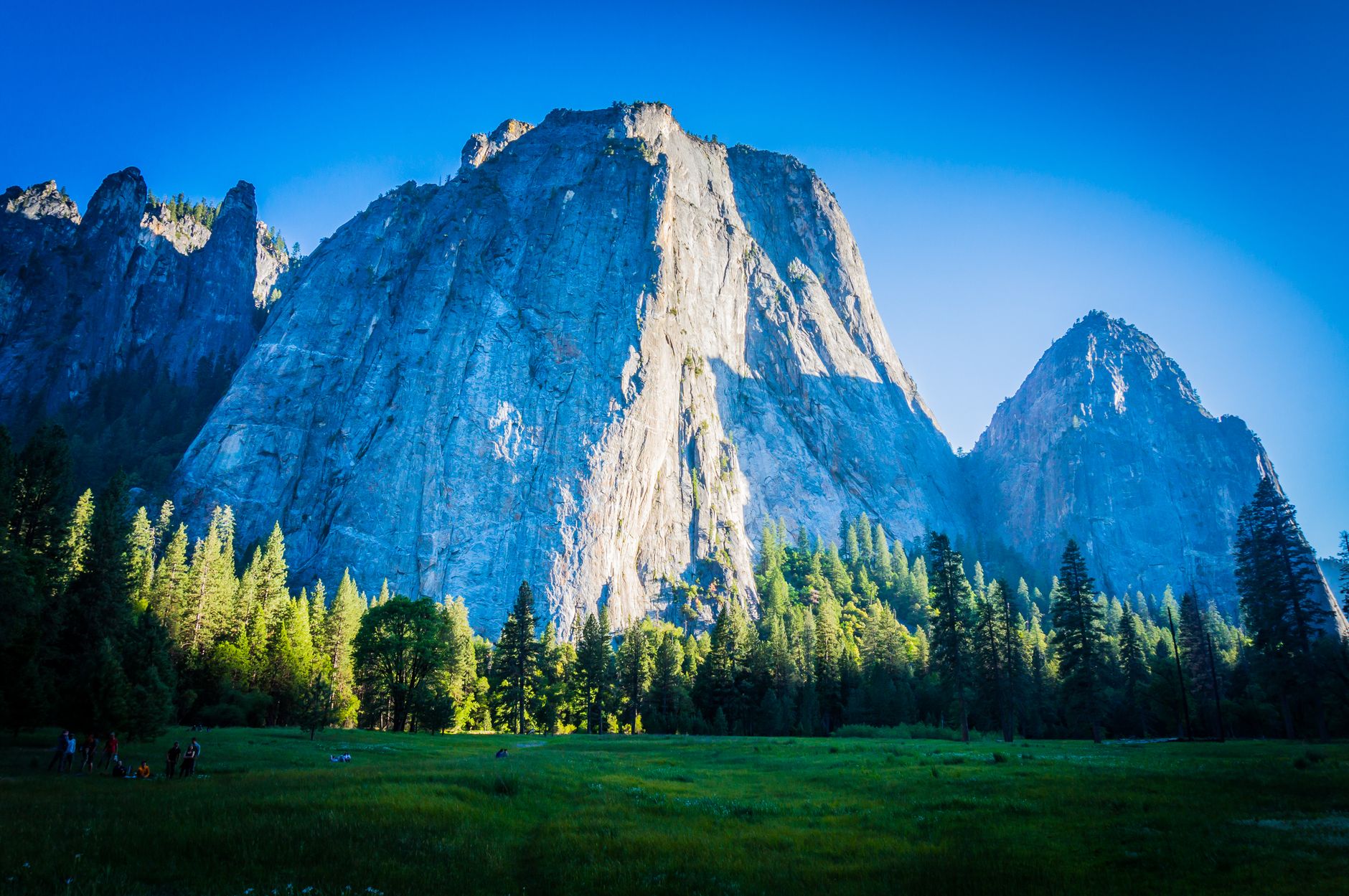
Mineral King is a remote sub-alpine valley at about 7,500 feet in the southeast corner of Sequoia National Park, reached only by Mineral King Road, a narrow, steep, winding route that is unpaved in sections and has no guardrails on its upper stretch1. It is about 30 miles and a 1.5-hour drive from Three Rivers, the nearest source of gas1. The road and the area’s campgrounds are open seasonally, roughly late May through October, and closed the rest of the year by snow1. RVs and trailers are not advised on the road and are not permitted in Mineral King’s campgrounds1. From spring through mid-summer, the valley’s yellow-bellied marmots are known to climb into parked engine bays and chew through radiator hoses and wiring, damage serious enough that the National Park Service recommends wrapping vehicles in a tarp for stays of more than a few hours1. Silver City Resort, just outside the park boundary, has cabins and a restaurant, the closest food to the valley1.
- Elevation: about 7,500 feet at the valley floor2
- Access: Mineral King Road only, narrow, steep, winding, unpaved in sections, no guardrails on the upper portion1
- Distance/time from Three Rivers: about 30 miles, 1.5 hours1
- Season: late May through October; closed by snow in winter1
- RVs and trailers: not advised on the road, not permitted in the campgrounds1
- Marmots: damage vehicles by chewing hoses and wiring, spring through mid-summer1
- Nearest food and lodging: Silver City Resort, cabins and a restaurant1
- Bears: very active in the area2
Mineral King is the part of Sequoia National Park that most visitors never see, mostly because getting there takes real commitment: a slow, narrow road with no shortcuts, and a season that closes for more than half the year. This page covers the drive, the valley’s marmot problem, where to stay, and the large-scale ski resort development once proposed for the area, which never got built. For the rest of the park, see the Sequoia National Park guide.
The road
Mineral King Road is the only way in. The National Park Service describes it as extremely narrow, steep, winding, and unpaved in some sections, with no guardrails on the upper portion1. It runs about 30 miles from Three Rivers, the nearest town with gas, a drive of roughly 1.5 hours each way1. That works out to an average speed well under the posted limits on most mountain roads, a reflection of how tight the curves are rather than any traffic.
RVs and trailers are not advised on the road and are not permitted in either of Mineral King’s campgrounds, both of which are tent-only1. In September 2026, construction work added scheduled delays at Atwell Mill: weekday closures from 10 am to 4 pm and weekend closures from 8 am to 7 pm, with limited pass-throughs, alongside general road-condition notes that the route was open but with construction delays as of September 1, 202634. Check the current road-conditions page before driving up, since both the season and construction schedules can change.
The marmot problem
Mineral King’s yellow-bellied marmots have a well-documented habit of climbing into parked cars and chewing on radiator hoses, belts, and wiring, most commonly from spring through mid-summer1. The National Park Service’s practical fix is blocking access to the engine compartment entirely: driving over a tarp, then wrapping it up and around the entire vehicle, physically sealing off the underside from marmots looking for salt and rubber to gnaw1. Anyone parking for more than a few hours in the valley during marmot season should plan on this, not just hope for the best.
Bears are also very active in the Mineral King area, on top of the marmot issue, and food storage rules apply here as they do throughout the park2.
Where to stay: Silver City Resort
Silver City Resort, just outside the park boundary on the way in, has cabins and cottages for rent and a restaurant serving breakfast, lunch, dinner, and pie, the closest food service to the valley1. There is no ice or gasoline available there, so fuel up in Three Rivers before the drive1. Inside the park, Atwell Mill and Cold Springs are the area’s two campgrounds, both tent-only and seasonal1.
A ski resort that never got built
Mineral King’s isolation today is a side effect of a large ski resort that almost got built here. In 1965 the U.S. Forest Service, which managed Mineral King before it became part of the national park, published a prospectus inviting bids from private developers for a recreational complex in the valley6. Walt Disney Enterprises won the competition, and the Forest Service approved Disney’s final plan in January 19696. The scale was substantial: a $35 million complex of motels, restaurants, swimming pools, and parking lots, built to handle 14,000 visitors a day on 80 acres of the valley floor, under a 30-year use permit6. Reaching it would have required a new state highway 20 miles long, part of which would have cut through Sequoia National Park, plus a high-voltage power line across the park6.
The Sierra Club sued to block the project, and the case reached the U.S. Supreme Court as Sierra Club v. Morton. In April 1972, the Court ruled against the Sierra Club, not on the merits of the development but on standing: the club had not alleged that its own members actually used Mineral King, so it had not shown the direct injury needed to sue6. The litigation continued in the lower courts after the ruling6.
The resort was never built. In 1978, Congress passed legislation adding roughly 16,200 acres to Sequoia National Park, the former Sequoia National Game Refuge that included Mineral King, and declared that “the development of permanent facilities for downhill skiing within the area would be inconsistent with the preservation and enhancement of its ecological values”7. That law is the reason Mineral King is part of the park today, administered under the same rules as the rest of it, down to its own ranger station and wilderness permits2.
Visiting today
A ranger station in Mineral King issues local wilderness permits and has park information, maps, first aid, and bear canisters2. The area’s day hikes reach several sub-alpine lakes and passes, all starting from trailheads near the valley floor at elevation2. Because the season is short and the drive is slow, most visitors treat Mineral King as a full-day trip at minimum, or an overnight at Atwell Mill, Cold Springs, or Silver City Resort, rather than a stop on a longer loop through the rest of the park.
Cell coverage in Sequoia and Kings Canyon is limited even by national park standards, working reliably only around the Kings Canyon Visitor Center, the Foothills Visitor Center, and Lodgepole Village, none of which are anywhere near Mineral King5. Plan on no signal for the entire drive in and the whole time you are there, and download any maps you need before leaving Three Rivers.
The combination of a slow approach, a short season, and no cell service is exactly why Mineral King sees a fraction of the traffic that Giant Forest does. Anyone willing to give up a half day just getting there and back gets a sub-alpine valley that, on a midweek morning outside the marmots’ favorite months, can feel closer to backcountry than to a national park’s main attractions.
When to go
Late June through September is the practical window: the road and campgrounds are open, snow has usually cleared from the higher trails, and by late summer the marmots have generally moved on from car engines to their normal foraging1. Late May and October, at the edges of the official season, can still carry snow or ice at this elevation, so call the ranger station or check the road-conditions page before counting on early or late access3.
Frequently Asked Questions
How do I get to Mineral King?
The only way in is Mineral King Road from Three Rivers, a narrow, steep, winding road, unpaved in sections, about 30 miles and 1.5 hours each way1.
Is the Mineral King Road open?
Why do marmots eat cars at Mineral King?
Yellow-bellied marmots in the valley chew on radiator hoses, belts, and wiring, most often from spring through mid-summer. The National Park Service recommends wrapping a parked vehicle in a tarp to block access to the engine compartment1.
Can I bring an RV to Mineral King?
No. RVs and trailers are not advised on Mineral King Road and are not permitted in the area’s campgrounds1.
Where can I stay near Mineral King?
Silver City Resort, just outside the park boundary, has cabins and a restaurant. Inside the park, Atwell Mill and Cold Springs campgrounds are tent-only and seasonal1.
Was a ski resort really proposed for Mineral King?
Yes. The Forest Service selected a Walt Disney Enterprises plan for a $35 million ski resort at Mineral King and approved it in January 1969, but the Sierra Club sued and the U.S. Supreme Court ruled against the club on standing grounds in 19726. The resort was never built; a 1978 act of Congress added the valley to Sequoia National Park and ruled out permanent downhill ski facilities there7.
Is there cell service at Mineral King?
No. Cell coverage in Sequoia and Kings Canyon works reliably only around a few developed areas elsewhere in the parks, none of them near Mineral King. Download maps and let someone know your plans before you drive up5.
Is Mineral King part of Sequoia National Park?
Yes. It is administered as part of Sequoia National Park today, with its own ranger station, wilderness permits, and campgrounds under the same park rules2.
Related Articles
Sources
- Mineral King — National Park Service, Sequoia & Kings Canyon. Accessed 2026-09-09.
- Mineral King Day Hikes — National Park Service. Accessed 2026-09-09.
- Road Conditions — National Park Service, updated September 1, 2026. Accessed 2026-09-09.
- Atwell Mill Campground — Recreation.gov. Accessed 2026-09-09.
- Frequently Asked Questions — National Park Service. Accessed 2026-09-09.
- Sierra Club v. Morton, 405 U.S. 727 (1972) — Legal Information Institute, Cornell Law School. Accessed 2026-09-09.
- 16 U.S. Code § 45f – Mineral King Valley addition authorized — Legal Information Institute, Cornell Law School. Accessed 2026-09-09.