
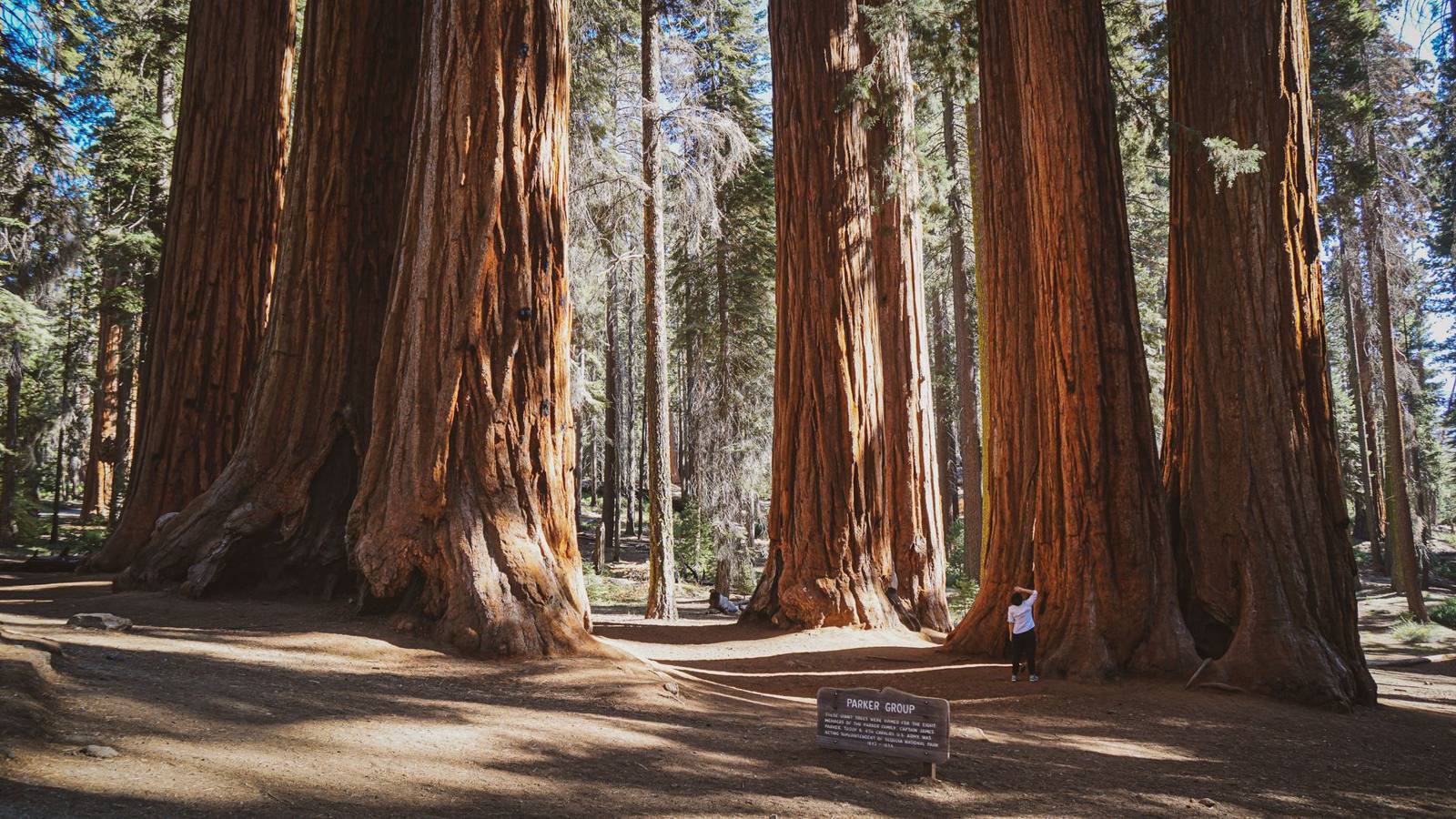
Mountain Home Demonstration State Forest is a 4,807-acre state-owned forest in Tulare County that the State of California acquired in 1946, under Governor Earl Warren, after public outcry over logging in the area1. Unlike Sequoia National Park a short drive away, it is managed as a working forest rather than a park, and the Giant Sequoia Lands Coalition credits it with preserving more than 4,500 old-growth giant sequoias12. Balch Park, a separate Tulare County park, sits inside the same Mountain Home Grove and adds its own campground, a stocked fishing pond, and a small museum3. Both sit at elevations between about 4,800 and 7,600 feet, reached from Springville via Balch Park Drive and Bear Creek Road, with camping typically running May through October1. Almost nobody outside Tulare County seems to know either exists.
- Mountain Home Demonstration State Forest size: 4,807 acres1
- Acquired: 1946, signed by Governor Earl Warren, after public opposition to logging1
- Elevation range: 4,800 to 7,600 ft1
- Old-growth sequoias preserved: more than 4,5002
- Managed as: a working demonstration forest, not a park1
- Balch Park: a separate Tulare County park inside the same grove, with a campground, fishing pond, and small museum3
- Access: from Springville via Balch Park Drive (Road J37), then Bear Creek Road (M220)1
- Camping season: May through October, weather permitting1
Not every major stand of old-growth giant sequoias sits inside a national park boundary. Two of the least-visited examples, Mountain Home Demonstration State Forest and the adjoining Balch Park, sit on the same mountain in Tulare County, reachable by the same road, and see a fraction of the traffic that Sequoia National Park does. Both belong on any complete list of where to see giant sequoias, even if neither shows up on most visitors’ itineraries.
Two different sequoia destinations sharing one road
Mountain Home Demonstration State Forest and Balch Park are administered separately, by two different government agencies, but they sit inside the same broader grove and share the same access road out of Springville13. Mountain Home is a California state forest of 4,807 acres, managed by the state’s forestry agency as a working demonstration forest rather than a protected park1. Balch Park, by contrast, is a Tulare County park located within the Mountain Home Grove, with its own campground, a stocked fishing pond, and a small museum3. Visitors sometimes assume they are the same place because of how close together they sit; they are not, and the distinction matters if you are trying to figure out who to call about camping reservations or current road conditions.
Mountain Home Demonstration State Forest: a working forest, not a park
The State of California acquired the land that became Mountain Home Demonstration State Forest in 1946, a purchase signed by Governor Earl Warren that followed public outcry over logging in the area1. That origin story sets Mountain Home apart from Sequoia and Kings Canyon National Parks, both created decades earlier specifically to stop logging before it started. Mountain Home was already being logged when the state stepped in, and the property continues to be managed today as a demonstration forest, meaning it exists partly to show sustainable forestry practices in action rather than to function purely as a scenic preserve1.
Despite that working-forest mandate, the numbers are substantial. The Giant Sequoia Lands Coalition credits Mountain Home with preserving more than 4,500 old-growth giant sequoias, a population on the same order as some groves inside the national parks2. The forest spans an elevation range from about 4,800 feet up to 7,600 feet, which puts its higher reaches well into true sequoia habitat and its lower access roads at a more moderate, foothill elevation1. That range also means weather and snow conditions can vary considerably between the entrance and the upper campgrounds on any given visit.
Camping at Mountain Home
Mountain Home offers several campgrounds, including Frasier Mill and Hidden Falls among others, with camping fees running $25 per night as of the 2026 season1. The season runs May through October, weather permitting, which is typical for a high-elevation Sierra forest that can hold snow into late spring1. Group sites and accessible sites require reservations, while other sites may be available first-come, first-served depending on the campground and time of year1. Anyone planning a visit during a busy summer weekend should treat reservations as the safer bet rather than counting on an open site at a walk-up campground.
Balch Park: the county's own grove
Balch Park sits at 48200 Bear Creek Drive in Springville and can be reached at (559) 205-11003. It occupies part of the same Mountain Home Grove as the state forest next door, and its facilities center on a campground, a stocked fishing pond, and a small museum3. Because Balch Park is a Tulare County facility rather than a state or federal one, its own reservation system, fee schedule, and season dates are handled separately from Mountain Home’s, so a call to the county park directly is the most reliable way to confirm current details before a trip.
Getting there and when to go
Both destinations share the same general approach from Springville: take Balch Park Drive, also signed as Road J37, and continue onto Bear Creek Road, signed as M220, heading east into the mountains1. The route climbs steadily from the foothills into the mixed-conifer and sequoia forest that both properties protect. As of September 2026, the practical camping season at Mountain Home runs May through October, and the same broad window applies to most activity at Balch Park, since both sit at elevations that hold snow well into spring in a typical year1. Anyone driving up specifically to see the sequoias, rather than to camp, should still plan around that same season, since access roads at these elevations are not maintained for winter travel the way the Generals Highway is inside the national parks.
For a broader sense of how these two lesser-known stops compare to the developed groves inside Sequoia and Kings Canyon, and to nearby national forest groves like Freeman Creek and the Trail of 100 Giants, see the complete list of giant sequoia groves and the Giant Sequoia National Monument guide.
Why so few visitors make the trip
Part of the reason Mountain Home and Balch Park stay quiet is simply geography. Both sit up a winding secondary road out of Springville, a town that is not itself a major gateway the way Three Rivers or Visalia are for Sequoia National Park, and neither property has anything like the General Sherman Tree to pull in visitors who have only budgeted a single stop for giant sequoias. A traveler mapping out a first trip to see the big trees is far more likely to head straight for the Giant Forest, where the paved trails, the shuttle system, and the single most famous tree on the continent are concentrated in one place.
That same obscurity is the appeal for anyone who has already made that first trip and wants a quieter second one. Mountain Home’s more than 4,500 old-growth sequoias are a real, substantial population, not a token grove tacked onto a campground, and Balch Park’s pond and museum give the area a small-town, county-park character that a national park unit does not try to offer123. Visitors comfortable planning around a state forest’s more limited signage and a county park’s separate booking system, rather than a national park’s visitor centers and rangers, will find a genuinely under-visited stand of ancient trees at the end of the drive.
Frequently Asked Questions
What is Mountain Home Demonstration State Forest?
Is Balch Park the same as Mountain Home State Forest?
How do you get to Mountain Home Demonstration State Forest and Balch Park?
Both are reached from Springville via Balch Park Drive (Road J37), continuing onto Bear Creek Road (M220) into the mountains1.
What elevation is Mountain Home Demonstration State Forest?
The forest ranges from about 4,800 feet to 7,600 feet in elevation1.
When is the camping season at Mountain Home?
Camping typically runs May through October, weather permitting, reflecting the forest’s high elevation and Sierra snow season1.
How many old-growth sequoias are at Mountain Home?
The Giant Sequoia Lands Coalition credits the forest with preserving more than 4,500 old-growth giant sequoias2.
Does Balch Park have camping and fishing?
Yes. Balch Park includes a campground and a stocked fishing pond within the Mountain Home Grove, along with a small museum3.
Related Articles
Sources
- Mountain Home Demonstration State Forest — Tulare County Treasures. Accessed 2026-09-15.
- Mountain Home Demonstration State Forest — Giant Sequoia Lands Coalition. Accessed 2026-09-15.
- Balch Park — Discover Tulare County. Accessed 2026-09-15.