
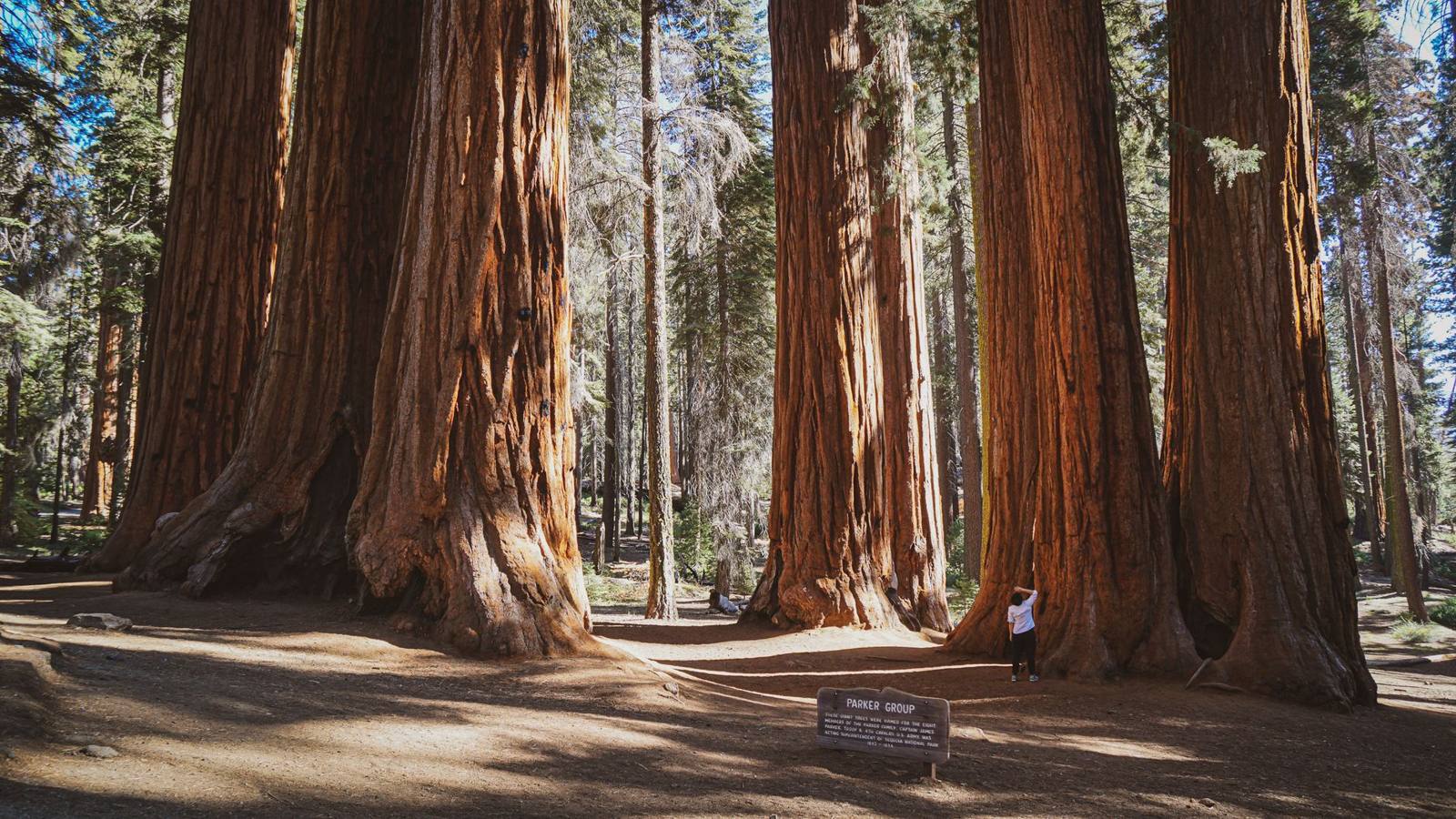
Alder Creek Grove was, until 2019, the largest privately owned giant sequoia forest remaining in the world, and it was not protected land1. Save the Redwoods League bought the 530-acre property on December 31, 2019 for $15.65 million, funded by more than 8,500 donations from all 50 states and 30 countries2. The purchase saved the Stagg Tree, a 250-foot sequoia believed to be the fifth-largest tree on Earth by volume and larger than any tree in the adjacent Giant Sequoia National Monument1. Less than a year later, the 2020 Castle Fire burned into the property, killing at least 108 old-growth sequoias in the roughly 38 percent of the grove that burned at high severity, while more than 300 acres of neighboring sequoias survived1. As of September 2026, Save the Redwoods League describes the property as still being planned for broader public access, with new trails and interpretive features under consideration rather than fully built out1.
- Size: 530 acres, once the largest privately owned giant sequoia forest in the world1
- Purchased: December 31, 2019, for $15.65 million2
- Funded by: more than 8,500 donations from all 50 states and 30 countries2
- Sequoias over 6 ft in diameter: 4831
- The Stagg Tree: 250 ft tall, believed the fifth-largest tree on Earth by volume1
- Castle Fire, 2020: about 38% of the property burned at high severity; at least 108 old-growth sequoias killed; 300+ acres of neighboring sequoias survived1
- Public access, as of September 2026: the League is still developing trails and interpretive access; the property is not a fully built-out visitor site1
Most groves covered in where to see giant sequoias have been protected land for a century or more. Alder Creek was not. As recently as 2019, it was privately owned timberland, and the fifth-largest tree on the planet stood on it without any permanent protection at all.
The largest privately owned sequoia forest in the world
Before 2019, the 530-acre Alder Creek property was, in Save the Redwoods League’s own description, the largest privately owned giant sequoia forest remaining anywhere1. It sits adjacent to the Giant Sequoia National Monument in Tulare County, close enough to the protected federal land that its sequoias were, functionally, part of the same ecosystem as trees in the Giant Sequoia National Monument without sharing any of the monument’s legal protections. The property held 483 sequoias measuring at least 6 feet in diameter, a density of large old trees that made it one of the more significant unprotected groves left in California1.
Why an unprotected grove of this size was still possible
Most of the largest surviving sequoia groves owe their survival to a national park or national monument boundary drawn a century or more ago. Alder Creek is a reminder of what happens when that boundary never gets drawn. The 1890s and early 1900s logging era showed what unprotected sequoia land could become: Converse Basin, once the largest sequoia grove in the world at about 4,666 acres, was logged of most of its giants between 1892 and 1918, leaving perhaps 60 large specimens standing out of what had been thousands3. Alder Creek sat in private hands for well over a century after that era without suffering the same fate, but nothing in state or federal law required its owners to keep it standing. A change in ownership, a change in market conditions, or simply a decision to sell to a logging operation could have ended the grove at any point before 2019.
The 2019 purchase
Save the Redwoods League bought the property on December 31, 2019, closing out a four-month fundraising campaign with a final price of $15.65 million2. The campaign drew more than 8,500 individual contributions from donors in all 50 states and 30 other countries, a scale of small-dollar public support unusual for a single land deal of this size2. The League’s stated plan was to hold the property for five to ten years and eventually transfer it to the U.S. Forest Service for formal inclusion in the Giant Sequoia National Monument, folding Alder Creek into the same protected system as its neighbors2.
The Stagg Tree
The purchase’s highest-profile beneficiary was the Stagg Tree, a sequoia that Save the Redwoods League describes as 250 feet tall and believed to be the fifth-largest tree on Earth by volume1. The League’s own description calls it wider than a two-lane street, and notes that it is larger than any tree standing in the adjacent Giant Sequoia National Monument, meaning the single biggest tree in the immediate area sat outside federal protection until the 2019 sale1. For how the Stagg Tree compares to the other largest sequoias, including General Sherman and General Grant, see the 10 largest giant sequoias.
The Castle Fire, 2020
Protection came just in time to matter, but not in time to prevent damage. The 2020 Castle Fire, part of the larger SQF Complex, burned roughly 171,000 acres in the neighboring Giant Sequoia National Monument1. At Alder Creek specifically, about 38 percent of the property burned at high severity, and the fire killed at least 108 old-growth sequoias in those high-severity areas1. More than 300 acres of neighboring sequoia stands on the property survived the fire1. The Castle Fire was one of three major fires, along with the KNP Complex and Windy fires, that killed unprecedented numbers of large sequoias across the southern Sierra in 2020 and 2021; for the full picture of that damage, see the Castle, KNP Complex, and Windy fires.
Visiting Alder Creek today
Public access to Alder Creek remains a work in progress. As of September 2026, Save the Redwoods League describes the property as still being reimagined for visitors, with potential new trails, amenities, and interpretive storytelling under consideration rather than a finished, signed visitor site1. That is a deliberate, if slow, process: a property bought specifically to keep a fragile, fire-damaged old-growth stand intact is not necessarily one an owner rushes to open to unrestricted foot traffic, especially in the sections burned in 2020. Anyone planning a special trip specifically to see the Stagg Tree should check the League’s current project page before setting out, since formal public access, parking, and trail conditions were still developing as of this writing, and the usual expectations from a national park visit, a paved lot, a marked trailhead, a interpretive sign at the tree, may not apply here yet.
Visitors looking for a similarly significant but fully developed sequoia stop nearby can use the Giant Sequoia National Monument guide to plan around Trail of 100 Giants or the Freeman Creek area instead, both of which have established trails and, in Trail of 100 Giants’ case, a campground across the road. Once Alder Creek’s eventual transfer to the Forest Service is complete, it will likely fold into that same network of monument trailheads rather than remaining a standalone destination.
Frequently Asked Questions
What is Alder Creek Grove?
Alder Creek is a 530-acre former private timberland property in Tulare County that was, before 2019, the largest privately owned giant sequoia forest remaining in the world. Save the Redwoods League purchased it in December 2019 to protect it1.
How much did Save the Redwoods League pay for Alder Creek?
The League paid $15.65 million, closing the purchase on December 31, 2019, after a four-month fundraising campaign supported by more than 8,500 donations from all 50 states and 30 countries2.
What is the Stagg Tree?
The Stagg Tree is a 250-foot giant sequoia at Alder Creek believed to be the fifth-largest tree on Earth by volume. Save the Redwoods League describes it as wider than a two-lane street and larger than any tree in the adjacent Giant Sequoia National Monument1.
Did the Castle Fire damage Alder Creek Grove?
Yes. The 2020 Castle Fire burned about 38 percent of the property at high severity and killed at least 108 old-growth sequoias there, though more than 300 acres of neighboring sequoia stands survived1.
Can you visit Alder Creek Grove and the Stagg Tree?
Public access is still being developed. As of September 2026, Save the Redwoods League describes the property as being reimagined for visitors, with new trails and interpretive features planned rather than a fully built-out site1.
Will Alder Creek become part of a national monument?
Save the Redwoods League’s stated plan was to hold the property for five to ten years after the 2019 purchase and then transfer it to the U.S. Forest Service for inclusion in the Giant Sequoia National Monument2.
How many large sequoias are at Alder Creek?
The property holds 483 sequoias measuring at least 6 feet in diameter1.
Related Articles
Sources
- Alder Creek — Save the Redwoods League. Accessed 2026-09-15.
- Save the Redwoods League Protects Alder Creek — Save the Redwoods League. Accessed 2026-09-15.
- Converse Basin Grove — U.S. Forest Service, Sequoia National Forest. Accessed 2026-09-15.