
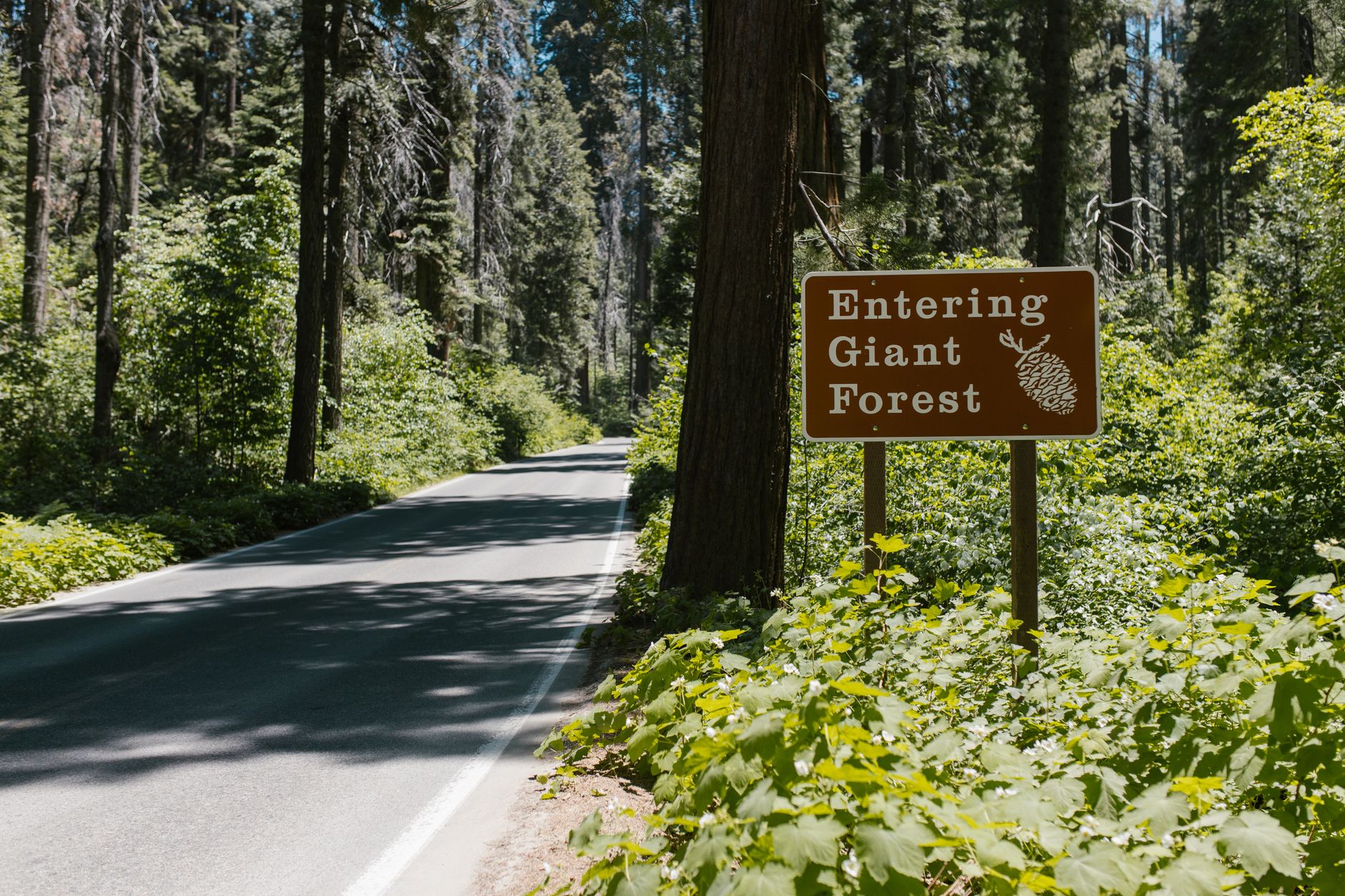
Three different names get used around the giant sequoia country of the southern Sierra Nevada, and they are not interchangeable. Sequoia National Park, run by the National Park Service together with adjoining Kings Canyon National Park, covers 865,964 acres and contains the General Sherman Tree, Giant Forest, and Moro Rock1. Giant Sequoia National Monument, proclaimed by President Clinton on April 15, 2000, covers 328,315 acres of U.S. Forest Service land split between two ranger districts of Sequoia National Forest23. Sequoia National Forest is the larger parent forest that manages the monument and 33 named sequoia groves outside the national park, ranging from the Trail of 100 Giants to Converse Basin45. The practical differences that matter to a visitor: the national park has a flat entrance fee, no dispersed camping, and no dogs on trails; the national forest generally allows roadside dispersed camping and leashed dogs on trails, and most of it has no entrance fee at all16.
- Who manages Sequoia National Park: National Park Service1
- Who manages Giant Sequoia National Monument: U.S. Forest Service, within Sequoia National Forest23
- Park size: 865,964 acres (combined with Kings Canyon)1
- Monument size: 328,315 acres3
- Park entrance fee: $35 per private vehicle, 7 days1
- Forest/monument entrance fee: generally none, though some developed sites charge a day-use fee46
- Dogs on trails: not allowed in the national park; generally allowed, leashed, in the national forest7
- Dispersed camping: not allowed in the national park; generally allowed in the national forest7
“Sequoia” describes a park, a national forest, and a national monument that sit side by side in the southern Sierra Nevada, plus dozens of individual groves that fall under one jurisdiction or another. This page lays out who runs each one, what it costs, and which rules change depending on which line you are standing on. For the park itself, start with the Sequoia National Park guide.
The three designations, briefly
Sequoia National Park is a National Park Service unit, administered jointly with Kings Canyon National Park as a single 865,964-acre unit1. It holds the most famous sights: the General Sherman Tree, Giant Forest, Moro Rock, and Crescent Meadow.
Giant Sequoia National Monument is Forest Service land, proclaimed by President Bill Clinton on April 15, 2000, and today covers 328,315 acres in two separate sections: a northern portion on the Hume Lake Ranger District near Dunlap, and a southern portion on the Western Divide Ranger District east of Springville238. It was carved out of, and remains part of, Sequoia National Forest.
Sequoia National Forest is the larger U.S. Forest Service unit that contains the monument. The forest lists 33 named giant sequoia groves under its management, split between the Hume Lake Ranger District in the north (13 groves) and the Western Divide Ranger District in the south, with elevations across the forest running from about 1,000 feet in the foothills to peaks over 12,000 feet458. Some of its groves, like Converse Basin and Freeman Creek, are inside the monument; others sit in ordinary national forest land outside the monument boundary.
None of the three shares a boundary fence you would notice while driving. Mineral King, for instance, is a detached arm of Sequoia National Park surrounded on three sides by national forest.
Comparison table
| Sequoia National Park | Giant Sequoia National Monument | Sequoia National Forest (general) | |
|---|---|---|---|
| Managed by | National Park Service1 | U.S. Forest Service (Sequoia NF)23 | U.S. Forest Service4 |
| Size | 865,964 acres, combined with Kings Canyon1 | 328,315 acres3 | Not confirmed to an official acreage figure at time of writing |
| Proclaimed/established | September 25, 18901 | April 15, 20002 | N/A (national forest) |
| Entrance fee | $35 per vehicle, 7 days1 | None to enter; some day-use sites charge separately6 | Generally none; day-use fees at some developed sites6 |
| Famous trees | General Sherman, General Grant1 | Boole Tree, Chicago Stump5 | Trail of 100 Giants, Converse Basin groves65 |
| Camping | Designated campgrounds only; wilderness permit required for backcountry7 | Developed campgrounds plus dispersed camping in most areas7 | Developed campgrounds plus dispersed camping in most areas7 |
| Dispersed/roadside camping | Not allowed7 | Generally allowed except in posted restricted areas | Generally allowed except in posted restricted areas7 |
| Dogs | Not allowed on any trail; allowed on roads, in campgrounds, and in parking lots7 | Generally allowed on trails, typically leashed | Generally allowed on trails, typically leashed7 |
| Drones | Prohibited1 | Permitted outside designated Wilderness7 | Permitted outside designated Wilderness7 |
What actually changes when you cross the boundary
The clearest single-source comparison on this is the National Park Service’s own “Where Can I…” page, which lays out the differences for visitors moving between SEKI and the surrounding national forest7. Three things matter most in practice:
Camping. Inside Sequoia National Park, you camp only in a numbered site in a designated campground, and any overnight stay in the backcountry requires a wilderness permit7. In the national forest, camping is allowed in developed campgrounds or, in most areas outside posted restrictions, along forest roads where you can safely pull off7. This is the single biggest practical difference for anyone trying to camp for free or without a reservation; free and dispersed camping options near the park are covered on their own page: free and dispersed camping near Sequoia National Park.
Dogs. The national park bars pets from every trail, permitting them only on roads, in campgrounds, and in parking lots7. The national forest is considerably more permissive, generally allowing leashed dogs on trails7. The Trail of 100 Giants, one of the monument’s best-known groves, sits in the national forest; for specifics on what is allowed there, see the Trail of 100 Giants guide.
Collecting and firewood. The national park prohibits collecting most natural objects, though dead wood for campfires and small amounts of edible plants for immediate consumption are allowed in most areas; the national forest allows collecting small amounts of forest products for personal use with fewer restrictions, and permits are available for larger home-use firewood quantities7.
Bicycles. Bikes stay on roads in the national park and are not allowed on trails. In the national forest, some trails permit bikes; ask the ranger district before assuming7.
Fees, in practice
The national park’s $35 vehicle fee is straightforward and covers both Sequoia and Kings Canyon for 7 days1. The national forest generally has no entrance fee at all, and the monument does not add one on top of the forest, but specific developed recreation sites inside the forest do charge day-use fees: the Trail of 100 Giants, for example, charges $12 per vehicle per day or $60 for an annual day-use pass, and cash may be required on site6. An America the Beautiful annual pass ($80) covers entrance and standard amenity fees at both the national park and most federal recreation sites, national forest included1.
Where the famous trees actually are
This is the source of most of the confusion. The General Sherman Tree, the largest tree on Earth by volume, and the General Grant Tree, the second largest, both stand inside the national park, in Giant Forest and Grant Grove respectively1. The largest sequoia growing on Forest Service land, the Boole Tree, stands in Converse Basin inside Giant Sequoia National Monument, along with the Chicago Stump, the cut base of a tree whose upper trunk was shipped to Chicago’s 1893 World’s Columbian Exposition5. The Trail of 100 Giants, a 1.3-mile paved loop past roughly 125 sequoias over 10 feet in diameter, is also national forest land, well south of the park in the monument’s Western Divide section6. For the monument’s full story, see the Giant Sequoia National Monument guide.
Which one should you visit?
If your priority is the General Sherman Tree, Moro Rock, or Crescent Meadow, that is the national park, and the $35 fee and no-dispersed-camping rules apply. If you want a quieter grove walk, a free or cheap campsite, or a place to bring a dog on an actual trail, the national forest and monument groves are the better fit, at the cost of fewer visitor services and rougher access roads in places like Converse Basin5. Many visitors combine both: a day in Giant Forest, then an afternoon at the Trail of 100 Giants or Converse Basin on the way out.
Frequently Asked Questions
What is the difference between Sequoia National Park and Sequoia National Forest?
Is Giant Sequoia National Monument part of Sequoia National Park?
Can I camp for free near Sequoia National Park?
Not inside the national park, where camping is restricted to designated, often reservable campgrounds. In the surrounding national forest, including parts of Giant Sequoia National Monument, dispersed camping is generally allowed outside posted restricted areas7.
Are dogs allowed at the Trail of 100 Giants?
The Trail of 100 Giants is on national forest land, where leashed dogs are generally permitted on trails, unlike inside the national park. Check current signage at the trailhead, since rules can be posted locally7.
Does the entrance fee for Sequoia National Park cover the national forest too?
Where is the largest tree outside the national parks?
The Boole Tree, in Converse Basin within Giant Sequoia National Monument, is the largest giant sequoia growing on land the Forest Service manages5.
Who created Giant Sequoia National Monument, and when?
President Bill Clinton proclaimed it on April 15, 20002.
Related Articles
Sources
- Basic Information — National Park Service, Sequoia & Kings Canyon. Accessed 2026-09-09.
- Trail of 100 Giants (Long Meadow Grove) — U.S. Forest Service. Accessed 2026-09-09.
- Giant Sequoia National Monument — U.S. Forest Service. Accessed 2026-09-09.
- Explore the Forest — Sequoia National Forest. Accessed 2026-09-09.
- Converse Basin Grove — Sequoia National Forest. Accessed 2026-09-09.
- Trail of 100 Giants (Long Meadow Grove) — Sequoia National Forest. Accessed 2026-09-09.
- Where Can I…? — National Park Service, Sequoia & Kings Canyon. Accessed 2026-09-09.
- About the Area — Sequoia National Forest. Accessed 2026-09-09.