
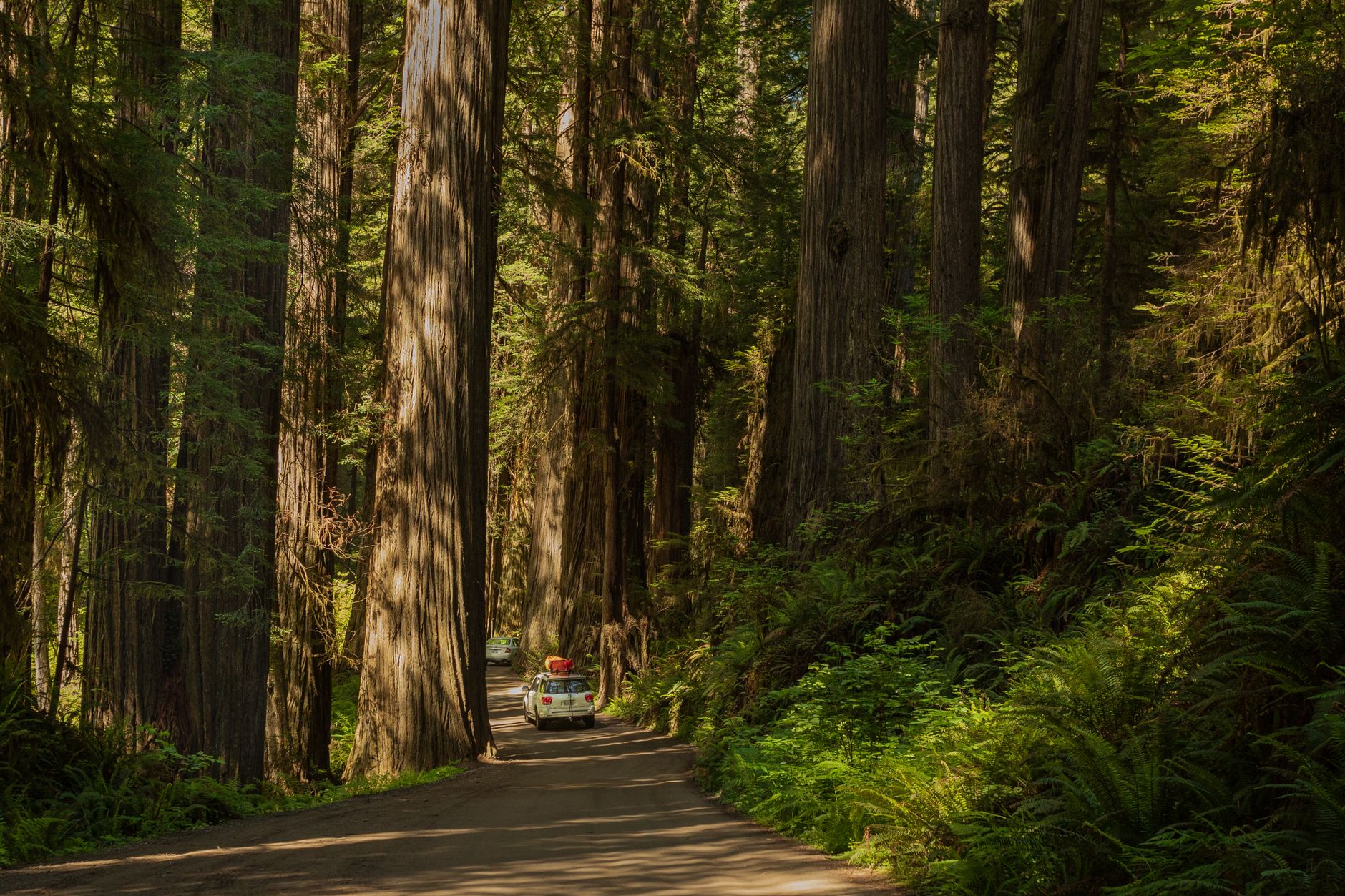
Five giant sequoias in California were tunneled between 1878 and 1938, and only the fallen ones and a dead snag still admit a vehicle. The Wawona Tunnel Tree in Yosemite’s Mariposa Grove, cut in 1881, fell in the winter of 1968–69; the Pioneer Cabin Tree at Calaveras Big Trees, enlarged into a tunnel in 1881, fell on January 8, 2017123. The California Tunnel Tree, also in Mariposa Grove, is the only living giant sequoia you can still walk through, and the Dead Giant in Yosemite’s Tuolumne Grove, a snag tunneled in 1878, still stands beside the old Big Oak Flat Road14. The only sequoia you can drive through is Tunnel Log in Sequoia National Park, a tree that fell across the road in 1937 and was cut with a 17-by-8-foot opening the next summer25. Three coast redwood drive-through trees survive on private land on the north coast, at Leggett, Myers Flat, and Klamath, for a fee6. No living sequoia will be tunneled again: the NPS says a healthy standing tree is worth more than the attraction, and the tunnel itself helped bring the Wawona Tree down2.
- Standing, walk-through: California Tunnel Tree, Mariposa Grove4
- Standing dead snag: Dead Giant, Tuolumne Grove, tunneled 187812
- Fallen: Wawona Tunnel Tree (1881–1969), Pioneer Cabin Tree (1881–2017)13
- Drive-through, fallen log: Tunnel Log, Sequoia NP, 17 ft wide by 8 ft high, cut 193825
- Coast redwood drive-throughs (private, fee): Chandelier Tree, Leggett; Shrine Tree, Myers Flat; Tour-Thru Tree, Klamath6
- Why no more: NPS policy since the mid-20th century favors intact trees over attractions2
Every few weeks someone asks a ranger where the tree you can drive through is, and the answer depends on which tree, which park, and which decade they have in mind. This page lists every tunneled giant sequoia in California with its dates and current state, then the three privately owned coast redwood drive-throughs, and explains why the practice ended. The tunnel trees are one chapter in the history of Sequoia National Park and the wider story of how the groves were sold to the public before they were protected.
The giant sequoia tunnel trees, in order
| Tree | Grove | Tunneled | Status | Can you pass through? |
|---|---|---|---|---|
| Dead Giant | Tuolumne Grove, Yosemite | 18781 | standing dead snag2 | on foot, on the paved grove trail7 |
| Wawona Tunnel Tree | Mariposa Grove, Yosemite | 18811 | fell winter 1968–691 | no; it lies where it fell, signed as the Fallen Tunnel Tree4 |
| Pioneer Cabin Tree | North Grove, Calaveras Big Trees SP | 18813 | fell January 8, 20173 | no |
| California Tunnel Tree | Mariposa Grove, Yosemite | date not given on NPS pages | living, standing4 | on foot |
| Tunnel Log | Giant Forest, Sequoia NP | 1938, after the tree fell in 193725 | fallen log with a cut tunnel | by car, up to 8 ft high; bypass for taller vehicles28 |
The Dead Giant, Tuolumne Grove (1878)
The first sequoia anyone cut a tunnel through was already dead. In 1878 a tunnel was bored through a 200-foot standing snag with a 120-foot circumference in the Tuolumne Grove to promote travel on the Big Oak Flat Road, which had been completed into Yosemite three years earlier1. The NPS tunnel-tree page notes that this dead tree still stands2. Today the grove is reached by a 2.5-mile round-trip walk from the Tioga Road trailhead near Crane Flat, with a 500-foot climb on the way back, and pets are allowed on the paved trail through the grove7. The grove and its quieter neighbor are covered on the Tuolumne Grove vs Merced Grove page.
The Wawona Tunnel Tree, Mariposa Grove (1881–1969)
The Wawona Tree is the one in the old photographs, with a stagecoach or a Model T in the opening. Its tunnel was cut in 1881 as a tourist attraction, and the tree stood another 88 years before it fell during the severe winter of 1968–69 under a heavy snow load on wet soil12. At its fall it was about 2,100 years old, 234 feet tall, and 26 feet in diameter at the base; the tunnel was 7 feet wide, 9 feet high, and 26 feet long2. President Taft and John Muir visited it together in 19091.
The NPS is direct about the cause: the tunnel weakened the tree and contributed to its collapse2. It lies in the upper grove on the Guardians Loop, a 6.5-mile round trip, marked as the Fallen Tunnel Tree4. Its full story is on the Wawona Tunnel Tree page, and the grove on the Mariposa Grove guide.
The Pioneer Cabin Tree, Calaveras (1881–2017)
Calaveras Big Trees answered Yosemite with its own tunnel the same year. Lightning had hollowed the base of the Pioneer Cabin Tree in the 1800s; in 1881 the hollow was squared and enlarged into a tunnel, and for 60 years visitors rode horses and carriages through, then automobiles in the 1920s3. State Parks gave the tree as about 205 feet tall and more than 19 feet in diameter at 6 feet above the ground3.
It fell at about 2:30 pm on Sunday, January 8, 2017, during storms that had dropped nearly a foot of rain in two weeks; State Parks blamed a combination of trunk and root decay and storm-water runoff39. Researchers then cut a 7.5-by-3.5-foot section to read its rings for drought and fire history3. Two other hollowed “cabin” trees, the Palace Hotel Tree and the Smith Cabin Tree, still stand in the park’s South Grove, though neither was cut as a tunnel9. See Calaveras Big Trees.
The California Tunnel Tree, Mariposa Grove (standing)
This is the survivor. The California Tunnel Tree is a living giant sequoia with a walk-through opening at its base, listed on the NPS trail map as a stop on the Grizzly Giant Loop, a 2-mile walk from the shuttle stop, and on the Guardians Loop4. Popular accounts date the cut to 1895, for horse-drawn stages, but the NPS grove page gives no date, so that year is unconfirmed here. What is not in doubt is that it is the only living sequoia anywhere with a tunnel you can pass through, and that it is on foot only. The grove’s shuttle runs May 3 to November 30 in 2026, and the walk from the Welcome Plaza is two miles each way when it is not4.
Tunnel Log, Sequoia National Park (drive-through)
Tunnel Log is the one place a car still passes through a giant sequoia, and it involved no harm to a living tree. In late 1937 a sequoia fell across the Crescent Meadow Road in the Giant Forest from natural causes; the following summer Civilian Conservation Corps crews cut a tunnel through the fallen trunk rather than remove it25. The opening is 17 feet wide and 8 feet high, and a bypass exists for taller vehicles28.
The log is on the Moro Rock and Crescent Meadow Road about half a mile past Moro Rock. The road opens around the Wednesday before Memorial Day and closes with snow, and on summer weekends and holidays it is closed to private cars, when the free shuttle from the Giant Forest Museum is the only way in; in winter it is reached on foot, skis, or snowshoes810. The NPS calls it the only “tree-you-can-drive-through” in Sequoia and Kings Canyon5. Whether your vehicle fits is answered on the Tunnel Log page.
The coast redwood drive-through trees (private, fee)
Three drive-through coast redwoods survive on the Redwood Coast, all on private land and all charging admission6. They are a different species, Sequoia sempervirens, and none is in a park.
| Tree | Where | Details |
|---|---|---|
| Chandelier Tree, Drive-Thru Tree Park | 67402 Drive Thru Tree Rd, Leggett | branches about 100 ft up form the “chandelier”; 200-acre park with gift shop and picnic area; open year-round except Thanksgiving and Christmas; (707) 925-64646. AFAR gives 315 ft tall, a 6-ft-wide tunnel, cut in the 1930s11. Roadside America lists $15 per car, summer hours 8:30 am–8 pm, off-season 8:30 am–5 pm12 |
| Shrine Drive-Thru Tree | 13078 Avenue of the Giants, Myers Flat, 50 mi south of Eureka | the opening is mostly natural rather than carved; also a drive-on fallen log with ramp and a walk-through stump; closed in winter; (707) 943-19756 |
| Klamath Tour-Thru Tree | 430 CA-169, Klamath, about an hour north of Eureka | carved in 1976; restroom, gift shop, picnic tables; (707) 482-59716. A travel blog reports $5 admission and that a Ford Transit van fits with mirrors folded13 |
Fees change; the Chandelier Tree’s has been reported at both $5 and $15 in recent years, so call before you go1112. All three are on or near Highway 101, and the Chandelier Tree at Leggett is the southernmost, making it the one most Bay Area drivers reach first. The parks that surround them are compared on the Redwood National Park vs Sequoia National Park page.
Why no living sequoia is tunneled anymore
The NPS page on the subject is titled “The Myth of the Tree You Can Drive Through,” and it explains the change plainly. Tunneling trees was a way to popularize the parks and gain public support for their protection at a time when a single spectacular attraction counted for more than an intact forest2. The goal in the parks today is to let nature run its course with as little human interference as possible; the page states that tunnel trees had their time and place in the early history of the national parks, but that sequoias standing healthy and whole are now worth far more2. It adds that the Wawona tunnel contributed to that tree’s fall2.
The Gymnosperm Database makes the same point from the other direction: of all the sequoia drive-throughs, only Tunnel Log, a fallen tree, remains operational14. The three coast redwood tunnels survive because they are on private land, cut before the modern parks existed. Nobody has proposed a new one on public land in living memory, and the agencies’ stated philosophy rules it out.
Seeing them in one trip
The four Yosemite and Calaveras trees are within a day of each other on the western Sierra, and Tunnel Log is four hours south of Yosemite Valley by the NPS drive time to the Giant Forest15. A north-to-south loop that includes the coast redwood drive-throughs is a week; see the redwoods-and-sequoias road trip. For the rest of the historical sites, from the Discovery Stump to the Chicago Stump, see where to see giant sequoias.
Frequently Asked Questions
Can you still drive through a sequoia tree?
Which drive-through trees still exist in California?
When did the tunnel tree in Yosemite fall?
Is the Pioneer Cabin Tree still standing?
No. It fell on January 8, 2017, during heavy storms, from trunk and root decay combined with storm runoff3.
Is there a tunnel tree you can walk through?
Why did they stop cutting tunnels in sequoias?
Because the tunnels weaken the trees, as the Wawona Tree’s collapse showed, and because park policy shifted from single attractions to preserving whole, healthy trees and natural processes2.
How much does it cost to drive through a redwood?
Related Articles
Sources
- Encroaching Civilization: Visitor Activities — National Park Service, Yosemite. Accessed 2026-09-06.
- The Myth of the Tree You Can Drive Through — National Park Service, Sequoia & Kings Canyon. Accessed 2026-09-06.
- State Parks Begins Study of Fallen Tunnel Tree — California State Parks. Accessed 2026-09-06.
- Mariposa Grove of Giant Sequoias — National Park Service, Yosemite. Accessed 2026-09-06.
- Tunnel Log — National Park Service. Accessed 2026-09-06.
- Drive Through a Redwood — Humboldt County Visitors Bureau. Accessed 2026-09-06.
- Tuolumne Grove — National Park Service, Yosemite. Accessed 2026-09-06.
- Drive Through Tunnel Log — National Park Service. Accessed 2026-09-06.
- Pioneer Cabin Tree Falls — Calaveras Big Trees Association. Accessed 2026-09-06.
- Road Conditions — National Park Service, Sequoia & Kings Canyon, updated September 1, 2026. Accessed 2026-09-06.
- Drive-Thru Tree Park, Leggett — AFAR. Accessed 2026-09-06.
- Chandelier Drive-Thru Tree — Roadside America. Accessed 2026-09-06.
- Klamath Tour Thru Tree — Whimsy Soul. Accessed 2026-09-06.
- Sequoiadendron giganteum — The Gymnosperm Database. Accessed 2026-09-06.
- Driving Directions and Distances — National Park Service, Yosemite. Accessed 2026-09-06.