
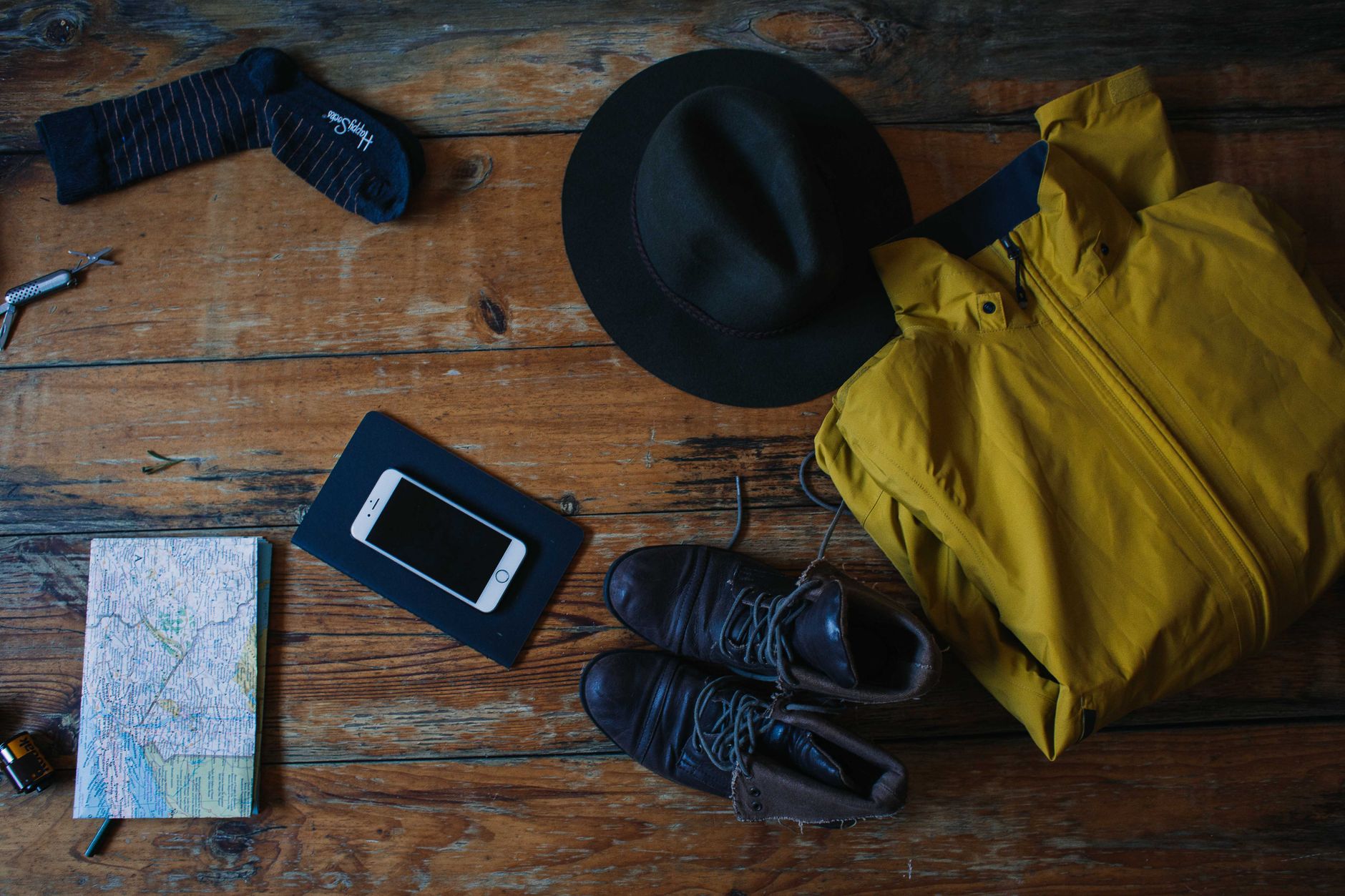
Packing for Sequoia National Park means packing for two climates at once. The Foothills entrance sits at about 1,700 feet with summer temperatures of 80 to 115°F, while the sequoia groves 18 miles up the road sit near 7,000 feet with summer highs of 68 to 76°F and cool evenings12. In winter the groves hold a deep snowpack from December to May, and tire chains can be required on park roads any time it snows13. Three items do most of the work: chains that fit your tires, traction cleats for icy trails, and a way to store every scented item in a bear-resistant locker or canister345. There is no gas, no EV charging, and no gear shop selling chains once restrictions are active, so buy before you climb67.
- Summer layers: groves run 68 to 76°F by day with cool evenings; the foothills run 80 to 115°F12
- Winter: carry chains, warm layers, emergency food and water on every drive8
- Boot cleats: advised for the plowed but icy Sherman Tree Trail9
- Bear canisters: rented at five park locations, from $5 for three nights5
- Everything scented goes in the locker, including sunscreen and toiletries4
- Water: treat all backcountry water for Giardia10
- Chains near the park: rentals in Three Rivers run about $40 to $65 a day and purchases $50 to $200, as of the 2026 winter season7
- Prohibited: drones and bear spray, both banned in the parks11
Disclosure: some links on this page are affiliate links, marked by the products, tours and hotels they name. As an Amazon Associate, sequoia.info earns from qualifying purchases. A purchase through these links may earn the site a commission at no cost to you, and it never affects what is recommended. How this works.
The mistake most first-time visitors make is packing for the elevation of the town they slept in. Three Rivers in July is hot enough for shorts; the Giant Forest the same afternoon is 20 degrees cooler and drops further after sunset. The second mistake is arriving in winter without chains because the forecast looked clear. This page gives two complete checklists, plus the handful of items the parks specifically require, rent, or ban. For everything else about the trip, see the complete Sequoia National Park visitor guide. The site earns a commission on purchases made through its product links, which does not affect what is recommended.
What the weather actually does here
| Zone | Elevation | Summer | Winter |
|---|---|---|---|
| Foothills, Ash Mountain entrance | To about 4,000 ft | Highs 89 to 97°F, extremes to 114°F; 80 to 115°F on the trails12 | Lows around 36°F; wildflowers begin12 |
| Giant Forest, Lodgepole, Grant Grove | 5,000 to 7,000 ft | Highs 68 to 76°F, cool evenings1 | Lows 24 to 27°F, extremes to -6°F; deep snowpack December to May1 |
| Cedar Grove | 3,500 to 4,700 ft | Mid-summer can reach the 90s1 | Road closed mid-November to late April1 |
Two details shape a packing list. Lodgepole Campground runs 10 to 15°F colder than the mid-elevation averages, so a summer sleeping bag rated for 60°F is the wrong bag1. And summer thundershowers occur at higher elevations, which is a rain shell rather than an umbrella1.
The foothills bring their own hazards in the warm months: poison oak is plentiful, rattlesnakes are common, and ticks are active from early spring to late summer2. Long trousers on foothill trails are a reasonable default.
Summer packing list
Clothing
- A warm mid-layer and a light insulated jacket for evenings in the groves, where highs top out around 76°F and drop after dark1
- A rain shell for afternoon thundershowers at elevation1
- Long trousers for foothill trails, where poison oak and ticks are common2
- Sturdy closed shoes or hiking boots
- Sun hat and sunglasses
On the trail
- More water than you think, and a way to treat any water you take from a stream; all backcountry water must be treated for Giardia10
- Electrolytes and snacks; most trails here are above 5,000 feet and the parks warn of shortness of breath and dehydration10
- Sunscreen and insect repellent, both of which must be locked away with the food at camp4
- A headlamp
- A paper map, since cell coverage is limited; see cell service in Sequoia National Park
Car and camp
- A full tank; there is no gas and no EV charging inside the parks6
- A cooler and food that can all go into the campsite bear locker, which measures 47 by 33 by 28 inches12
- Firewood bought locally, since fires are permitted only in existing rings13
- A tarp if you are driving to Mineral King in spring or early summer, when marmots chew radiator hoses, belts, and wiring; rangers recommend driving onto a tarp and wrapping the vehicle including the wheel wells from early spring to mid-July14
- Your entrance pass. The America the Beautiful annual pass is $80, the Senior annual is $20 and lifetime $80, and the Access Pass is free to U.S. citizens and permanent residents with permanent disabilities15
If you are backpacking
- An approved bear canister for the designated wilderness zones; the parks rent them at the Foothills Visitor Center, Lodgepole Visitor Center in summer, the Giant Forest Museum in winter, the Kings Canyon Visitor Center, and the Mineral King Ranger Station, which carries the largest selection5
- A wilderness permit; see Sequoia and Kings Canyon wilderness permits
Winter packing list
The car comes first
- Tire chains or cables that fit your tires. Chains may be required on park roads any time it snows, most commonly from late fall through spring, and the parks tell every winter visitor to carry them regardless of vehicle38. Buy for the exact size printed on the sidewall.
- Waterproof gloves, a kneeling mat, and a headlamp for fitting them in the dark
- Warm layers, blankets, emergency food and water in case a storm delays you; roads can take hours to clear after a storm8
- A full tank, for the same reason as in summer6
Under California’s chain-control system, R-1 requires chains except on passenger vehicles and light trucks under 6,000 pounds with snow tires on the drive wheels, R-2 requires them except on four-wheel-drive and all-wheel-drive vehicles with snow-tread tires on all four wheels, and R-3 requires them on every vehicle with no exceptions16. Exemption from fitting chains is not exemption from carrying them. The full breakdown is in do you need snow chains for Sequoia National Park.
Buy before you climb. As of the 2026 winter season, chain rentals in Three Rivers ran about $40 to $65 a day and purchases $50 to $200, and on the Kings Canyon side the nearest place to buy is 21 miles outside the park, with the Grant Grove Market unable to sell chains once restrictions are active7.
On foot
- Traction cleats for your boots. The Sherman Tree Trail is the only trail in the Giant Forest kept plowed, and the parks advise traction devices for it9
- Waterproof boots and gaiters
- Insulated jacket, hat, and gloves; winter lows in the groves run 24 to 27°F, with recorded extremes to -6°F1
- Sunglasses, because snow glare at 7,000 feet is severe
- A helmet for anyone sledding, and the discipline to sled feet-first and away from roads and parking lots17
- Hand warmers and a thermos
Hypothermia is possible year-round in these parks, not only in winter18. For what is open in the cold months, see Sequoia National Park in winter.
Bear canisters: which models and what they cost to rent
Canisters are required in designated wilderness zones, and the parks rent four models rather than expecting you to buy one5:
| Model | Capacity | Weight | Rental as of September 2026 |
|---|---|---|---|
| BearVault BV450 Solo | 6 person-days | 1 lb 6 oz | $5 for three nights, then $2 a night5 |
| Garcia Backpacker’s Cache 812 | 6 person-days | 2 lb 11 oz | $5 for three nights, then $2 a night5 |
| Wild Ideas Bearikade Weekender | 6 person-days | Not listed | $6 the first night, then $3 a night5 |
| Wild Ideas Bearikade Expedition | 9 person-days | Not listed | $6 the first night, then $3 a night5 |
A credit card deposit is required, and the parks charge $90 or $235 if a canister is not returned, depending on the model5. Rentals are not available at Cedar Grove5. More in bear canisters in Sequoia and Kings Canyon.
Whether or not you are backpacking, the food storage rule applies from the moment you park. Everything with a scent must be stored: food, trash, toiletries, sunscreen, air fresheners, pet food, sealed drinks, coolers, and stoves4. Pack a bag you can lift into a locker in one trip. See bears in Sequoia National Park.
Maps
Cell coverage in the parks is patchy, so a paper map earns its place. The Tom Harrison “Sequoia/Kings Canyon NP” map is drawn at 1:126,720, or one inch to two miles, with 200-foot contours, and the 2026 edition lists at $13.95; it covers the whole combined parks from Mineral King, the Giant Forest, and Grant Grove east to Mount Whitney, Bishop Pass, and Evolution Valley19. That coverage is the point: a single sheet spans both parks and the high country.
The free NPS map handed out at entrance stations is adequate for driving and the paved walks. For a comparison of the options, see best maps for Sequoia and Kings Canyon. Download offline maps to your phone before you leave the valley as a backup, not a substitute.
What to leave at home
- Drones. Unmanned aircraft are prohibited in the parks11
- Bear spray. It is prohibited here, along with BB, pellet, and paint guns, bows, and slingshots11
- Anything you plan to collect. Cones, rocks, and artifacts all stay where they are20
- Wood for a campfire in late summer, if you are camping on national forest land. The 2026 fire order banned wood campfires outside designated sites from August 11 to November 30, while allowing gas stoves and propane fire pits with shut-off valves under a free California campfire permit21
One more consideration for summer visitors with respiratory conditions: ground-level ozone and fine particulate matter often exceed federal health standards in the parks during summer, and air above about 8,500 feet is usually cleaner22. Pack any inhaler or medication you might need, and check conditions using the guidance in wildfire and smoke season in Sequoia National Park.
Frequently Asked Questions
What should I wear in Sequoia National Park in summer?
Do I need to bring snow chains?
Do I need a bear canister for a day visit?
No, but you do need to use the campsite or trailhead food lockers. Canisters are required in designated wilderness zones for overnight trips, and the parks rent four approved models at five locations5.
Can I rent a bear canister in the park?
Yes. Rentals run $5 for three nights plus $2 a night for the BearVault BV450 and Garcia Backpacker’s Cache, and $6 the first night plus $3 a night for the Wild Ideas Bearikade models, with a credit card deposit5.
What map should I buy for Sequoia and Kings Canyon?
The Tom Harrison “Sequoia/Kings Canyon NP” map covers both parks on one sheet at 1:126,720 with 200-foot contours, priced at $13.95 for the 2026 edition19. Other options are compared in best maps for Sequoia and Kings Canyon.
Is bear spray allowed in Sequoia National Park?
No. Bear spray is prohibited in the parks, as are BB, pellet, and paint guns, bows, and slingshots11.
Do I need traction cleats for winter walks?
For the Sherman Tree Trail, yes. It is the only plowed trail in the Giant Forest, and the parks advise traction devices for boots because it ices over9.
Is there anywhere in the park to buy gear I forgot?
Related Articles
Sources
- Weather — National Park Service, Sequoia & Kings Canyon. Accessed 2026-09-09.
- Foothills — National Park Service. Accessed 2026-09-09.
- Road Information — National Park Service. Accessed 2026-09-09.
- Food Storage and Bears — National Park Service. Accessed 2026-09-09.
- Food Storage Containers for Rent — National Park Service. Accessed 2026-09-09.
- Gas Stations & EV Charging — National Park Service. Accessed 2026-09-09.
- Winter Driving — National Park Service. Accessed 2026-09-09.
- Winter Activities — National Park Service. Accessed 2026-09-09.
- Giant Forest and Lodgepole Winter Trails — National Park Service. Accessed 2026-09-09.
- Winter 2025-26 Trip Planner (PDF) — National Park Service. Accessed 2026-09-09.
- Laws & Policies — National Park Service. Accessed 2026-09-09.
- Campground Fee Increase and Booking Windows — National Park Service. Accessed 2026-09-09.
- Campground Regulations — National Park Service. Accessed 2026-09-09.
- Marmots and Vehicles — National Park Service. Accessed 2026-09-09.
- Entrance Passes — National Park Service. Accessed 2026-09-09.
- Chain Controls — Caltrans. Accessed 2026-09-09.
- Snowplay — National Park Service. Accessed 2026-09-09.
- Safety — National Park Service. Accessed 2026-09-09.
- Sequoia/Kings Canyon NP Map — Tom Harrison Maps. Accessed 2026-09-09.
- Where Can I…? Park and Forest Rules Compared — National Park Service. Accessed 2026-09-09.
- Fire Restrictions, Sequoia National Forest — USDA Forest Service. Accessed 2026-09-09.
- Air Quality — National Park Service. Accessed 2026-09-09.