
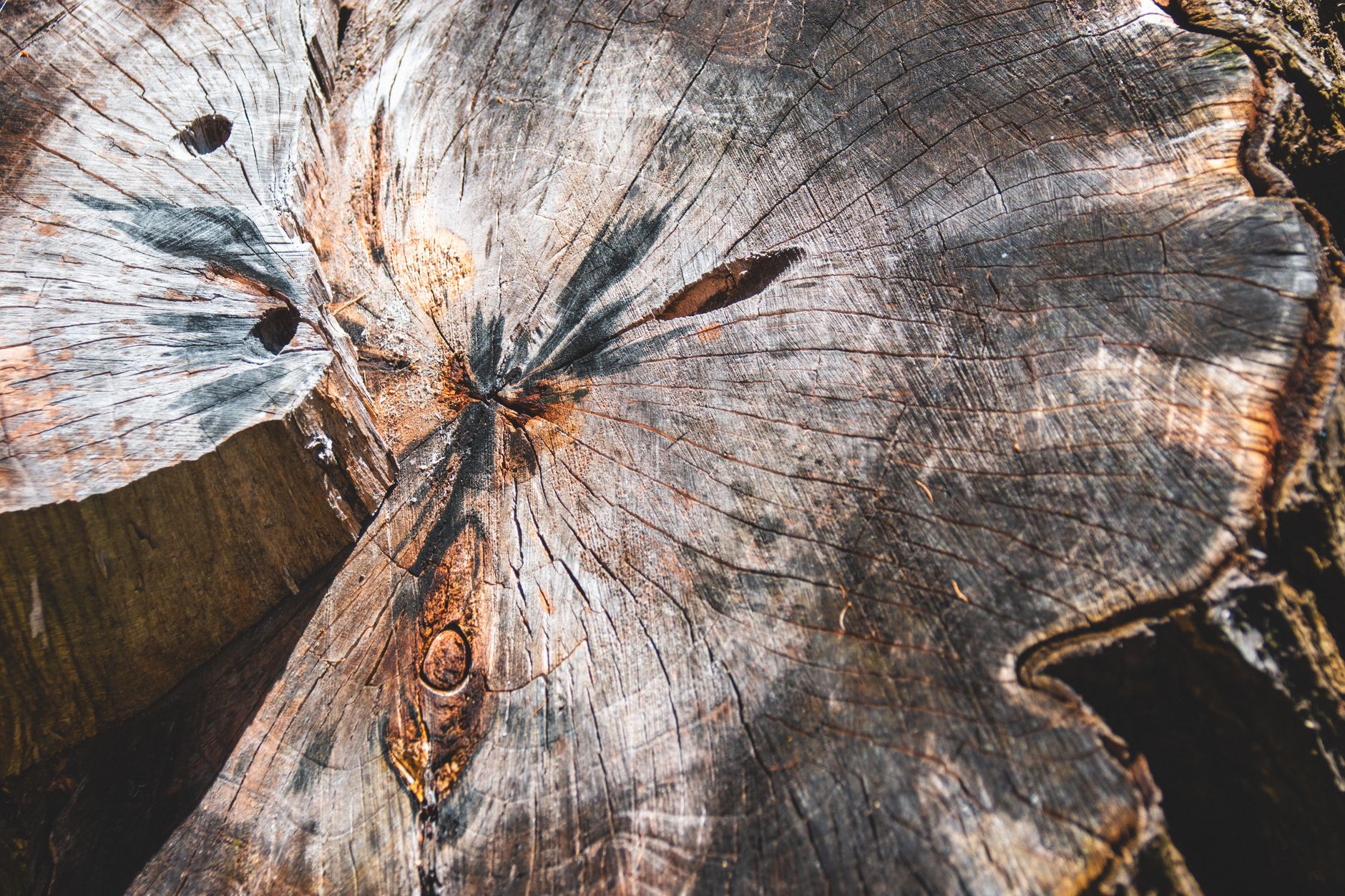
Giant sequoias (Sequoiadendron giganteum) live more than 3,000 years. The oldest verified age comes from a stump in Converse Basin, logged in the 1870s and later crossdated at 3,266 years; the U.S. Forest Service rounds the record to 3,200 years12. The National Park Service says the species reaches ages “up to 3,400 years,” the highest figure any official source gives3. The General Sherman Tree, the largest tree on Earth, is only about 2,200 years old4. No living giant sequoia has been ring-counted to its center, so ages of standing trees are estimates, and a tree 15 feet in diameter can be anywhere from 800 to 3,100 years old5.
- Oldest verified: 3,266 years, a crossdated Converse Basin stump1
- Forest Service record: 3,200 years by ring count2
- NPS maximum: “up to 3,400 years”3
- Other ancient counts: 3,220 and 3,075 (Douglass, 1919); 3,033 (Swetnam and Baisan)1
- General Sherman: about 2,200 years4; 2,200–2,700 per Save the Redwoods League6
- Grizzly Giant, Yosemite: about 2,900 years7
- The President, Giant Forest: about 3,200 years8
Ask three official sources how old giant sequoias get and you will hear 3,200, 3,266, and 3,400. All three are defensible, and the differences say something about how tree age is actually measured. This page lists the oldest known trees, explains ring counts, crossdating, and size-based estimates, gives the age-to-diameter table researchers used after the 2020 Castle Fire, and explains why the largest tree is not the oldest. It belongs to the site’s guide to giant sequoia trees.
The oldest known giant sequoias
Every giant sequoia with a verified age over 3,000 years is a stump. The trees were cut in the logging era, mostly in Converse Basin north of Kings Canyon, and their rings were counted later.
| Specimen | Age | How measured | Source |
|---|---|---|---|
| Converse Basin stump, logged 1870s | 3,266 years | Crossdated by Hughes, Touchan and Wright | Gymnosperm Database1 |
| Specimen D-21 | 3,220 years | Ring count, A. E. Douglass, 1919 | Gymnosperm Database1 |
| Specimen D-23 | 3,075 years | Ring count, A. E. Douglass, 1919 | Gymnosperm Database1 |
| Specimen cmC3 | 3,033 years | Swetnam and Baisan | Gymnosperm Database1 |
| Stump Meadow, Converse Basin | “just over 3,200 years” | Ring count | U.S. Forest Service9 |
| “Greatest known age” | 3,200 years | Ring count | U.S. Forest Service silvics manual2 |
John Muir once counted about 4,000 rings on a stump; later work corrected it to roughly 3,0001. That 4,000 figure still circulates, and it is the reason some pages claim sequoias live four millennia. No verified count supports it.
Converse Basin’s story is on the page about Converse Basin. It was once the largest grove in the world and was logged of most of its giants between the 1890s and 1918; the oldest stump there is just over 3,200 years old9.
The oldest living giant sequoias
Living trees are estimated, not counted. The best-known estimates:
- The President, Giant Forest, Sequoia National Park: about 3,200 years, according to the National Geographic team that measured it in 2011–128.
- Grizzly Giant, Mariposa Grove, Yosemite: about 2,900 years on the NPS tour page, rounded to 3,000 on the grove’s visitor page710.
- General Sherman, Giant Forest: about 2,200 years in the most recent NPS estimate, with Save the Redwoods League giving 2,200 to 2,70046. A 1975 NPS history put it at 3,000 to 3,500 years, an estimate later research treats as too high11.
The gap between General Sherman and the President matters. Sherman is larger by trunk volume, at about 52,500 cubic feet, yet is perhaps a thousand years younger128. Size reflects the site as much as the calendar.
How a sequoia's age is measured
Ring counts on stumps and fallen logs
The only way to know a sequoia’s age exactly is to count its annual rings from bark to pith. That requires a cut face, which is why the verified records all come from logged stumps and fallen trees. Ellsworth Huntington measured rings on 458 stumps in 1911 and 1912, mostly in Converse Basin, for research on climate cycles; the U.S. Geological Survey still hosts his data13. Andrew Douglass, the founder of tree-ring science, collected the D-21 and D-23 specimens in 19191.
Crossdating
A raw ring count can be off. Trees sometimes skip a ring in a bad year or lay down a false one, and rot can erase the innermost rings. Crossdating matches the pattern of wide and narrow rings in one sample against a master chronology built from many trees, so each ring is assigned a calendar year rather than simply tallied. That is how the 3,266-year figure was obtained, and why it is quoted with more confidence than a count alone1.
Fire scars
Almost all large sequoias carry fire scars, and those scars are dated the same way2. Fire-scar records in sequoia rings reach back 2,000 years and show that surface fires burned through Giant Forest every 6 to 35 years until about 186014. Scars do not give a tree’s age directly, but they anchor its ring record to known fire years. The page on giant sequoias and fire covers what that record reveals.
Estimates from size
For a living tree, researchers combine trunk diameter with growth rates measured on stumps from the same kind of site. The NPS is blunt about the limits: it “is not possible to estimate precisely how old a giant sequoia is from its size,” because growth depends on soil, water, light, and competition5.
The age-to-diameter table
After the 2020 Castle Fire, NPS scientists needed to translate the diameters of dead trees into ages. They used ring data from the logging areas of the late 1800s and early 1900s and published this guide5:
| Trunk diameter | Median age | Range |
|---|---|---|
| 4 ft (1.2 m) | — | 200–500 years |
| 10 ft (3 m) | about 1,000 years | 400–2,100 years |
| 15 ft (4.6 m) | about 2,000 years | 800–3,100 years |
The ranges are the point. A 15-foot sequoia is probably around 2,000 years old, but it could have germinated before the Trojan War or after the fall of Rome. The Forest Service gives a typical diameter progression of 48 cm (19 in) at 100 years, 132 cm (52 in) at 400, 219 cm (86 in) at 800, and 427 cm (168 in, or 14 ft) at 2,000 years2. General Sherman’s 36.5-foot base does not mean it is 5,000 years old; the base flares, and fast sites add wood far faster than average12.
Why sources disagree
Three habits produce three numbers.
- Rounding. The silvics manual and the Fire Effects Information System both say 3,200 years, a rounded version of counts in the 3,200s215.
- Crossdating versus counting. The 3,266-year figure is a crossdated age of one stump, published by tree-ring scientists and reported by the Gymnosperm Database1.
- Allowing for the unmeasured. The NPS’s “up to 3,400 years” is a ceiling for the species rather than a measured tree3. Because the oldest verified trees are stumps, and the cut face rarely sits at ground level or captures the true pith, a living tree somewhere may be older than any stump that has been counted.
This site uses “over 3,200 years” for the verified record and reports the NPS’s 3,400 as the official maximum.
Do giant sequoias die of old age?
Not in the usual sense. The Forest Service notes that few veteran sequoias are killed by fire alone; the trees mostly die by falling, when wind, water-softened soil, stream undercutting, or heavy snow acts on enormous weight over shallow roots, especially where basal fire scars have weakened one side2. Growth does not slow down either. Measurements of the President showed a 3,200-year-old tree laying down more new wood each year than vigorous younger trees8.
That picture changed recently. During the 2012–2016 hotter drought, 33 sequoias died standing, associated with native bark beetles and fire damage at the base, something never before documented16. And the 2020 and 2021 wildfires killed an estimated 13 to 19 percent of all large sequoias, many of them likely older than 1,000 years165. See are giant sequoias dying.
How age compares to other trees
The giant sequoia is the longest-lived of the three redwoods. The Forest Service gives coast redwood a maximum age greater than 2,200 years, while sequoia ring counts exceed 3,200172. It is not the oldest tree species; the silvics manual acknowledges that one species lives longer, a reference to the bristlecone pine2. For the whole comparison, see sequoia vs redwood and the life cycle of a giant sequoia.
Frequently Asked Questions
What is the oldest sequoia tree?
How old is the General Sherman Tree?
How do scientists know how old a sequoia is?
Can a giant sequoia live 4,000 years?
Is the biggest sequoia also the oldest?
What is the lifespan of a sequoia?
Do giant sequoias ever stop growing?
No. Height levels off near 250 feet between 800 and 1,500 years of age, but trunk volume keeps increasing; General Sherman adds an estimated 40 to 51 cubic feet of wood a year2.
Related Articles
Sources
- Sequoiadendron giganteum — The Gymnosperm Database. Accessed 2026-09-06.
- Sequoiadendron giganteum, Silvics of North America — U.S. Forest Service. Accessed 2026-09-06.
- Giant Sequoias — National Park Service, Sequoia & Kings Canyon. Accessed 2026-09-06.
- General Sherman Tree (place page) — National Park Service. Accessed 2026-09-06.
- Wildfires Kill Unprecedented Numbers of Large Sequoia Trees — National Park Service. Accessed 2026-09-06.
- Giant Sequoias — Save the Redwoods League. Accessed 2026-09-06.
- Grizzly Giant Tour: Enduring Giant — National Park Service, Yosemite. Accessed 2026-09-06.
- Forest Giant — National Geographic, December 2012. Accessed 2026-09-06.
- Converse Basin Grove — U.S. Forest Service, Sequoia National Forest. Accessed 2026-09-06.
- Mariposa Grove of Giant Sequoias — National Park Service, Yosemite. Accessed 2026-09-06.
- Sequoia–Kings Canyon National Parks: A History of the Parks — A. Berle Clemensen, NPS, 1975. Accessed 2026-09-06.
- The General Sherman Tree — National Park Service, Sequoia & Kings Canyon. Accessed 2026-09-06.
- Ellsworth Huntington’s 1914 Giant Sequoia Ages and Tree-Ring Measurements, 458 Stumps — U.S. Geological Survey. Accessed 2026-09-06.
- Giant Sequoias and Fire — National Park Service. Accessed 2026-09-06.
- Sequoiadendron giganteum, Fire Effects Information System — U.S. Forest Service. Accessed 2026-09-06.
- Giant Sequoias Face New Threats — National Park Service. Accessed 2026-09-06.
- Sequoia sempervirens, Fire Effects Information System — U.S. Forest Service. Accessed 2026-09-06.